How to Prepare for a Haircut Consultation and Avoid Regret
A little note: Some images in this article are AI-generated to illustrate hairstyle ideas. Actual cuts, textures, colors, and styling results may differ depending on individual hair characteristics and professional techniques. Visit our Image Credits Policy for more information.
A haircut can go wrong before your hairstylist even picks up the scissors.
You ask for a trim, but your stylist removes more length than you expected. You show a photograph of soft layers, but the finished haircut feels too choppy. Or you leave with a beautiful salon blowout and discover the next morning that you have no idea how to style your new hair.
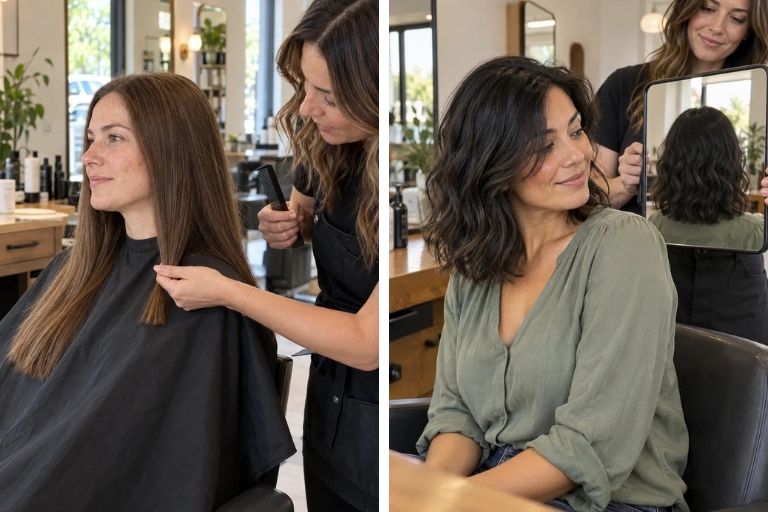
These disappointments don’t always mean the stylist lacks skill. Sometimes you and your stylist simply had different ideas about the finished result.
That’s why the consultation matters.
A good haircut consultation gives you the chance to explain what you want, understand what your hair can realistically do, and agree on important details before any cutting begins.
You don’t need to know professional haircutting terminology. You need clear preferences, a few useful photographs, and the confidence to ask questions.
Here’s how to prepare for your appointment and make decisions you’re less likely to regret.
Before Booking: Decide What You Actually Want to Change
It’s easy to walk into a salon knowing that you’re bored with your hair but having no clear idea what you want instead.
That makes the consultation harder.
Before collecting hairstyle photographs, identify what bothers you about your current haircut.
Maybe your hair feels too heavy around the ends. Perhaps the front pieces fall awkwardly against your face. Your layers might have grown out, or you’re spending too much time trying to create volume.
The more specific you are, the easier it becomes to discuss a solution.
Separate Your Problem From Your Proposed Solution
Imagine someone with shoulder-length hair who says, “I want a pixie because my hair is too difficult to style.”
The problem is daily styling time.
A pixie might solve that problem, but it could also introduce new work, especially if the person wants a very structured finish.
A better starting point is to explain the actual frustration.
“My hair takes too long to style in the morning. I’d like something that works better with my natural texture.”
That gives the stylist room to suggest an appropriate cut.
Make Three Decisions Before Your Appointment
You don’t need to design the entire haircut. Focus on three priorities.
What do you want to change?
Length, layers, bangs, volume, shape, or ease of styling?
What do you want to keep?
Your overall length, the ability to tie your hair back, a full-looking perimeter, or your natural curl pattern?
What are you unwilling to accept?
A fringe that’s too short, a heavily layered finish, shaved sides, frequent maintenance, or a haircut requiring daily heat styling?
These boundaries are often more useful than a long list of hairstyle preferences.
Choose Reference Photos That Explain Your Preferences
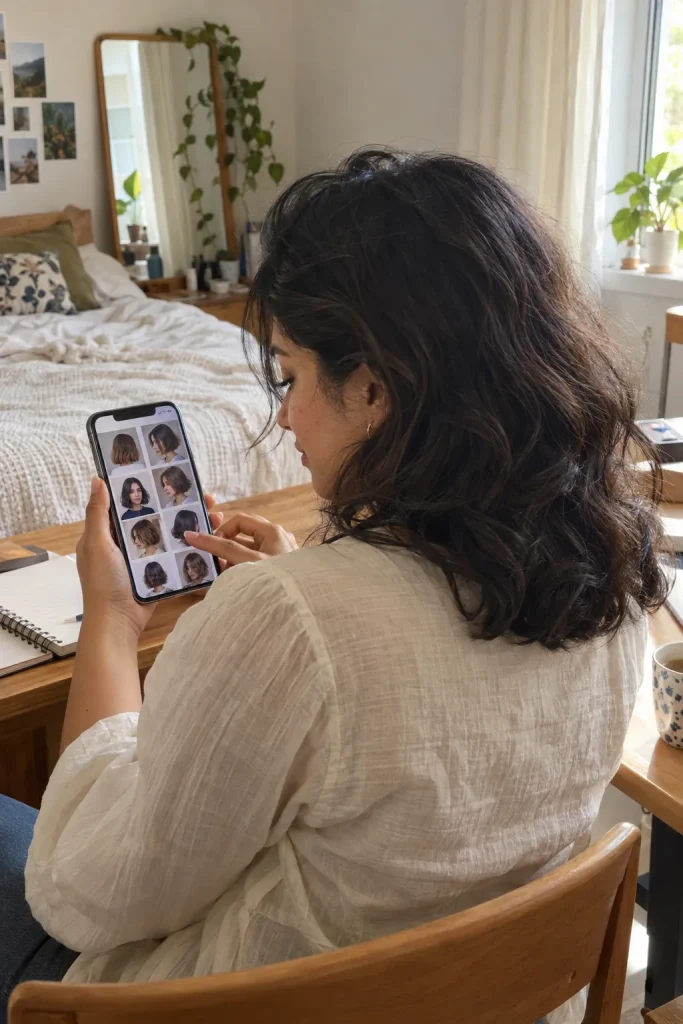
Reference photographs are one of the easiest ways to communicate your hairstyle goals.
But one beautiful photograph doesn’t always tell the whole story.
The model may have a different hair texture, greater density, extensions, or a professional blowout that creates much of the visible shape.
You also might love only one detail of the photograph without realizing it.
A useful reference collection should help your stylist understand the haircut, not simply show an attractive person with beautiful hair.
Bring Two to Four Purposeful Photographs
You don’t need twenty screenshots.
Choose a small collection that answers different questions.
| Reference Photo | What It Should Show |
|---|---|
| Front view | Face framing, bangs, parting, and overall silhouette |
| Side view | Length, layers, and shape around the jaw |
| Back view | Perimeter, graduation, layers, or neckline |
| Optional alternative | A detail you like or want to avoid |
You can use photos of different people, but try to find at least one example with a hair texture similar to yours.
A sleek haircut on straight hair may behave differently when adapted to curls.
Explain What You Like in Each Picture
Don’t assume your stylist knows which detail attracted you to the photograph.
Point to the exact feature.
For example:
“I like the length of this bob, but I prefer the softer front pieces in the second photo.”
Or:
“I like the volume in this hairstyle, but I don’t want the short layers around the crown.”
This turns your photographs into useful instructions.
Bring a Photo of What You Don’t Want
A negative reference can be surprisingly helpful.
Maybe you dislike extremely wispy ends, a heavily stacked back, or a fringe that covers your eyebrows.
Showing an example can make your boundary clearer.
Just make sure you explain the specific detail you dislike rather than assuming the stylist will interpret it correctly.
Be Careful With AI-Generated Hairstyle Pictures
AI hairstyle images can provide inspiration, but they may show unrealistic density, perfectly uniform curls, or cutting lines that wouldn’t behave naturally.
Treat them as visual ideas rather than guaranteed results.
If you bring an AI-generated reference, ask which parts can realistically be achieved with your natural hair.
Agree on Your Haircut Length Before the Scissors Come Out
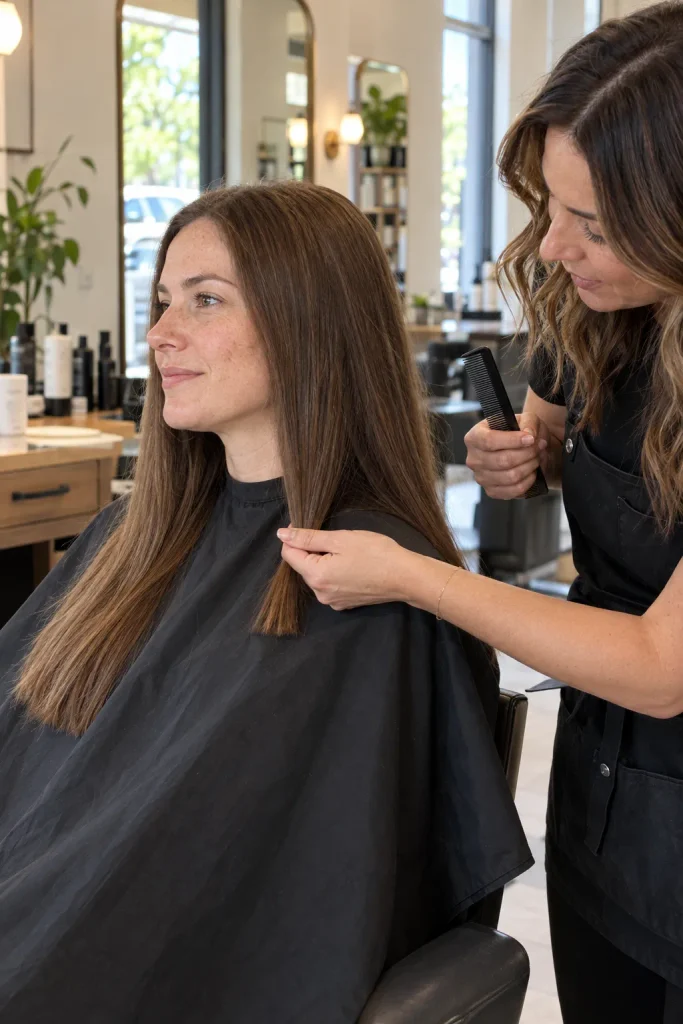
“Just take off a little.”
It’s one of the most common haircut requests, but it doesn’t communicate an exact amount.
Your idea of a little might be very different from your stylist’s.
The same problem occurs with terms such as shoulder-length, chin-length, or short layers.
Those descriptions are useful starting points, but you still need to agree on where the hair will fall.
Use Visible Landmarks
Instead of relying only on words, point to the desired length.
You might want the ends to sit:
- Just below your jaw
- At the base of your neck
- Along your collarbone
- Slightly below your shoulders
- At the middle of your back
Ask your stylist to show you the proposed length before cutting.
If you’re comfortable using measurements, you can agree on an approximate amount to remove, but remember that curl shrinkage and the shape of the cut affect the finished appearance.
Agree on the Shortest Piece
This is especially important for layered haircuts.
You might be comfortable keeping your overall length but dislike having short layers near your cheekbones.
Ask where the shortest layer will fall.
If you’re getting bangs, establish the shortest acceptable fringe length.
For curly or coily hair, discuss the dry result rather than judging the length only while it’s stretched or wet.
Set a Clear Length Boundary
A useful way to explain your preference is:
“I’m happy to remove some length, but I don’t want the finished haircut to sit above my shoulders when dry.”
This gives your stylist a boundary.
If the desired shape requires cutting beyond that point, you can discuss the trade-off before making a decision.
Tell Your Stylist How Your Hair Behaves at Home
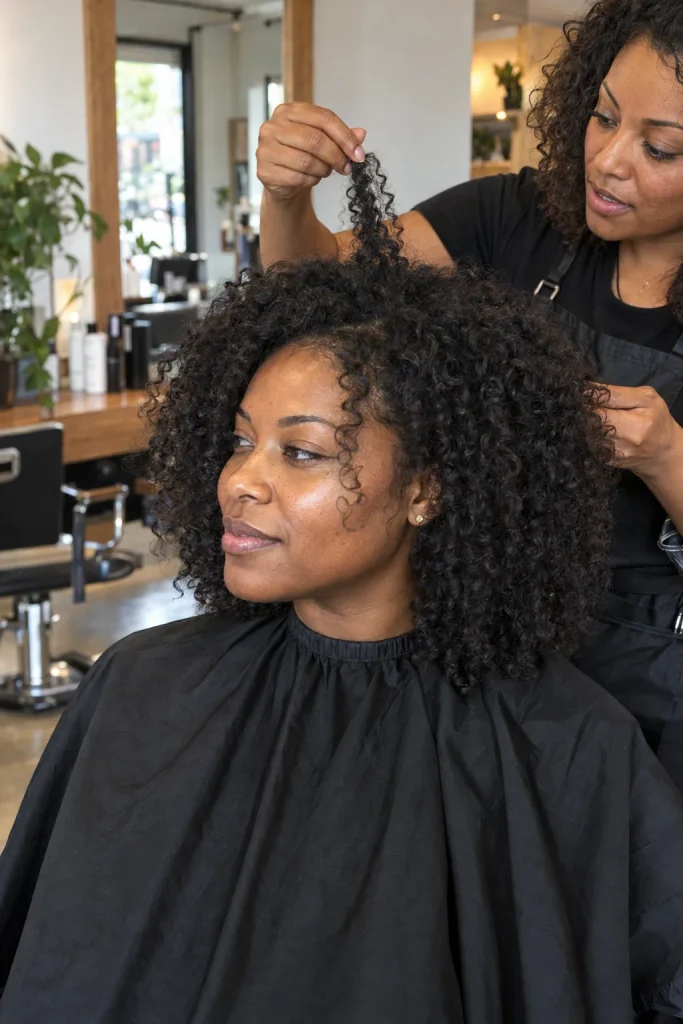
A haircut isn’t just about how your hair looks while you’re sitting in the salon chair.
Your natural texture, density, growth patterns, and styling habits influence how it will behave afterward.
Two women with similar shoulder-length hair may need very different cutting techniques.
One might have fine, straight strands that sit close to the scalp. The other might have dense waves that become much shorter-looking as they dry.
Their desired haircut could require different layers, weight distribution, or overall length.
Explain Your Natural Texture
Tell your stylist whether you usually wear your hair straight, wavy, curly, or coily.
Mention if you regularly straighten your curls or create waves using heat.
If your hair has multiple curl patterns, explain which sections behave differently.
Point Out Difficult Areas
Some common examples include:
- A cowlick around the fringe
- Hair that flips outward at the shoulders
- A crown that naturally sits flat
- Shorter or less dense sections around the temples
- Curls that shrink considerably when dry
- A nape that grows in an unusual direction
These details can affect the finished haircut.
Discuss Density and Hair Condition
If your hair is fine or relatively low-density, you may want to preserve fullness through the ends.
If your hair is very dense, you might prefer a shape that controls where volume sits.
Tell your stylist if your hair breaks easily or has been chemically treated.
Previous coloring, bleaching, relaxing, perming, or straightening treatments can affect hair condition and the services that are appropriate.
Don’t Hide Your Real Styling Habits
If you rarely blow-dry your hair, say so.
If you usually wear it in a ponytail, explain that you need enough length to continue doing so.
And if you won’t spend twenty minutes styling every morning, don’t choose a haircut that depends on that routine without understanding the commitment.
Make Sure You Understand the Difference Between the Cut and the Styling
This detail causes more confusion than many people realize.
A reference photograph shows a finished hairstyle, not necessarily how the underlying haircut looks naturally.
The model may have a blowout, temporary curls, extensions, or products that create additional volume.
Your stylist might reproduce the cut accurately while the finished appearance differs from the photograph when you style it yourself.
Ask What the Haircut Will Look Like Air-Dried
This is particularly useful if you prefer low-maintenance hairstyles.
A sleek bob might require regular blow-drying if your hair naturally waves.
A layered haircut might create beautiful movement on natural curls but require styling products to achieve the same finish shown in a reference.
Ask your stylist which features come from the cut and which depend on styling.
Discuss the Tools You’ll Need
If the desired look requires a round brush, dryer, curling iron, or multiple products, you should know that before agreeing to it.
You don’t necessarily have to reject the haircut.
You may simply prefer a version that better suits your routine.
Ask About Growing It Out
A sharply structured pixie may grow out differently from a softly layered bob.
A short fringe may need frequent attention as it grows.
A consultation should include what happens after the first few weeks, not just how the haircut looks on appointment day.
Seven Questions That Can Prevent a Disappointing Haircut
These are the questions I would prioritize during a consultation.
1. Will This Cut Work With My Natural Texture?
Your stylist should be able to explain which parts of the reference suit your hair and what might need adjusting.
2. Where Will the Shortest Piece Fall When Dry?
Ask this before agreeing to layers or bangs.
It’s particularly important when your hair has substantial curl shrinkage.
3. Will This Haircut Make My Ends Look Fuller or Lighter?
If you have fine or lower-density hair, discuss whether the proposed layers will preserve the appearance of fullness.
If you have dense hair, ask where the stylist plans to remove or redistribute weight.
4. How Will This Look Without Professional Styling?
Ask whether the haircut can be worn air-dried or whether it needs a blowout to achieve the desired shape.
5. How Often Will I Need to Maintain It?
Some cuts need frequent reshaping, while others grow out more gradually.
The answer depends on the haircut and your preferences.
6. What Would You Change About My Reference Photo?
This is an important question.
A skilled stylist may recommend adjusting the layers, length, fringe, or perimeter to suit your hair.
Understanding those changes before the haircut helps prevent surprises.
7. Can You Show Me the Length Before Cutting?
Make sure you’re comfortable with the final plan.
If you’re uncertain about a dramatic length change, discuss starting longer and reassessing before removing more hair.
A Haircut Consultation Example: How to Explain Exactly What You Want
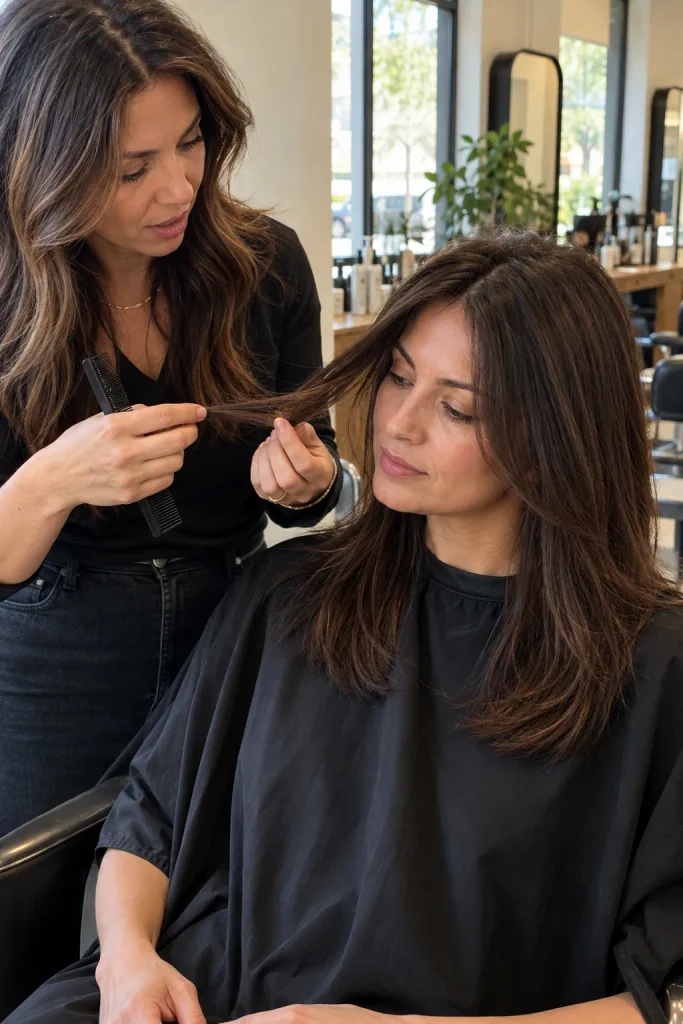
Imagine you’re visiting a salon for a shoulder-length layered haircut.
You’ve saved several inspiration photographs, but you’re concerned that the layers might be too short.
Instead of simply requesting “soft layers,” explain the full picture.
A vague request
“I want something like this, with layers and more movement.”
The stylist knows you’re interested in layers, but important details remain unclear.
How short should the layers be?
Do you want to keep the overall length?
Are you comfortable with daily blow-drying?
A clearer request
“I’d like to keep my hair around collarbone length when dry. I want soft movement through the lower half, but I don’t want short layers near my crown. My hair is naturally wavy, and I usually air-dry it. Could you suggest a shape that works with that routine?”
This request gives the stylist useful information about the desired length, layering, texture, and maintenance.
It also leaves room for professional advice.
What the stylist might explain
The stylist may suggest adjusting the placement of the layers so they support your wave pattern.
They may recommend a slightly different length or explain how the haircut will grow out.
You can then decide whether those adjustments work for you.
The consultation becomes a shared decision rather than a guessing game.
What to Do if You Feel Uncertain During the Appointment
You don’t have to agree to a haircut simply because you’ve booked the appointment.
If the proposed length feels too short, say so.
If the stylist recommends a technique you don’t understand, ask for an explanation.
And if you feel uncomfortable about a major change, it’s reasonable to choose a smaller adjustment.
When Your Stylist Recommends Something Different
A professional recommendation can be valuable.
Perhaps your reference haircut would require considerable styling on your natural texture.
Maybe the layers you requested would leave the ends looking sparse.
Ask why the stylist recommends a change.
Then decide whether the explanation matches your priorities.
A recommendation should help you understand your options, not pressure you into a haircut you don’t want.
If the Stylist Has Already Started Cutting
If you become concerned about the length or shape, speak up as soon as possible.
You can say:
“Could we check the length before continuing? I’m worried we’re going shorter than I wanted.”
It’s easier to address a misunderstanding early than after the entire haircut is finished.
When It Makes Sense to Postpone
Consider postponing a major transformation if:
- You and your stylist cannot agree on the finished length.
- The proposed result still feels unclear.
- The service involves unfamiliar chemical treatments that need further assessment.
- You feel pressured to accept a change you’re uncomfortable with.
- There isn’t enough appointment time for the consultation and service you need.
It’s reasonable to book another appointment after you’ve had time to think.
Your Haircut Consultation Worksheet
This is a practical checklist you can save before your appointment.
My Haircut Goals
- The main thing I want to change is: __________
- My preferred finished length is: __________
- The shortest length I’ll accept is: __________
- I want to keep: __________
- I definitely don’t want: __________
My Hair Characteristics
- My natural texture is: __________
- My hair density is approximately: __________
- My hair has these difficult areas or growth patterns: __________
- My relevant color or chemical treatment history is: __________
- My main hair-condition concern is: __________
My Everyday Routine
- I normally spend about ___ minutes styling my hair.
- I usually air-dry / blow-dry / heat-style my hair.
- I need / don’t need to tie my hair back.
- I’m comfortable returning for trims approximately every __________.
- I want to keep my routine within this budget: __________.
Before the Cut Begins
- We’ve reviewed my reference photos.
- We’ve agreed on the finished length.
- I understand where the shortest layers or bangs will fall.
- I understand how the haircut will look naturally.
- I understand the expected styling and maintenance.
- I’ve asked about anything I’m unsure of.
You don’t need to complete every box perfectly. The worksheet is meant to help you organize your priorities and prevent important details from being overlooked.
How to Check the Haircut Before Leaving the Salon
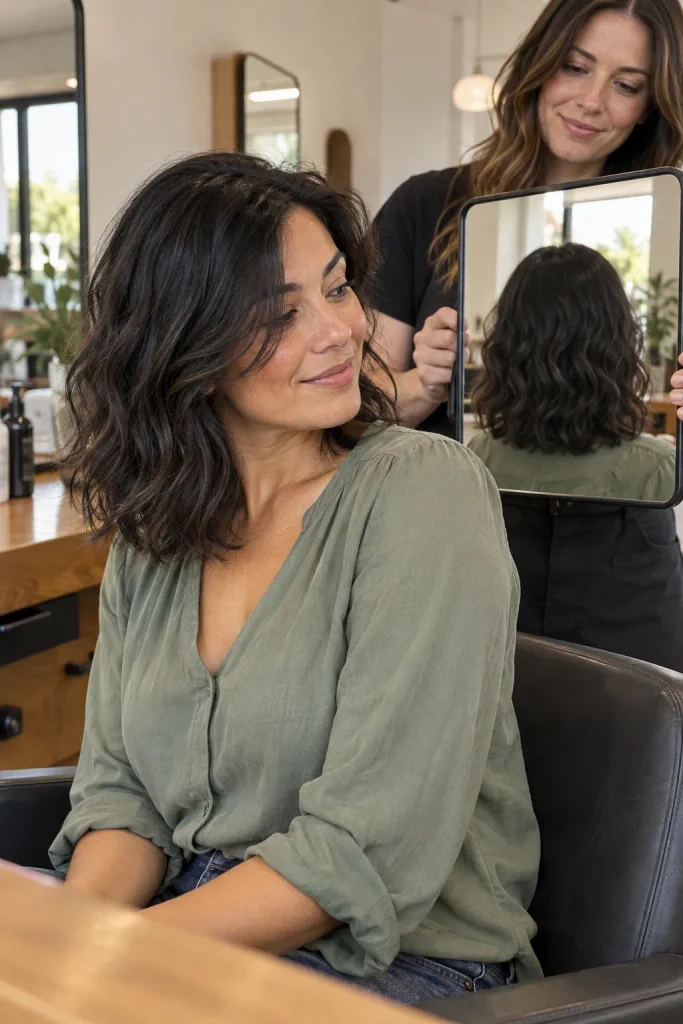
Once your stylist finishes, take a moment to look at the result from different angles.
Don’t judge it only from the front.
Ask to see the back and sides using a hand mirror.
Check whether the fringe sits where you expected and whether the overall length feels comfortable.
Look at the Cutting Shape
Does the perimeter match what you discussed?
Are the layers positioned where you expected?
Does the cut feel balanced?
If something seems different from the plan, ask your stylist to explain it.
Ask for a Simple Home-Styling Demonstration
This is especially useful when you’ve made a major change.
Ask your stylist to demonstrate one or two techniques you can realistically repeat.
For example, you might want to know how to arrange your fringe, lift the crown, or preserve your natural waves.
Try to understand which products are essential and which are optional.
Find Out What to Do if You Need an Adjustment
Some haircut details may become more noticeable after your first wash.
Ask about the salon’s adjustment policy before leaving.
Policies differ between salons, so don’t assume that adjustments will always be free or available indefinitely.
If you notice a problem at home, contact the salon promptly and explain what seems different from the agreed result.
What if You Regret the Haircut?
Even with careful preparation, you might dislike a new haircut.
Sometimes the issue is the technical result.
Other times, you may simply need time to adjust to seeing yourself with a different silhouette.
Try identifying the exact problem before deciding what to do next.
If the Haircut Is Technically Uneven
Contact the salon and explain the concern.
Photographs taken in good lighting may help illustrate the issue.
Avoid attempting a complicated correction yourself.
If the Haircut Is Shorter Than You Expected
Ask a stylist about styling options as it grows.
Accessories, part changes, and different finishing techniques may help you feel more comfortable during the transition.
If You Dislike the Layers
Explain which sections feel too short, too heavy, or too disconnected.
Depending on the haircut, the stylist may be able to refine the shape, but some corrections require time for the hair to grow.
If the Style Only Works With Heat
Ask whether the cut can be adapted or styled differently to work with your natural texture.
Avoid relying on excessive daily heat if it’s causing damage.
The American Academy of Dermatology recommends limiting heat exposure, reducing rough handling, and avoiding repeated tension that can damage hair.
Special Considerations for Curly, Coily and Thinning Hair
Certain hair characteristics deserve additional attention during a consultation.
Curly and Coily Hair
Curl shrinkage can make the finished dry length look considerably shorter than the wet length.
Ask how your stylist accounts for this.
You may also want to discuss whether the haircut will be evaluated in its natural, dry shape.
A stylist experienced with your texture can help choose a suitable approach.
Fine or Low-Density Hair
If your ends already appear sparse, discuss how layering or texturizing could affect their fullness.
Ask whether a stronger perimeter would better match the appearance you want.
Fragile or Chemically Treated Hair
Tell the stylist about previous bleaching, relaxing, coloring, or other chemical services.
Hair condition may affect the recommended approach.
Some services require additional assessment or testing.
Noticeable Hair Loss
A stylist can help you find an appearance you’re comfortable with, but they cannot necessarily diagnose why your hair is thinning.
If you’re experiencing sudden shedding, new bald patches, scalp inflammation, or progressive thinning, consult a dermatologist.
Frequently Asked Questions
How Do I Prepare for a Haircut Consultation?
Choose a few reference photographs, identify the length you want, and think about your natural texture and daily styling routine. Bring clear preferences and questions rather than relying on vague requests.
What Should I Bring to a Haircut Appointment?
Bring reference photographs, notes about your preferred length and style, and information about relevant hair treatments. If you’re planning a major change, it may help to bring an example of a haircut you don’t want.
Should I Wash My Hair Before a Consultation?
Follow the salon’s instructions. In many cases, arriving with reasonably clean hair worn close to its usual texture allows the stylist to assess how it naturally falls.
What Should I Tell My Stylist Before Getting Layers?
Explain where you want the shortest layers to begin, how much overall length you want to preserve, and whether you prefer a full-looking perimeter or a more textured finish.
How Do I Explain a Haircut Without Knowing Salon Terms?
Use plain language and photographs. Describe the length, shape, volume, fringe, and maintenance you want. Ask your stylist to explain any technical terms you don’t understand.
Can I Change My Mind During a Haircut Consultation?
Yes. You can change your mind before the service begins. If you’re uncertain about a major cut, discuss a more gradual change or postpone the appointment.
What Should I Do if My Stylist Recommends a Different Haircut?
Ask why. The recommendation may relate to your texture, density, growth patterns, or maintenance preferences. Consider the explanation and decide whether the alternative meets your needs.
Can a Haircut Consultation Prevent Every Bad Haircut?
No. Even a careful consultation can’t guarantee a perfect result. However, agreeing on length, shape, styling expectations, and maintenance can reduce avoidable misunderstandings.
Leave the Salon Knowing What You’re Getting
A haircut consultation isn’t about proving that you understand professional styling techniques.
It’s about making sure your hairstylist understands you.
A few useful reference photographs, clearly defined length boundaries, and an honest explanation of your routine can make the conversation much more productive.
Take your time discussing major changes.
Ask where the shortest pieces will fall, what the haircut will look like without a professional blowout, and how it will behave as it grows.
Most importantly, don’t agree to a change you haven’t understood.
The best salon experience starts with a shared plan. When you know what you’re asking for and understand what your stylist recommends, you’re in a much better position to leave with a haircut you enjoy wearing.
Editorial note: This article offers general guidance for salon consultations. Cutting techniques, appointment policies, and expected outcomes vary by salon, hairstylist, and individual hair characteristics.

Gayathri Arun is the founder and editor of GlowNStylish, where she shares hairstyle inspiration, practical hair care guides, outfit ideas, and nail trends. Passionate about making style advice useful and approachable, she focuses on the little details that matter—from hair texture and face-framing layers to styling techniques and everyday maintenance. Her goal is to help women look beyond inspiration photos, understand their options, and confidently choose styles that suit their hair, lifestyle, and personal preferences.