The Best Haircut Length for Fine Hair: Short, Medium or Long?
A short bob can make fine hair look beautifully full, but that doesn’t mean cutting your hair above your shoulders is always the best decision. Some women find that a pixie gives their hair the lift they’ve been missing. Others get a more flattering result from a collarbone-length cut, while plenty can wear long, fine hair without sacrificing their personal style.
The real question isn’t how short fine hair should be. It’s how much length your particular hair can carry while keeping the shape, movement, and fullness you want.
Hair density, natural texture, the condition of your ends, and your everyday styling habits all affect the answer. A blunt haircut that looks gorgeous on straight, fine hair may behave very differently on fine curls or waves.
Before taking several inches off at your next appointment, consider what each length actually offers.
Does Fine Hair Really Look Better Short?
Not necessarily. Short hair can make fine strands appear fuller, but long hair can look equally attractive when the cut suits your density and texture.
Fine hair refers to the diameter of the individual strands. It doesn’t automatically mean you have a small amount of hair.
Someone with fine strands and high density may have enough overall fullness to wear a long layered haircut. Someone with fine strands and lower density might prefer a shorter cut that preserves a stronger-looking outline.
The reason shorter cuts are often recommended is visual rather than biological. A blunt perimeter can make ends appear more substantial, while shorter lengths sometimes make root styling easier.
Cutting your hair won’t change the thickness of individual strands or increase the number of hair follicles.
What it can change is the silhouette.
And that distinction is important when you’re choosing a haircut you actually want to live with.
Short, Medium or Long: How the Three Lengths Compare
Every hair length involves a trade-off. A shorter cut may require frequent salon visits, while longer hair may need more time for drying, detangling, and maintaining the condition of its ends.
| What matters to you | Short Hair | Medium Hair | Long Hair |
|---|---|---|---|
| Visual fullness at the ends | Can look compact and defined | Can maintain a full perimeter | Depends heavily on density and end condition |
| Root volume | Often easier to shape | Usually manageable | May take more styling effort |
| Styling versatility | Limited by available length | Good balance of options | More options for braids and updos |
| Salon maintenance | Often needs frequent reshaping | Moderate | May need less frequent shape maintenance |
| Blow-drying time | Generally shorter | Moderate | Generally longer |
| Best reason to choose it | Defined shape or shorter styling sessions | Balance of movement and length | Love of long hairstyles and versatile styling |
These are general styling considerations, not guarantees. A short, textured pixie may take more daily effort than a longer wash-and-go hairstyle, depending on your natural texture.
The Case for Short Hair: When Shape Matters More Than Length
A woman with fine hair might spend years keeping it long because she assumes short hair will expose every flat spot.
Yet a well-planned short haircut can create a shape that’s difficult to achieve with longer, heavier sections.
The key is choosing the right kind of short haircut.
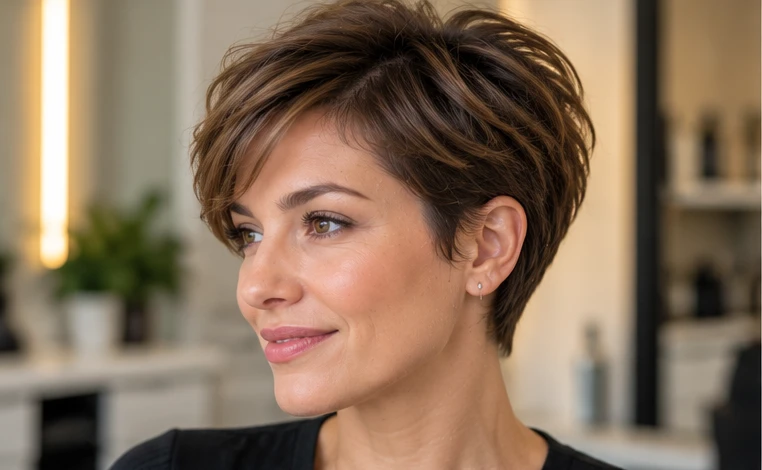
The textured pixie: Best when you want definition around the crown
A pixie cut places the focus on the crown, fringe, and shape around your face.
Because the hair is shorter, it’s often easier to arrange sections into a softly lifted silhouette without working through long lengths.
For fine hair, a pixie with carefully controlled texture can look airy rather than excessively piecey.
Ask your stylist to keep enough hair through the top for movement. If you prefer softer styling, consider a longer fringe instead of a very cropped front.
What you might love: Less hair to wash and dry, an expressive shape, and easy access to the roots for styling.
What you might not love: Frequent trims to maintain the outline and fewer options for tying your hair back.
A pixie also isn’t automatically a low-maintenance haircut. Some designs need daily styling to preserve their shape.
Browse these short pixie haircuts for fine hair for different lengths and finishes.
The blunt bob: Best when your ends look wispy
Imagine two haircuts with approximately the same amount of hair.
One has numerous layers ending at different lengths. The other has a relatively straight cutting line around the bottom.
The second can sometimes appear denser because more strands contribute to the visible perimeter.
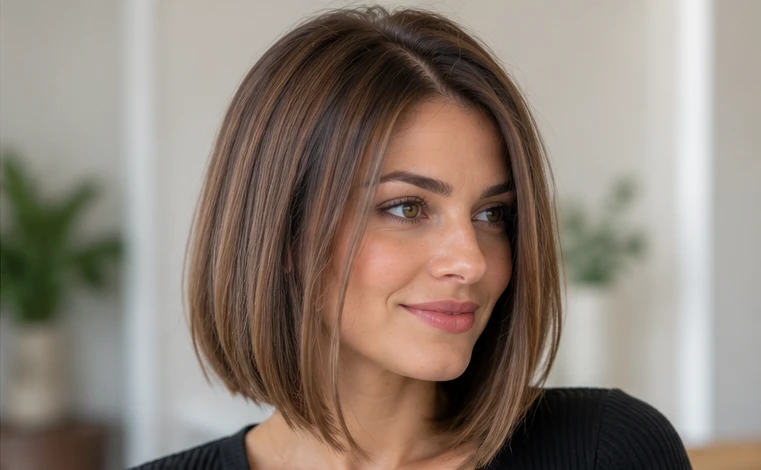
That’s what makes the blunt bob worth considering for fine hair.
A chin-length or jaw-length bob creates a clear outline, especially on straight and slightly wavy textures.
You don’t have to wear it perfectly sleek. Soft bends, a side part, or subtle face-framing details can make it feel less severe.
Ask your stylist: “Can we keep the bottom looking full and avoid removing too much weight from my ends?”
For inspiration, explore these chin-length bob ideas for fine hair.
When I wouldn’t rush into a short cut
Short hair is worth reconsidering if you regularly depend on ponytails, don’t want frequent salon visits, or prefer a style that needs almost no morning attention.
It’s also worth considering how your natural waves or curls will spring up when some length is removed.
If you’re unsure, a longer bob can be a sensible intermediate step.
Medium-Length Hair: The Compromise That Doesn’t Have to Feel Like One
A medium-length haircut is often overlooked because it doesn’t seem as dramatic as a pixie or as romantic as long layers.
But for many people with fine hair, shoulder and collarbone lengths offer an appealing balance.
There’s enough hair to create movement, enough length for some updos, and often less total length to manage than with very long hair.
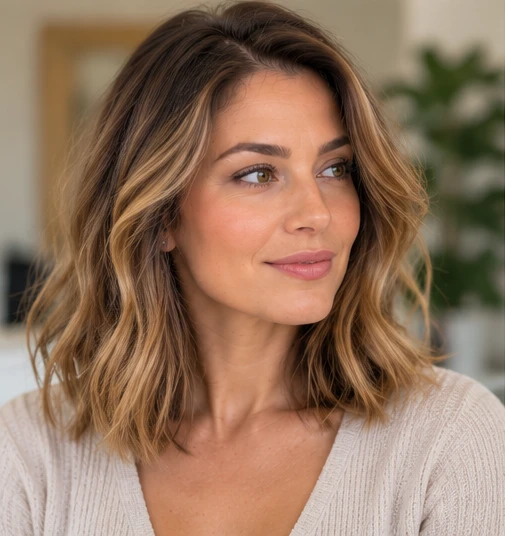
Why the collarbone-length lob deserves consideration
A lob, or long bob, usually falls somewhere around the shoulders or collarbone.
Its biggest advantage is flexibility.
You can wear it straight with a defined cutting line, add soft waves, tuck one side behind your ear, or pull some of it back.
For fine hair, the most important detail may be the bottom edge.
If the ends are already sparse, a heavily layered lob can sometimes exaggerate that appearance. A cleaner perimeter with limited internal layering may preserve more visible fullness.
On naturally wavy hair, however, thoughtful layers can help create movement and prevent an overly bulky shape.
The same haircut shouldn’t be applied identically to every texture.
The shoulder test
Before choosing a medium-length cut, think about how your hair behaves where it meets your shoulders.
Does it naturally flip outward?
Does it form a soft bend?
Does it become difficult to arrange because it sits directly against your clothing?
Some people love this movement. Others prefer a cut that falls just above or slightly below the shoulders.
That small length difference can influence how your hairstyle sits throughout the day.
Who might enjoy medium-length hair most?
Consider a lob if you want to:
- Keep some length around your face.
- Wear your hair both up and down.
- Experiment with soft waves.
- Preserve a fuller-looking bottom edge.
- Transition gradually from long hair to a shorter haircut.
Our long bob hairstyles for thin fine hair offer several ideas to discuss with your hairstylist.
What About Long Fine Hair? You Don’t Have to Give It Up
Advice about fine hair often makes long hairstyles sound like a mistake.
They aren’t.
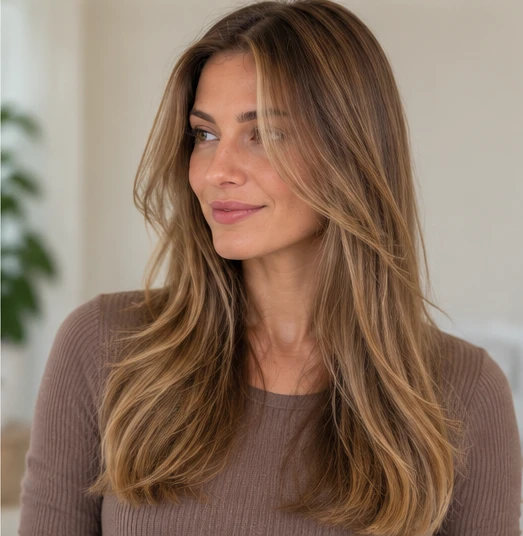
Fine hair can look lovely when worn long, particularly when the density, texture, and condition of the ends support the style.
The challenge is maintaining a shape that doesn’t look overly sparse toward the bottom.
Long hair with minimal layers
If you prefer sleek hair, a simple long haircut with a relatively even perimeter may work well.
This approach avoids removing large amounts of hair from the lower lengths.
Rather than asking for numerous short layers, consider subtle face-framing sections or a soft U-shaped outline.
These details can create movement while allowing you to preserve much of your length.
Long fine hair with waves
Fine hair with natural waves may benefit from a different approach.
A carefully placed layer can support movement or help redistribute bulk, while the natural wave pattern creates visual texture.
The goal should be to work with the way your hair falls rather than trying to copy a heavily layered haircut designed for dense, coarse hair.
When long hair becomes harder to manage
It’s worth reassessing the cut when:
- The ends look noticeably sparse compared with the upper lengths.
- Detangling takes increasingly long.
- The bottom of your hairstyle has lost its shape.
- Your preferred styling routine takes more time than you want to spend.
- You’re keeping the length mainly because you’re afraid of cutting it.
These are reasons to reconsider your shape, not proof that long hair is unsuitable.
Sometimes removing a small amount of damaged or wispy length is more satisfying than committing to a dramatic haircut.
Your Hair Texture Changes the Answer
Fine hair isn’t always straight.
It can be wavy, curly, or tightly coiled, and that affects how much length is visible when dry.
Fine, straight hair
A clean perimeter can create the appearance of more substantial ends.
Blunt bobs, lightly layered lobs, and long styles with minimal layering are all worth considering.
Fine, wavy hair
Natural waves create bends and separation that can contribute to visual volume.
A medium-length haircut with carefully placed layers may encourage movement without requiring daily heat styling.
You can explore our hairstyles for fine wavy hair for additional options.
Fine, curly hair
Curl pattern, shrinkage, and density matter enormously.
A short haircut can become much shorter-looking after drying, while a medium cut may create a rounded or more elongated silhouette depending on the layering.
Find a stylist familiar with your curl type and ask to discuss the finished dry length rather than relying only on measurements made when wet.
See our hairstyles for fine curly hair for ideas.
How to Choose Your Length Without Regretting It
Instead of asking which haircut is generally best for fine hair, answer these four questions.
1. What bothers you most about your current haircut?
If your main concern is flat roots, consider how the cut distributes weight around the crown.
If your ends look sparse, a stronger perimeter may be more relevant.
If the hairstyle feels shapeless, you might need more thoughtful layering rather than a dramatic change in length.
2. How often do you actually style your hair?
Don’t base the decision on your most motivated morning.
Think about a typical workday or weekend.
If you rarely use styling tools, choose a shape that works reasonably well with your natural texture.
If you enjoy blowouts and styling products, you may be comfortable maintaining a haircut that needs more daily attention.
3. How much length are you comfortable losing?
A haircut can be technically flattering and still feel wrong if you’re uncomfortable wearing it.
If you’re uncertain, begin with a smaller change.
You can move from long hair to a collarbone-length lob before deciding whether you want a jaw-length bob.
There’s no need to make the most dramatic choice immediately.
4. What will the haircut look like six weeks later?
Consider how quickly your shape may grow out.
A highly structured pixie may need reshaping sooner than a longer, softer haircut.
A blunt bob may eventually begin touching your shoulders and behaving differently.
Choose a cut you can maintain, not just one that looks great in the salon chair.
Which Length Fits Your Priorities?
Use this table as a conversation starter rather than a rulebook.
| Your main priority | A length worth exploring | What to request |
|---|---|---|
| A defined shape around the crown | Pixie or short crop | Controlled texture with enough length on top |
| Fuller-looking ends | Blunt bob | A clean, substantial perimeter |
| Some length with easy movement | Collarbone-length lob | Minimal or carefully placed layers |
| Naturally wavy movement | Medium cut | Layers adapted to your wave pattern |
| Keeping long hair | Long, gently shaped cut | Healthy-looking ends and restrained layering |
| Reducing a dramatic length change | Shoulder-length transition | A gradual cut preserving styling flexibility |
There’s no universally correct outcome here.
A woman with fine, dense curls might prefer long layers, while someone with fine, low-density straight hair may find a blunt bob more flattering.
Both decisions can make sense.
Take These Questions to Your Next Haircut Appointment
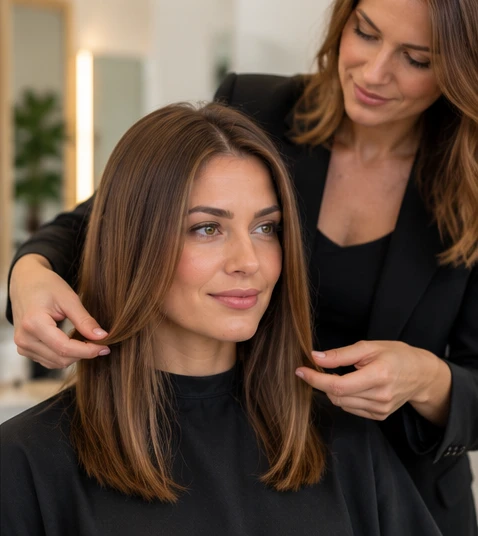
A useful salon consultation should cover more than the length you want to remove.
Bring two or three reference photographs showing the overall shape you like.
Try to select examples with hair textures reasonably similar to yours.
Then discuss:
“How much density do I have through my ends?”
This helps your stylist determine whether a heavily layered cut might leave the bottom looking sparse.
“Would a blunt or softly layered perimeter work better?”
The answer should consider your natural texture and the way your hair falls.
“How will this haircut behave when I air-dry it?”
A beautiful salon blowout doesn’t necessarily show what the style will look like on an ordinary morning.
“What styling would I need to maintain this shape?”
Ask for realistic guidance about tools, products, and effort.
“How will the haircut grow out?”
This is particularly important if you’re considering a pixie or a sharply shaped bob.
A salon request you can use
“I have fine hair and want to keep as much visible fullness through the ends as possible. I’m considering a [preferred length], but I’d like your advice on how much layering my hair can handle. I also want something that works with my natural texture and doesn’t require extensive daily heat styling.”
This gives your stylist useful priorities while leaving room for professional judgment.
A Practical Note About Fine Hair and Hair Damage
Regardless of the length you choose, gentle handling matters.
The American Academy of Dermatology recommends choosing hair-care products appropriate for your hair type, conditioning after washing, handling damp hair carefully, and limiting excessive heat.
For straight, fine hair, applying conditioner mainly to the ends may help avoid weighing down the roots while keeping the lengths manageable.
Frequent aggressive brushing, hot tools, and tight hairstyles can increase damage or breakage.
If you’re experiencing new or progressive hair thinning, remember that changing the haircut can improve its appearance but won’t identify or treat the underlying cause.
A dermatologist can help assess concerning changes in hair density.
Before You Decide: Imagine an Ordinary Morning
Picture your hair six weeks after your appointment.
You’re getting ready for the day, you have limited time, and you want your hairstyle to look reasonably good without a complicated routine.
Would you enjoy arranging a textured pixie?
Would you prefer brushing a sleek bob into place?
Would a collarbone-length lob give you the styling freedom you want?
Or would you feel most comfortable keeping your long hair and simply refining the shape?
That’s usually a more useful way to choose a haircut than following a rule about how short fine hair should be.
Short hair can create a defined silhouette. Medium hair offers flexibility. Long hair preserves styling options. The right choice is the one that works with your natural texture, the condition of your hair, and your everyday life.
Fine hair doesn’t need one prescribed length. It needs a haircut designed around the person wearing it.
Editorial note: This article offers general haircut and styling guidance. The haircut comparisons are editorial recommendations rather than scientifically established rules. The accompanying generated images are illustrations, not documented client transformations.