How to Add Volume to Fine Hair Without Teasing
Fine hair can look full and airy after a wash, then lose its shape by lunchtime. More product is not always the answer. Often, the difference comes down to where you apply your products, how you dry your roots, and how much weight sits on your hair.
The good news is that adding volume doesn’t require aggressive teasing, layers of sticky hairspray, or an expensive collection of styling products. A few small changes to your washing, conditioning, and drying routine can help your hair look fuller while keeping it soft and touchable.
This guide focuses on practical techniques for fine, straight, and loosely wavy hair that tends to fall flat. You can follow the complete wash-day routine or experiment with individual steps to discover what works for your hair.
First, Find Out Why Your Fine Hair Falls Flat
Not every volume problem has the same cause.
Fine hair refers to strands with a smaller diameter. It doesn’t necessarily mean you have less hair. Someone can have fine strands and a full head of hair, while another person may have thicker strands but lower hair density.
Understanding the difference helps you avoid buying products that don’t address your actual styling concern.
| What you notice | Possible reason | What to try |
|---|---|---|
| Roots are flat, but ends have movement | Root direction or styling technique | Lift roots while drying |
| Hair looks greasy or separated | Product buildup or scalp oil | Reduce product and cleanse as needed |
| Hair looks full initially, then collapses | Insufficient styling support | Try a lightweight mousse |
| Ends appear stringy | Heavy products or overly thinned haircut | Reduce leave-in products and consider a fuller cut |
| Crown looks flatter than the sides | Natural growth pattern or part placement | Change your part or gently lift the crown |
If your hair has always been fine, these styling adjustments may help.
However, if your part is becoming wider or your ponytail is noticeably smaller than before, you may be experiencing a change in hair density rather than a simple volume problem.
For haircut inspiration, explore these hairstyles for thin fine hair.
The 5-Step Wash-Day Routine for Fuller-Looking Hair
The foundation of good volume starts before you reach for your styling brush.
You’ll need your usual shampoo and conditioner, a soft towel or cotton T-shirt, and optionally a lightweight mousse, heat protectant, and hair dryer with a nozzle.
Step 1: Clean Your Scalp Without Overwashing Your Lengths
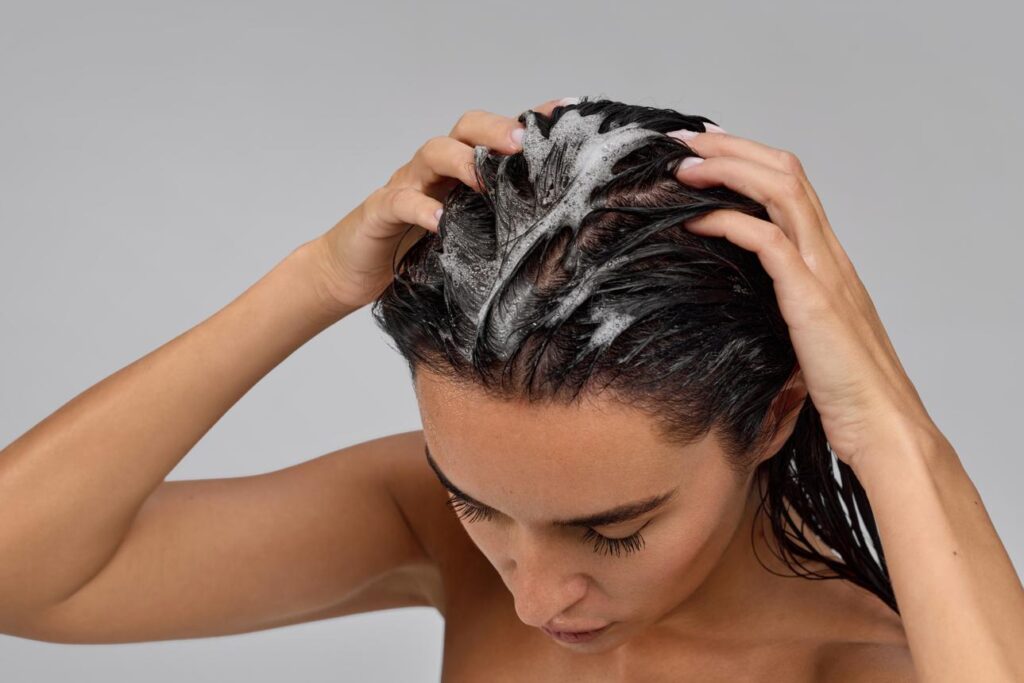
Fine hair can lose volume when scalp oil and product residue accumulate around the roots.
When shampooing, concentrate on the scalp rather than vigorously scrubbing the entire length of your hair.
Wet your hair thoroughly, apply shampoo to the scalp, and massage gently with your fingertips. Allow the lather to rinse through the lengths rather than rubbing the strands together.
How frequently you should wash depends on your scalp’s oil production and hair texture. Some people with straight, fine hair prefer frequent washing, while those with drier or curlier hair may need a different schedule.
Styling tip: If your roots feel greasy but your ends are dry, focus shampoo on the scalp and keep conditioning products primarily where your lengths need moisture.
Image alt text: Woman gently massaging shampoo into her scalp while washing fine brown hair.
Step 2: Condition Without Weighing Down the Roots

Skipping conditioner entirely might seem like a shortcut to fuller hair, but it can lead to tangles, dryness, and unnecessary breakage.
The key is finding the right amount and placement for your hair.
If your hair is straight and easily weighed down, start by applying conditioner to the mid-lengths and ends. Rinse thoroughly, then gently squeeze away excess water.
For fine hair that’s curly, bleached, damaged, or particularly dry, more conditioning may be appropriate.
After washing, use a soft towel or cotton T-shirt to absorb water without aggressively rubbing the hair.
This gentler approach helps minimize friction while preparing your hair for styling.
Try this: On your next wash day, use your usual conditioner but adjust where you apply it. Notice whether your roots feel lighter once your hair is dry.
Image alt text: Woman gently drying fine, shoulder-length brown hair using a soft towel.
Step 3: Use One Lightweight Volumizing Product
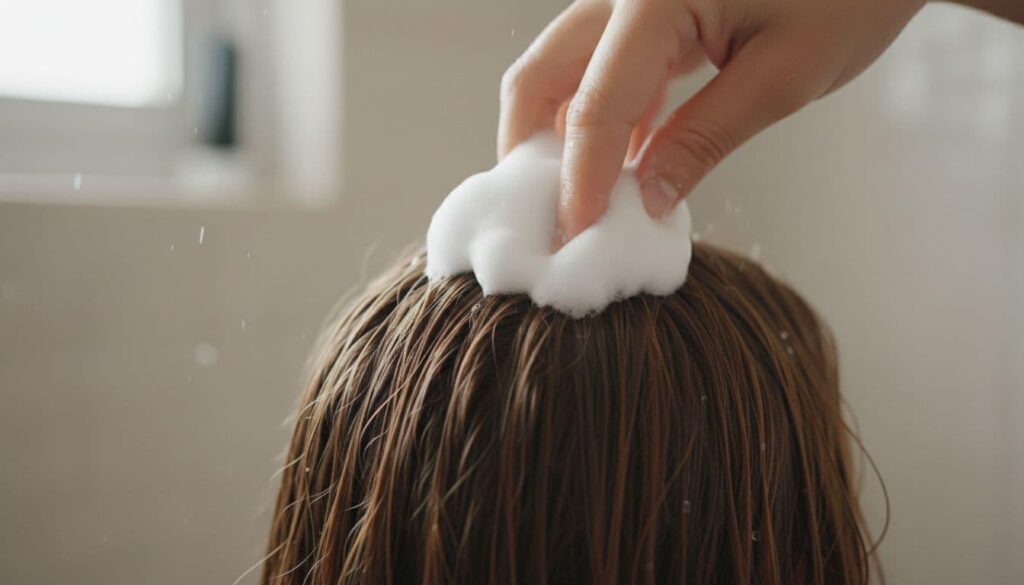
More styling product doesn’t automatically create more volume.
For fine hair, layering mousse, leave-in cream, oil, and hairspray can sometimes produce the opposite result.
Begin with one lightweight product designed to provide styling support.
A volumizing mousse or root-lifting spray can help your hair maintain a fuller-looking shape. Follow the manufacturer’s directions and start with a modest amount.
Apply it to the areas where you want lift, particularly around the crown and upper sections.
If you need a leave-in conditioner, concentrate on the areas that need moisture rather than automatically applying it across your entire scalp.
A useful rule: Introduce one styling product at a time. This makes it easier to identify what improves your hairstyle and what leaves it looking flat.
Image alt text: Woman applying lightweight volumizing mousse to the roots of damp brown hair.
Step 4: Change the Direction of Your Roots While Blow-Drying
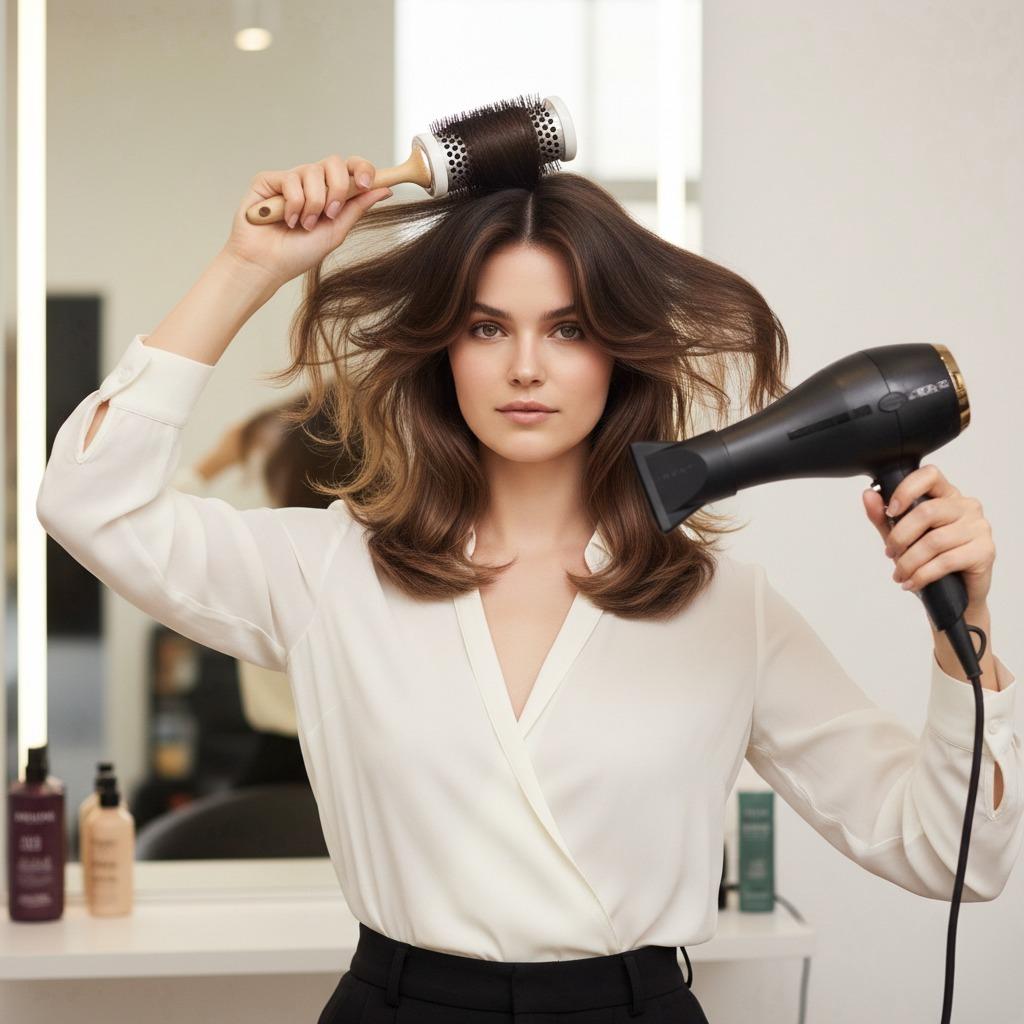
This is one of the most useful styling techniques for fine hair that tends to sit close to the scalp.
Instead of directing every section downward while drying, gently lift sections away from the scalp.
Start with partially air-dried hair, then work through small sections around the crown and sides.
Using your fingers or a round brush, lift each section upward while directing airflow toward the roots.
Keep the dryer moving and use low or medium heat rather than concentrating high heat in one place. Apply a suitable heat protectant when heat styling.
Once a section is dry, allow it to cool before releasing it. A cool-air setting can help the hair settle into its styled position.
Avoid strong pulling or excessive brush tension, particularly if your hair is fragile or breaks easily.
You don’t need an elaborate salon blowout. Even a little controlled root lift can change the overall shape of a fine-haired style.
No round brush? Use your fingers to gently lift sections as you dry. The essential technique is changing the direction of the roots, not buying another tool.
Image alt text: Woman using a round brush and hair dryer to create lift at the roots of her fine bob haircut.
Step 5: Finish Without Flattening Your Work
Once you’ve created volume, resist the temptation to keep touching and brushing your hair.
Repeated brushing can disturb the shape you’ve just created.
Instead, use your fingertips to loosen individual sections and gently adjust the part.
If your crown needs a little more height, lift the front section briefly and release it.
Avoid heavy finishing oils near the roots if they tend to collapse your style.
A small amount of lightweight finishing product may be useful, but it isn’t always necessary.
The goal is hair that moves naturally rather than a stiff hairstyle held in place by excessive product.
Image alt text: Finished shoulder-length brunette bob with natural movement and softly lifted roots.
Three Ways to Refresh Flat Hair Without Washing It Again
Not every day needs to be a full styling day. These simple adjustments can help restore some movement between washes.
Change Your Part
Hair that has rested in the same direction for hours may temporarily sit higher when you move your part slightly.
Try shifting it a little to the left or right rather than creating an entirely new hairstyle.
This works particularly well with bobs, lobs, and short layered haircuts.
Refresh Oily Roots Carefully
A small amount of dry shampoo may help absorb excess oil and add temporary texture.
Apply it according to the product instructions and remove any visible excess.
Dry shampoo doesn’t replace cleansing the scalp, so avoid using it indefinitely between washes.
Try a Loose Crown Clip
Gently gather a small section around the crown and clip it upward while you’re getting ready.
After a short period, release the section and use your fingers to arrange the hair.
Avoid pulling tightly or using clips that cause discomfort.
This trick provides temporary shape rather than permanent volume, but it can be useful when you don’t have time to restyle everything.
A 7-Day Fine Hair Volume Experiment
Buying several new products at once makes it difficult to figure out what actually works.
Instead, experiment with one change at a time over a week. You don’t need to wash your hair every day for this test.
Take a photograph immediately after styling and another a few hours later. Keep the lighting and camera angle similar.
| Styling session | Change to test | What to observe |
|---|---|---|
| First | Use your usual products and routine | How quickly does your volume disappear? |
| Second | Adjust conditioner placement | Do your roots feel lighter? |
| Third | Introduce one lightweight root product | Is there more lift or unwanted buildup? |
| Fourth | Change the direction of your roots while drying | Does your crown hold its shape longer? |
On the remaining days, observe how your hair behaves between washes.
Does changing your part help? Do your roots need cleansing? Does your hairstyle still have shape the following morning?
By the end of the week, you should have a better understanding of which techniques suit your hair.
This is a personal styling experiment, not a scientific test, and you should stop any step that causes irritation or excessive dryness.
When Your Haircut Is Working Against Your Volume
Sometimes the issue isn’t your styling routine. It’s the shape of your haircut.
Long, fine hair may appear flatter because of how its weight and natural growth pattern affect the style. Extremely layered hair can also look sparse at the ends if too much bulk is removed.
A different haircut won’t change your strand diameter, but it can change how full your hair appears.
A Blunt Bob for Fuller-Looking Ends
A bob with a strong perimeter can make fine ends look more substantial.
The even cutting line creates a defined shape that can look polished without excessive styling.
See these short bob hairstyles for thin fine hair for inspiration.
A Textured Pixie for Short, Lifted Styles
Shorter hair can be easier to shape around the crown because there’s less length to manage.
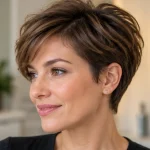
A pixie with a textured top may create an airy appearance without requiring a heavy finishing product.
Browse these short pixie haircuts for fine hair before your next salon appointment.
A Long Bob for Those Who Want to Keep Some Length
If you’re not ready for a short haircut, a long bob can provide a balance between length and structure.
Subtle layers may add movement, while a carefully maintained perimeter can help preserve visual fullness.
Explore these long bob hairstyles for thin fine hair.
Fine Hair Volume Problems: What to Do When Nothing Seems to Work
Your roots lift beautifully, then collapse after an hour. Try using less conditioner near the roots, checking whether your scalp is oily, and allowing blow-dried sections to cool before releasing them.
Your mousse leaves your hair stiff. Reduce the amount or experiment with a different formulation. Some products provide more hold than your hairstyle needs.
Your ends look dry while your roots look greasy. Treat these as two separate concerns. Cleanse according to your scalp’s needs, while conditioning the lengths where necessary.
Your hair looks thinner after getting layers. Ask your stylist whether the haircut has removed too much weight around the perimeter. A more compact shape may make the ends appear fuller.
Your volume disappears overnight. Try adjusting your part in the morning or refreshing only the roots instead of restyling every section.
You notice increasing scalp visibility. Styling techniques may improve the appearance of fullness, but they cannot replace evaluation of potential hair loss.
A dermatologist can help assess significant changes in density, sudden shedding, bald patches, or scalp inflammation.
Common Questions About Adding Volume to Fine Hair
Can you add volume to fine hair without using heat?
Yes. Lightweight styling products, changing your part, and choosing a haircut that works with your natural texture may improve volume without heat styling. Results vary depending on your hair’s density, length, and curl pattern.
Does mousse actually make fine hair thicker?
Mousse can help hair hold a fuller-looking style, but it doesn’t permanently change strand diameter or increase the number of hair follicles.
Is dry shampoo good for fine hair?
Dry shampoo may absorb some excess oil and provide temporary texture. However, it shouldn’t replace regular scalp cleansing, and overuse may contribute to buildup.
Should you avoid conditioner if you have fine hair?
No. Conditioner helps reduce tangling and friction. The important part is choosing an appropriate formulation and adjusting the amount and placement to suit your hair.
Is it better to blow-dry fine hair upside down?
Some people find that changing their drying direction creates temporary root lift. However, it’s not necessary to dry upside down. Gently lifting sections while using controlled heat may be easier and more comfortable.
Build a Volume Routine That Works for Your Hair
Fine hair doesn’t need to be teased, overloaded with products, or exposed to excessive heat to look fuller.
A comfortable routine often starts with properly cleansed roots, appropriate conditioning, a lightweight styling product when needed, and a little attention to how your hair dries.
Experiment with one adjustment at a time rather than changing your entire routine overnight.
If your natural hair has waves or curls, work with that texture rather than forcing every section straight. And if you’ve noticed progressive thinning, seek professional advice instead of relying on cosmetic volume tricks.
The aim isn’t to make fine hair behave like a completely different hair type. It’s to help your natural hair look its best with a routine you can comfortably maintain.
Sources and Further Reading
- American Academy of Dermatology — Tips for Healthy Hair
- American Academy of Dermatology — Hair Loss: Signs and Symptoms
- American Academy of Dermatology — Hair-Care Habits That Can Damage Your Hair
Editorial note: The images are illustrative AI-generated visuals rather than photographs documenting a tested routine. This article provides general styling guidance and does not replace individualized professional or medical advice.