How to Find a Low-Maintenance Hairstyle for Your Lifestyle
A little note: Some images in this article are AI-generated to illustrate hairstyle ideas. Actual cuts, textures, colors, and styling results may differ depending on individual hair characteristics and professional techniques. Visit our Image Credits Policy for more information.
A pixie cut sounds easy until you’re back at the salon every few weeks. Long hair seems like more work, yet someone with naturally straight strands might spend less time styling it than a person trying to keep a short bob perfectly smooth.
That’s the tricky thing about low-maintenance hairstyles. The shortest haircut isn’t always the easiest, and the style that looks effortless in a photograph may require twenty minutes with a round brush.
What matters is how your hair behaves on an ordinary day.
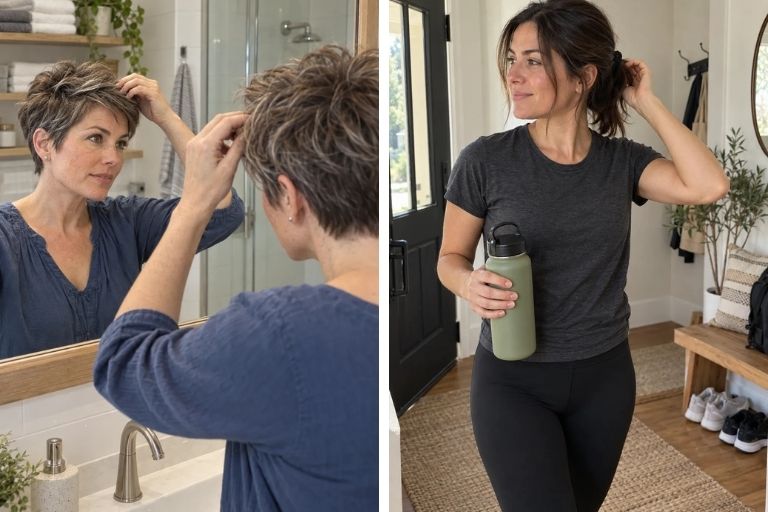
A good low-maintenance haircut should work with your natural texture, suit your daily schedule, and stay manageable as it grows. It should also fit your budget and the amount of time you’re comfortable spending on washing, detangling, drying, and styling.
You don’t have to settle for a boring haircut to make your mornings easier. The goal is to find a style that looks intentional without demanding more work than you want to give it.
First, What Does Low-Maintenance Hair Actually Mean?
Low-maintenance doesn’t mean never washing, conditioning, detangling, or visiting a salon.
It means reducing the work required to maintain the appearance you want.
There are four different kinds of maintenance to consider.
Daily Styling
How much time do you spend arranging your hair each morning?
A haircut that looks good when air-dried may require very little daily styling. Another style might need blow-drying, straightening, or curling to hold its intended shape.
This is usually the first thing people think about when they want an easier hairstyle.
Wash-Day Work
Washing and detangling can take more time than everyday styling.
Long or dense hair may require additional sectioning, while curly and coily textures may need careful detangling and conditioning.
A hairstyle isn’t necessarily low-maintenance just because it looks good for several days after washing.
You still need to consider the work involved in caring for it.
Salon Upkeep
Some short haircuts lose their intended shape relatively quickly as they grow.
A precise pixie or sharply graduated bob may need more frequent reshaping than a longer, softly layered cut.
Color treatments, fringe trims, and chemical services may also add appointments.
Product and Tool Requirements
A haircut that looks good with your existing comb and conditioner may be easier to maintain than one requiring several styling products and heated tools.
Think about the complete routine rather than the haircut alone.
Compare the Different Types of Maintenance
| Hairstyle | Daily Styling | Salon Upkeep | Main Consideration |
|---|---|---|---|
| Textured pixie | Often quick | May need frequent reshaping | Grows out noticeably |
| Blunt bob | Varies with texture | Moderate to frequent | Defined cutting line |
| Shoulder-length lob | Often flexible | Usually moderate | May bend at the shoulders |
| Long layers | Varies | Shape may grow out gradually | Washing and detangling |
| Natural curly cut | Varies with curl pattern | Depends on shape | Conditioning and definition |
| Loose twists or braids | Often less daily rearranging | Installation and removal take time | Tension and scalp care |
These are general tendencies, not fixed schedules. Hair growth, density, texture, and the precision of the cut can change the amount of work involved.
Find Your Realistic Styling-Time Budget
Before choosing a haircut, think about your last five ordinary mornings.
Not the morning you had plenty of time to get ready. Not the day you spent an hour recreating a hairstyle from Pinterest.
Think about your actual routine.
How long did you spend on your hair?
What part felt frustrating?
Did you need to use heat, or could you arrange your hair with your fingers and leave the house?
Your answers reveal what kind of hairstyle might be practical for you.
If You Have Less Than Five Minutes
Look for a cut that works with your natural hair pattern.
A textured pixie, a softly shaped bob, or naturally curly hair with an established styling routine might be suitable.
The important detail is whether the haircut requires heat or extensive manipulation to achieve your preferred finish.
A pixie that’s designed to sit naturally can be quick to style. A pixie that requires carefully arranging every section may not be.
If You Have Five to Fifteen Minutes
You have room for small styling adjustments.
A lob with a natural bend, shoulder-length waves, or a bob that needs a little root lift may fit comfortably into this routine.
You might refresh the front sections, change your part, or use a small amount of styling product.
If You Enjoy Styling but Want Less Work
You don’t necessarily need a wash-and-go haircut.
You may simply need a hairstyle that holds its shape more easily.
For example, adjusting the length of your layers could reduce the time you spend trying to create movement.
A haircut that supports your natural texture may also reduce the need for repeated heat styling.
The aim is to remove unnecessary steps, not eliminate styling altogether.
The Haircut You Choose Should Work With Your Natural Texture

Hair texture can make a bigger difference to daily maintenance than haircut length.
Imagine a woman with naturally wavy hair who chooses a sleek, jaw-length bob.
The haircut might look beautiful after a professional blowout. But if she wants that perfectly straight finish every morning, she may need to spend time smoothing her natural waves.
Now imagine the same woman choosing a softly layered bob designed around those waves.
She may be able to wear her hair with much less heat styling.
Neither haircut is inherently better. One simply works more closely with her natural texture.
Straight Hair
Naturally straight hair may suit blunt bobs, lobs, pixies, and longer cuts with a defined perimeter.
If your strands tend to sit flat, consider whether you want to create volume every day.
A haircut that looks attractive without pronounced root lift may be easier to maintain.
Wavy Hair
Wavy hair often benefits from a shape that accommodates its natural bends.
A softly layered lob or medium-length cut may allow waves to form without requiring a curling iron.
However, too many layers can change the silhouette and may create unwanted volume in particular areas.
Ask your stylist where the waves will sit once the hair dries.
Curly Hair
Curly hair can look beautiful with relatively little daily rearranging when the cut works with the natural curl pattern.
However, washing, conditioning, detangling, and drying may still require time.
A shorter curly cut isn’t automatically easier than a longer one.
The ideal shape depends on density, shrinkage, and how you like to wear your curls.
Coily Hair
Coily hair can be worn in short natural styles, tapered cuts, twists, braids, and many other shapes.
Low maintenance may involve reducing daily manipulation while preserving comfortable scalp and hair care.
Some styles take considerable time to install but require less daily rearranging afterward.
Avoid confusing low daily styling with zero maintenance.
Any style that causes persistent pulling, pain, or scalp irritation needs attention.
Five Haircuts Worth Considering for an Easier Routine
There’s no single best low-maintenance haircut, but these styles offer useful starting points.
Each has advantages and trade-offs.
1. The Textured Pixie
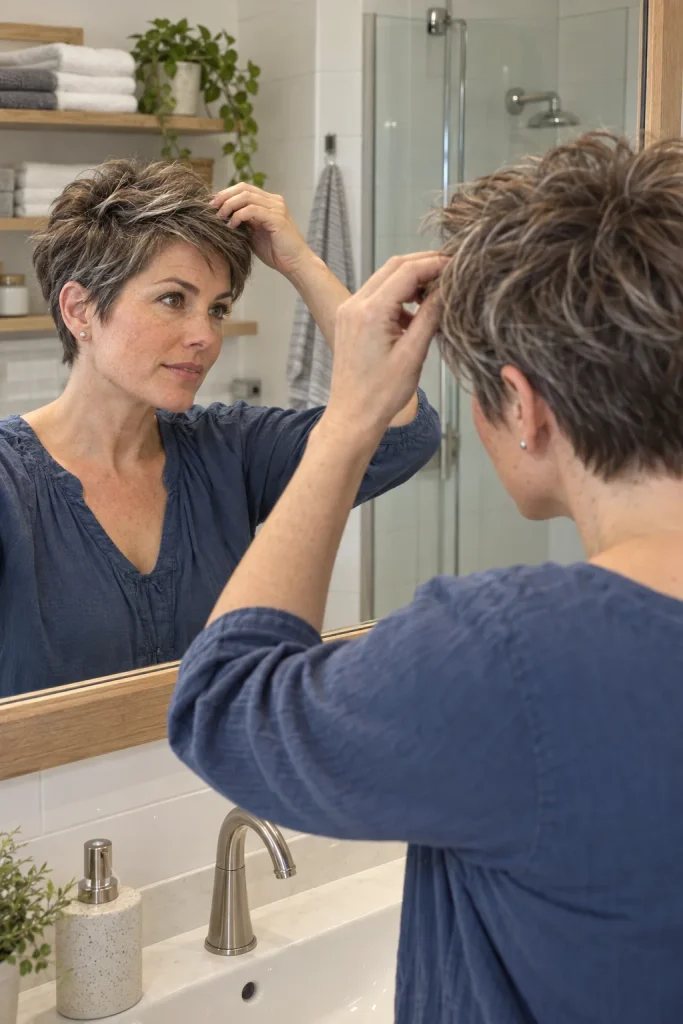
A textured pixie can be practical if you enjoy short hair and want to spend less time washing and drying longer strands.
A little styling product may be enough to arrange the top.
However, pixies often need regular reshaping to preserve their intended outline.
The shorter the neckline and sides, the more noticeable new growth may become.
Consider a Pixie If
- You enjoy short hairstyles.
- You don’t rely on ponytails or buns.
- You’re comfortable with regular salon visits.
- Your natural texture can be arranged into a shape you like.
Think Twice If
You dislike frequent trims or want a hairstyle that can easily be tied back.
A pixie can save daily styling time but create more salon maintenance.
2. The Blunt Bob
A blunt bob has a strong, defined perimeter that can look polished without complicated layering.
It may be especially appealing for naturally straight or slightly wavy hair.
However, the length matters.
A bob that sits directly on your shoulders may flip outward as the ends rub against clothing.
A shorter jaw-length bob may avoid that issue but offer less flexibility for tying the hair back.
The simplest version is often one that complements the way your hair naturally falls.
Consider a Bob If
You enjoy a structured silhouette and don’t mind maintaining the cutting line.
Think Twice If
You need to pull your hair into a ponytail regularly or require a sleek result despite having a texture that needs considerable straightening.
3. The Shoulder-Length Lob

A lob, or long bob, can offer a useful balance between shape and flexibility.
It’s long enough for some updos and short enough to avoid managing very long lengths.
A lightly layered lob may work well with natural waves.
A more blunt version can create a defined outline.
The main question is where it ends.
If your hair flips awkwardly when it touches your shoulders, ask whether a slightly shorter or longer length would behave better.
4. Long Hair With Minimal Layers
Long hair is often labeled high-maintenance, but that isn’t always accurate.
Someone with naturally straight hair who prefers a simple braid or loose ponytail may find long hair practical.
However, longer hair can require more time for washing, drying, and detangling.
It can also be uncomfortable if your daily routine involves sports, heat, or frequent movement.
If you want to keep your length, consider whether you actually need extensive layers.
A relatively simple cutting shape may be easier to grow out.
5. A Curly Cut Designed for Your Natural Pattern
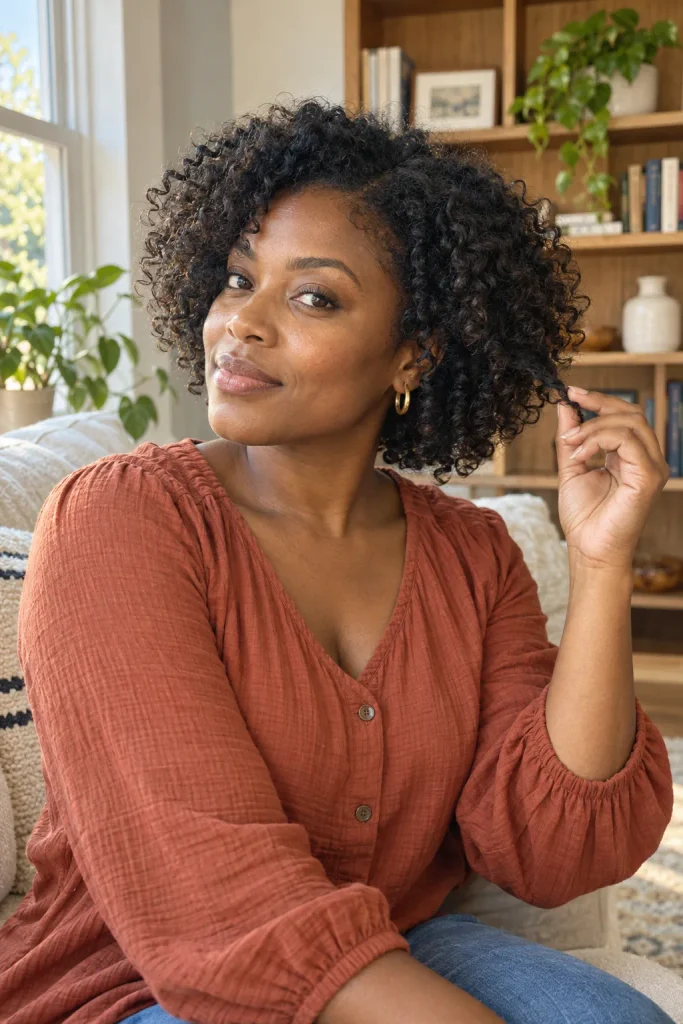
A curly haircut may be relatively easy to wear daily when the shape supports your natural curls.
The key is planning the cut around the finished dry silhouette.
Ask how the layers will affect volume and how much shrinkage to expect.
You may prefer a rounded shape, a longer outline, or a tapered cut.
A style that works with your curls can reduce the need to straighten or reshape them every morning.
That doesn’t mean you should skip conditioning, detangling, or proper scalp care.
Low-Maintenance Hairstyles for Different Lifestyles
A hairstyle should fit what you do, not just how you want to look.
Consider these everyday situations.
If You Work in an Office
You may want something that looks polished without extensive styling.
A lob, blunt bob, or softly layered medium-length cut can provide a defined shape.
If you frequently wear your hair up, keep enough length for a comfortable loose bun or ponytail.
If You’re a Busy Parent
You may prefer a hairstyle that can be arranged quickly and stays out of your face.
A longer bob, shoulder-length haircut, or natural texture-friendly cut could work.
A short pixie may also be practical if you enjoy wearing your hair down.
Consider whether your usual routine involves a quick tie-back.
If You Exercise Frequently
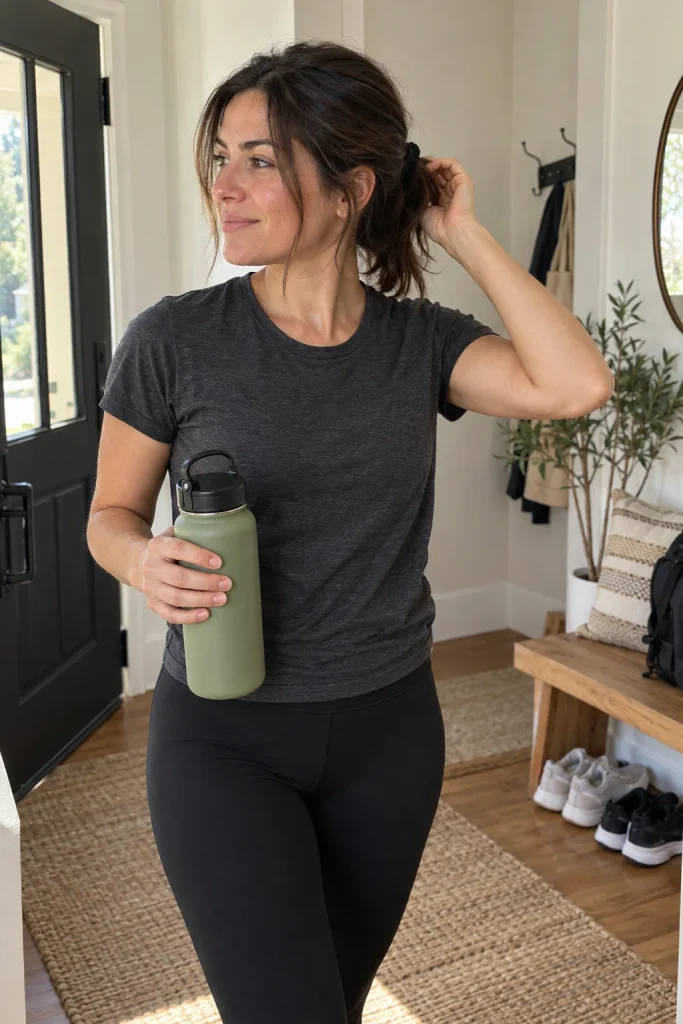
Choose a hairstyle you can secure comfortably or wear short enough to stay away from your face.
A collarbone-length cut may offer enough hair for a loose ponytail.
A pixie can avoid the need to tie your hair back.
If you use braids or buns, avoid excessive tension around your hairline.
Repeatedly pulling hair tightly can contribute to breakage and, in some cases, traction alopecia.
If You Travel Often
You might prefer a haircut that doesn’t depend on several heated tools or an elaborate product routine.
Natural waves, an easy-to-arrange bob, or a longer cut that can be loosely braided may be practical.
Consider how your hair responds to different humidity levels.
A hairstyle that requires constant straightening in humid weather may become frustrating.
If You Prefer a Minimalist Routine
Focus on a haircut that looks good when air-dried.
Bring photographs showing the natural finish you want rather than only professional blowouts.
Ask your stylist how much effort the cut requires on a normal morning.
What About Braids, Twists and Protective Hairstyles?
Braids and twists are sometimes described as low-maintenance because they can reduce the need for daily restyling.
That’s partly true, but they still require care.
Installation can take time. Removal and detangling also need attention.
You’ll still need to keep your scalp clean and monitor the condition of your hair.
Most importantly, the style shouldn’t pull painfully on your roots or hairline.
The American Academy of Dermatology warns that repeated tight hairstyles can contribute to traction alopecia, a type of hair loss caused by persistent tension.
A protective hairstyle should not feel painful.
If braids, twists, or extensions cause pulling, scalp irritation, or discomfort, the style may need to be loosened or removed.
A hairstyle isn’t low-maintenance if it creates a new hair or scalp problem.
Consider the Cost of Maintaining Your Haircut
Daily styling isn’t the only expense.
Some hairstyles need frequent salon appointments to maintain their intended appearance.
Others may grow out more gradually.
Think about the following:
| Maintenance Requirement | Questions to Ask |
|---|---|
| Haircuts | How often will this shape need reshaping? |
| Fringe trims | Can the bangs grow comfortably between appointments? |
| Color | Will visible roots require frequent touch-ups? |
| Styling products | How many products will I realistically use? |
| Heat tools | Does the look require regular blow-drying or straightening? |
| Braids or twists | What will installation, removal, and upkeep involve? |
A pixie may reduce your drying time but require more frequent trims.
Long, naturally colored hair may involve fewer salon appointments but take longer to detangle and dry.
Neither option is automatically cheaper or easier.
It’s the balance that matters.
The One-Week Hairstyle Audit
Before committing to a new haircut, spend a week observing how you currently manage your hair.
You don’t need a detailed journal.
Make a few notes on your phone.
Days 1–2: Track Your Morning Routine
Record how long you spend styling.
Notice which steps you actually need and which you perform out of habit.
Days 3–4: Observe Your Natural Texture
On a suitable wash day, let your hair dry with minimal heat where practical.
See what shape it takes naturally.
Consider whether a haircut could work better with that pattern.
Day 5: Think About Your Work and Activities
How often do you need your hair tied back?
Do you wear helmets, exercise, or spend time outdoors?
Would shorter hair make these activities easier or more difficult?
Day 6: Consider Salon Maintenance
Look at your recent appointments.
Would you be comfortable visiting more frequently?
Are you trying to reduce the time or money spent on professional styling?
Day 7: Identify Your Non-Negotiables
Write down three things your hairstyle must allow.
For example:
- I need to tie it back.
- I don’t want to use heat every morning.
- I prefer salon visits to be occasional.
Use these priorities when selecting reference photographs.
This exercise won’t predict every detail of a new haircut, but it gives you a realistic basis for the decision.
How to Explain Your Routine to Your Hairstylist
When asking for a low-maintenance cut, avoid relying only on that phrase.
It means different things to different people.
Your stylist needs to understand what you’re trying to reduce.
You might say:
“I want a haircut that works with my natural texture. I usually have about ten minutes to style my hair, and I don’t want to blow-dry it every day. I also need enough length to tie it back occasionally. What shape would work with those requirements?”
This gives your stylist clear boundaries.
Ask to see photographs of the haircut in its natural state, not just professionally styled.
Also ask how it will grow out.
A haircut that looks good six weeks after your appointment may suit your lifestyle better than one requiring constant reshaping.
Signs Your Hairstyle Needs Too Much Work
Sometimes you don’t realize how much effort a hairstyle demands until you’ve been wearing it for several weeks.
Watch for these signs:
- You use heated tools nearly every day just to make the cut sit correctly.
- Your haircut only looks how you want immediately after a salon visit.
- You regularly avoid activities because your hair is difficult to manage afterward.
- You spend more time on your hair than you’re comfortable with.
- Your style causes pulling, discomfort, or frequent breakage.
- You rely on numerous products but still dislike the result.
These problems don’t necessarily mean you need a completely different haircut.
You might only need to change the length, soften the layers, adjust your fringe, or work more closely with your natural texture.
Can Low-Maintenance Hair Still Look Stylish?
Absolutely.
Low maintenance doesn’t mean giving up shape, movement, or personality.
A blunt bob can look striking because of its clean outline.
A textured pixie may need only a little arranging to create an expressive silhouette.
Natural waves and curls can provide movement without heated styling tools.
Long hair can look polished in a simple, loose braid.
The most useful approach is to find an appearance you enjoy that doesn’t require unnecessary daily effort.
However, remember that minimizing styling should never mean neglecting hair or scalp health.
Dermatologists recommend washing according to scalp needs, conditioning appropriately, avoiding rough handling, and limiting excessive heat.
Frequently Asked Questions
What Is the Easiest Haircut to Maintain?
There isn’t one easiest haircut for everyone. A short pixie may be quick to style but require regular trims. A longer haircut may grow out more easily but take more time to wash and detangle.
Is Short Hair Always Low Maintenance?
No. Some short styles need frequent salon visits or daily styling to preserve their shape. Maintenance depends on the haircut, texture, and desired finish.
What Haircut Is Best If I Don’t Like Using Heat?
Consider a cut designed around your natural texture. Softly layered waves, natural curls, and certain bobs or pixies may work without frequent heat styling.
Are Braids Low-Maintenance Hairstyles?
Braids may reduce daily rearranging, but installation, washing, scalp care, and removal still require attention. They should never cause persistent tightness or pain.
Can Long Hair Be Low Maintenance?
Yes. If your natural texture is manageable and you prefer simple styles, long hair may work well. Consider the time required for washing, drying, and detangling.
What Should I Tell My Hairstylist If I Want an Easy Haircut?
Explain your daily styling time, whether you use heat, how often you want salon visits, and whether you need to tie your hair back. These details help your stylist recommend a practical shape.
Choose the Haircut That Makes Your Actual Life Easier
A low-maintenance hairstyle isn’t defined by how short it is or how effortless it looks in a photograph.
It’s defined by the work it requires from you.
The right cut should make sense for your natural hair texture, your morning schedule, and the way you spend your days.
If you love styling your hair, low maintenance might mean finding a cut that holds its shape better. If you prefer a quick routine, it may mean choosing a hairstyle that looks good when air-dried.
And if you’re trying to reduce salon appointments, a softly shaped cut that grows out comfortably may be more useful than a highly structured short style.
Before making a change, think about the parts of your current hairstyle that take the most effort.
Then choose a haircut that addresses those problems without sacrificing the things you enjoy about your hair.
A hairstyle should fit into your life, not make your life revolve around it.
Editorial note: Haircut maintenance varies by texture, density, hair growth, styling expectations, and salon technique. The comparisons in this article are general decision-making guidance, not guarantees about the time or cost of a particular hairstyle.

Gayathri Arun is the founder and editor of GlowNStylish, where she shares hairstyle inspiration, practical hair care guides, outfit ideas, and nail trends. Passionate about making style advice useful and approachable, she focuses on the little details that matter—from hair texture and face-framing layers to styling techniques and everyday maintenance. Her goal is to help women look beyond inspiration photos, understand their options, and confidently choose styles that suit their hair, lifestyle, and personal preferences.