How to Know If a Bob Haircut Will Suit You
A bob haircut can completely change the way your face is framed, but the difference between loving the result and wishing you’d kept your length often comes down to a few inches.
A jaw-length bob draws attention to different features than a collarbone-length version. A blunt edge gives fine hair a defined outline, while layers can help curls and waves move more naturally. Even the way your hair falls behind your ears can change how a short haircut feels on an ordinary day.
The question isn’t whether your face is the right shape for a bob. It’s which version of the bob works with your features, hair texture, and lifestyle.
Before booking the appointment, consider where the hair will fall, how it behaves without styling, and what you’re comfortable doing to maintain it.
There are several ways to find a bob you love without depending on rigid face-shape rules or taking a dramatic risk.
Start With the Bob You Actually Want
The word bob describes an entire family of haircuts rather than one specific look.
Some bobs are sharply cut at the jaw. Others have softly layered ends, natural curls, a side-swept fringe, or enough length to touch the shoulders.
That flexibility is what makes this haircut so adaptable.
A useful first step is deciding what you want your new haircut to do.
Are you hoping to make fine ends look fuller? Do you want a shorter hairstyle that’s easier to wash and dry? Would you like to emphasize your cheekbones or keep enough length for a small ponytail?
Your answer should influence the cut more than a celebrity photograph or a passing trend.
Different bobs create different effects
| Bob style | What makes it distinctive | Worth considering if… |
|---|---|---|
| Blunt bob | Strong, even-looking perimeter | You like defined lines or fuller-looking ends |
| French bob | Often shorter, with a soft or textured finish | You enjoy an undone, expressive style |
| Layered bob | Movement created through strategic layers | Your hair needs shape or texture management |
| A-line bob | Front pieces are longer than the back | You like a more angular silhouette |
| Curly bob | Shape adapted to natural curls | You want to wear your curl pattern at a shorter length |
| Long bob (lob) | Usually around shoulder or collarbone length | You want a gradual transition from long hair |
None of these styles has to be worn exactly as pictured in a reference photo.
A good hairstylist can adapt the length, perimeter, fringe, and internal layers to your hair.
The Most Important Detail: Where Should Your Bob End?
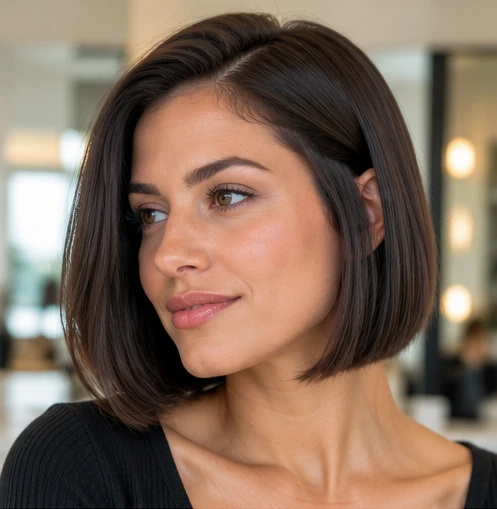
A few centimeters can make a noticeable difference in a bob haircut.
When the ends sit near your jawline, they create a visual line across that area. A shorter bob can draw attention toward the cheekbones and neck. A longer bob tends to create a more elongated outline.
This doesn’t mean one length is objectively better for a particular face shape.
It means you can decide which features you want the hairstyle to emphasize.
A bob that ends above the chin
This creates a cropped, distinctive silhouette.
It may suit someone who enjoys shorter hair and doesn’t mind regular reshaping at the salon.
However, consider how your natural texture will behave. Waves and curls may shorten visibly as they dry, and strong growth patterns can influence how the ends sit.
A bob that ends around the jaw
A jaw-length bob has a defined, classic appearance.
It can highlight the jawline, create a clean perimeter, and work with straight, wavy, or carefully shaped curly textures.
The exact placement matters more than following an arbitrary measurement.
For inspiration, explore these chin-length bob hairstyles with bangs.
A bob that ends below the chin
A slightly longer bob gives you more hair around the face.
You might prefer this if you’re transitioning from long hair or want a style that feels less dramatically cropped.
It also allows more flexibility with face-framing pieces.
A bob that reaches your shoulders
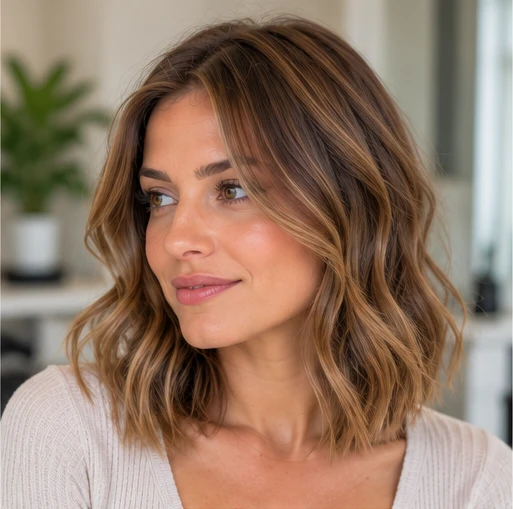
A shoulder-length lob is often a comfortable first step for someone considering a shorter haircut.
You can still experiment with waves, clips, small updos, and different partings.
The trade-off is that the ends may flip or bend where they meet your shoulders.
Some people love this natural movement. Others prefer the hair cut just above or below that point.
Before deciding: Hold your current hair at different lengths in front of a mirror. A simulated length won’t show exactly how your cut will fall, but it can help you identify which outline feels appealing.
Face Shape Matters, but Not in the Way You Might Think
You’ve probably seen rules claiming that round faces need long bobs, square faces need soft layers, and oval faces can wear anything.
These suggestions can offer inspiration, but they aren’t universal laws.
Hair density, curl pattern, neck length, part placement, and personal taste influence the result too.
A bob can be adapted to virtually any face shape.
Rather than asking whether your face is suitable for a bob, think about what you want the haircut to highlight or soften.
If you have a round face
A longer bob with pieces falling below the chin can create a more elongated visual outline.
But that doesn’t mean you should avoid a chin-length bob.
An asymmetrical part, softly angled perimeter, or added movement can create a different effect at the same length.
If you have a square or angular face
A blunt bob can beautifully emphasize a defined jawline.
If you prefer a softer outline, consider gentle waves or face-framing movement.
Neither approach is inherently more flattering. The choice depends on whether you want to emphasize or visually soften your natural angles.
If you have a long or rectangular face
A shorter bob or a style with movement around the cheeks may add visual width.
You can also explore a fringe if you like how bangs frame your eyes and forehead.
If you have a heart-shaped face
A bob with movement around the jaw may create visual balance between the forehead and lower face.
Side-swept pieces, a soft fringe, or a slightly longer front can also change the proportions of the hairstyle.
If you have an oval face
You have plenty of bob variations to experiment with, but that doesn’t mean every cut will behave the same way.
Your natural texture, cowlicks, hairline, and styling preferences still matter.
The better question to ask your stylist: “Which bob length and shape would highlight the features I like, while working with the way my hair naturally falls?”
The Hair Texture Test: Will Your Bob Look the Same When You Style It Yourself?
A salon-finished bob can look dramatically different from the same haircut after you wash it at home.
That’s why your natural texture deserves as much attention as your face shape.
Straight hair: Consider the cutting line
A bob on naturally straight hair tends to reveal the shape of its perimeter clearly.
If you like a sleek finish, a blunt bob may appeal to you.
However, the way your hair grows around the nape and hairline can affect how the ends turn inward or outward.
You may need occasional styling to maintain a particular finish.
Wavy hair: Plan for movement
Waves can create beautiful natural movement in a bob.
A cut with a little length and carefully placed layers may help the waves sit comfortably.
But too many layers can alter the overall shape, particularly if your hair is fine or has lower density.
Ask your stylist to consider how your waves look when dry.
Curly hair: Account for shrinkage and shape
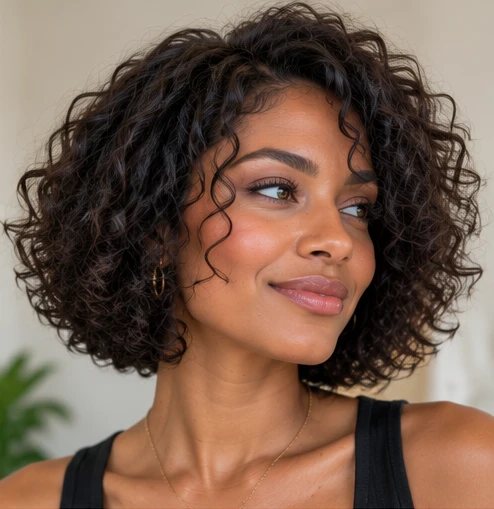
A curly bob can be one of the most expressive versions of the haircut.
Depending on your curl pattern, the finished dry length may be considerably shorter than the wet length.
The shape should be planned around how the curls spring, cluster, and frame your face.
A stylist experienced with your texture can help you avoid cutting the hair shorter than you intended.
Consider where you want the volume to sit: around the cheeks, near the jaw, or higher around the crown.
For inspiration, browse our curly pixie haircut ideas if you’re also exploring shorter styles.
Fine hair: Protect the fullness at the ends
Fine hair can work beautifully with a bob, especially when the cutting line creates a strong-looking perimeter.
If your ends appear sparse, ask whether a blunt or lightly layered bob would preserve more visual fullness.
You can browse our short bob hairstyles for thin fine hair to compare styles.
Thick or dense hair: Think about bulk
Dense hair may need internal shaping so the bob doesn’t develop more width than you want.
That doesn’t always mean visible layers.
A hairstylist can consider weight distribution, density, and the finished silhouette before deciding where to remove bulk.
The Bob Haircut Reality Check
A bob may be shorter than your current hairstyle, but shorter doesn’t always mean easier.
A sharply defined bob can require frequent maintenance to keep its outline.
A sleek style may need more regular blow-drying if your hair naturally curls or bends.
Meanwhile, a textured bob designed around your natural waves might take very little styling on an ordinary morning.
Consider these everyday situations before making your decision.
You usually put your hair in a ponytail before leaving the house.
A jaw-length bob may be too short for your usual hairstyle. A lob or longer front sections may be more practical.
You rarely use a hair dryer.
Choose a cut that looks appealing when air-dried, rather than one that relies on heat styling to achieve its shape.
You dislike frequent salon visits.
A very short or precise bob may lose its intended outline as it grows. A softer, longer shape may be easier to grow out.
You wear glasses every day.
Consider how the hair falls around your temples, ears, and frames. Try your glasses on during the consultation.
You have a strong cowlick or unusual growth pattern.
Tell your stylist before the cut. Growth patterns can influence how shorter sections sit, especially around the nape and fringe.
You love trying different hairstyles.
Keep enough length for the accessories, clips, braids, or updos you actually use.
There’s nothing wrong with choosing a longer bob for flexibility instead of committing to a shorter look.
Don’t Ignore the Back of the Haircut
Many people choose a bob by looking at photographs taken from the front.
But the back is where some of the most important design decisions happen.
A graduated bob may be shorter and more structured at the nape. A one-length bob creates a different outline. A textured bob may have an intentionally softer finish.
Your neckline, growth patterns, and preferred styling routine influence which design is practical.
Ask your stylist to show you reference photos of the front, side, and back of the haircut.
If you’re considering an angled shape, our angled bob hairstyles offer useful examples.
What about layers?
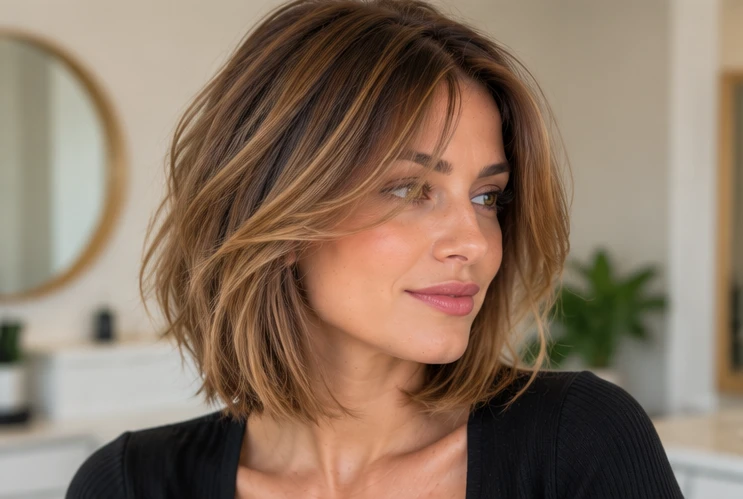
Layers aren’t automatically necessary for every bob.
They can create movement, reduce or redistribute weight, and shape the hairstyle around the face.
However, excessive layering may leave fine or lower-density ends looking sparse.
The right approach depends on your hair.
Look at our short layered bob hairstyles if you’d like to compare more structured and softly textured versions.
Try a Bob Before You Commit to One
You can’t fully predict a short haircut without cutting it, but you can reduce some uncertainty.
Start by collecting three reference photographs.
Choose one that shows the front, one that reveals the side, and one with a hair texture reasonably similar to yours.
Avoid selecting only heavily styled photographs. Try to find examples where the haircut looks good with its natural texture.
Next, consider trying a faux bob by gently tucking longer hair underneath and securing it loosely. This will only approximate the outline, but it can help you decide whether you enjoy seeing more of your jaw and neck.
You can also use a virtual hairstyle preview, provided you understand that the simulated result may not accurately represent your hair’s density or curl behavior.
Finally, visit your salon for a consultation before deciding on a dramatic change.
You don’t need to commit to the shortest version immediately.
If you’re unsure, cutting gradually—from long hair to a lob, then potentially shorter—can make the transition more comfortable.
What to Ask Your Hairstylist Before Cutting a Bob
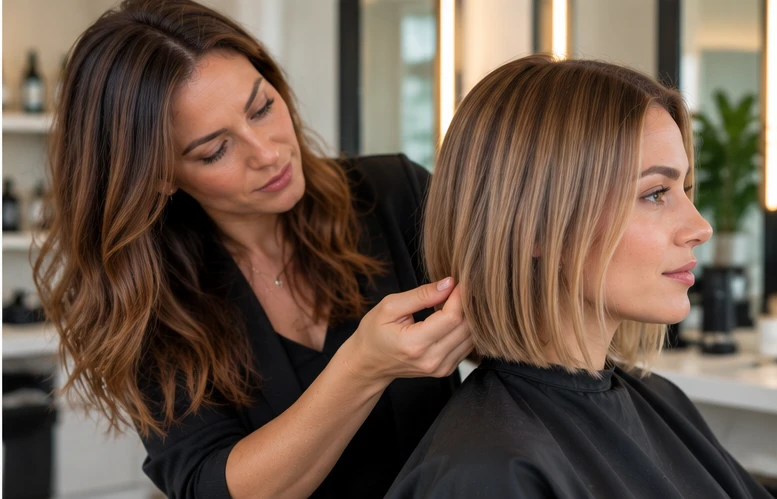
A thoughtful consultation can prevent many haircut disappointments.
Bring your reference photographs and explain what you like about each one.
Is it the length, the cutting line, the volume, the fringe, or the way the ends move?
Then ask these questions.
“How will this cut look when I air-dry my hair?”
This helps separate the haircut’s natural shape from the effect of professional blow-drying.
“Will the ends sit where I expect once my hair is dry?”
Especially important for waves and curls, which may shrink as they dry.
“Can I still tie my hair back?”
If that matters to your routine, establish the minimum length needed.
“How often will I need a trim to maintain this shape?”
Maintenance depends on the exact style, how quickly your hair grows, and how precise you want the outline to remain.
“What would you change about my reference photo for my hair?”
A good stylist should be able to explain which details translate well to your texture and which may need adjusting.
A salon request you can use
“I’m interested in getting a bob, but I want the length and shape to work with my natural hair texture. I like the overall look of these photos, especially the way the ends frame the face. Could you help me choose a length that looks good both styled and air-dried? I’d also like to know whether I can still tie my hair back and how often the shape will need maintenance.”
This gives the stylist more useful information than simply requesting a trendy bob.
Signs You Might Prefer a Longer Bob First
A dramatic jaw-length cut isn’t always the best starting point.
A lob might be a more comfortable choice if you are attached to your long hair, frequently wear ponytails, prefer less frequent reshaping, or are unsure how your natural texture will behave at a shorter length.
It’s also worth starting longer if your hair has substantial shrinkage or you’ve never worn it above your shoulders.
The benefit of a gradual transition is straightforward: you can always decide to go shorter at a later appointment.
Cutting significantly shorter and regretting the lost length is harder to reverse.
Caring for Your Bob Without Overstyling It
A well-designed bob should work with your hair rather than requiring constant manipulation.
If you use heated styling tools, keep the temperature appropriate for your hair, use heat protection, and avoid unnecessary repeated passes.
The American Academy of Dermatology recommends gentle towel drying, limiting excessive heat, and avoiding aggressive brushing to reduce damage.
If your bob is naturally wavy or curly, consider techniques that preserve your natural pattern rather than straightening it every day.
For fine hair, lightweight products may help prevent the roots from becoming overloaded.
And remember that a bob can be worn sleek, softly tousled, air-dried, tucked behind the ears, or dressed up with accessories.
It doesn’t have to look like a fresh salon blowout to be a successful haircut.
So, Will a Bob Haircut Suit You?
A bob haircut can suit many different faces, hair types, ages, and personal styles. The deciding factor is usually not whether you qualify for the haircut, but whether the version you choose matches your needs.
A blunt bob may create the defined outline you’re looking for. A softly layered style may accommodate movement. A curly bob can frame your face beautifully when the shape respects your curl pattern. And a longer lob can give you the shorter silhouette you’ve been considering without taking away all your styling flexibility.
The most useful decision happens before the scissors come out.
Know what you want to emphasize, understand how your hair behaves naturally, and choose a length you feel comfortable maintaining.
A good bob should feel like your own style—just with a different shape.
Sources and Further Reading
- British Vogue — How to Find the Best Bob for Your Face Shape
- Stylist — Expert Advice to Know Before Getting a Bob
- American Academy of Dermatology — Tips for Healthy Hair
- American Academy of Dermatology — Hair Styling Without Damage
Editorial note: Bob length and face-framing recommendations are aesthetic guidance, not scientifically proven rules. The supporting AI-generated photographs are illustrative examples rather than documented salon results.