
How to Wash Braids Without Frizz: 8 Easy Steps for Clean, Neat Braids
Getting your braids wet doesn’t have to mean saying goodbye to a neat, fresh-looking style. With the right washing technique, you can clean your scalp, remove product buildup, and keep your braids looking smoother for longer.
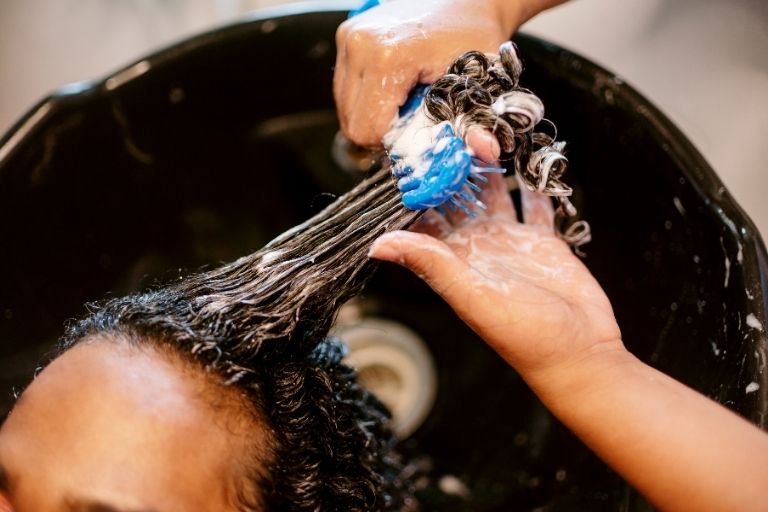
The trick is to focus on your scalp, handle your braids gently, and give them enough time to dry completely. Scrubbing your hair as you would when it’s loose can disturb the braid pattern, loosen small hairs, and create unnecessary frizz.
Whether you’re wearing box braids, knotless braids, cornrows, or braided extensions, this step-by-step guide will help you wash your hair without unnecessarily disturbing your style.
Why Do Braids Get Frizzy After Washing?
A little frizz is normal when you wear braids, especially as your natural hair grows. However, certain washing habits can make it more noticeable.
Here are the most common reasons your braids may look fuzzier after a wash.
Rubbing Your Braids Too Much
Scrubbing your braids between your palms or rubbing them vigorously against one another creates friction. This can loosen small hairs along the braid’s surface and make the style look rough.
Instead, concentrate your cleansing efforts on your scalp. Let the shampoo flow down the braids rather than repeatedly rubbing their lengths together.
Using Too Much Shampoo or Heavy Products
Shampoo helps remove oil, sweat, and styling residue. However, products that leave a thick coating on your hair can make braids look dull or feel sticky.
Heavy creams, thick conditioners, and excessive styling gels can also accumulate around the roots and between the braids.
Choose a gentle shampoo and rinse thoroughly to prevent residue from remaining in your hair.
Skipping the Drying Process
Braids, particularly long or thick braids with extensions, can hold a surprising amount of water. If you put your hair into a bun or cover it while it’s still damp, moisture can remain trapped between the braids.
Allowing your braids to dry thoroughly helps prevent lingering dampness and unpleasant odors.
Washing Braids That Are Already Too Tight
If your scalp hurts, feels tender, or develops bumps around the roots, the problem might be excessive tension rather than your washing technique.
The American Academy of Dermatology warns that tight braids can contribute to traction alopecia, a type of hair loss caused by repeated pulling on the hair follicles. Your braids should not cause persistent pain or pull excessively around your hairline.
What You Need to Wash Your Braids Without Frizz
Gather everything before you begin. Having your products and drying tools ready helps you avoid leaving wet braids unattended for longer than necessary.
| Item | Why you need it |
|---|---|
| Gentle shampoo | Cleans your scalp and removes buildup |
| Applicator bottle or pointed-nozzle bottle | Helps direct shampoo between braid sections |
| Lightweight conditioner, if appropriate | Can soften accessible natural hair or loose curly sections |
| Microfiber towel or soft cotton T-shirt | Absorbs water without vigorous rubbing |
| Blow-dryer with a low-heat setting, if needed | Helps thick braids dry more efficiently |
| Lightweight braid mousse, optional | Can help smooth minor flyaways once your braids are dry |
You don’t need to purchase a special product for every step. A gentle shampoo, a soft towel, and a suitable drying method are the essentials.
How to Wash Your Hair With Braids In Without Frizz: Step-by-Step Guide
Follow these eight steps for a cleaner scalp and smoother-looking braids.
Step 1: Prepare Your Braids Before Washing
Before turning on the shower, take a moment to prepare your hair.
If you have long braids, divide them into two to four loose sections. You can secure the sections with soft hair ties if necessary, but avoid pulling them tightly.
This makes the braids easier to manage and reduces the amount of tangling while you wash.
Check your scalp for heavy product buildup, irritation, or sore spots. If your braids are painful or causing bumps, address the tension rather than trying to solve the problem with extra products.
Tip: Don’t brush or aggressively comb your braids before washing. You don’t need to manipulate the braided lengths to clean your scalp.
Step 2: Wet Your Scalp and Braids With Lukewarm Water
Stand under a gentle shower stream and allow lukewarm water to run over your scalp.
Use your fingers to separate the braids slightly so water can reach the skin underneath. Pay particular attention to the crown, nape, temples, and the areas between your parts.
Avoid using very hot water, which can contribute to dryness and discomfort.
If you have a handheld showerhead, direct the water along the partings instead of concentrating a forceful stream on one small area.
Let the water run down the braids naturally. You don’t need to toss your hair around or pile the braids on top of your head.
Step 3: Apply Shampoo Directly to Your Scalp
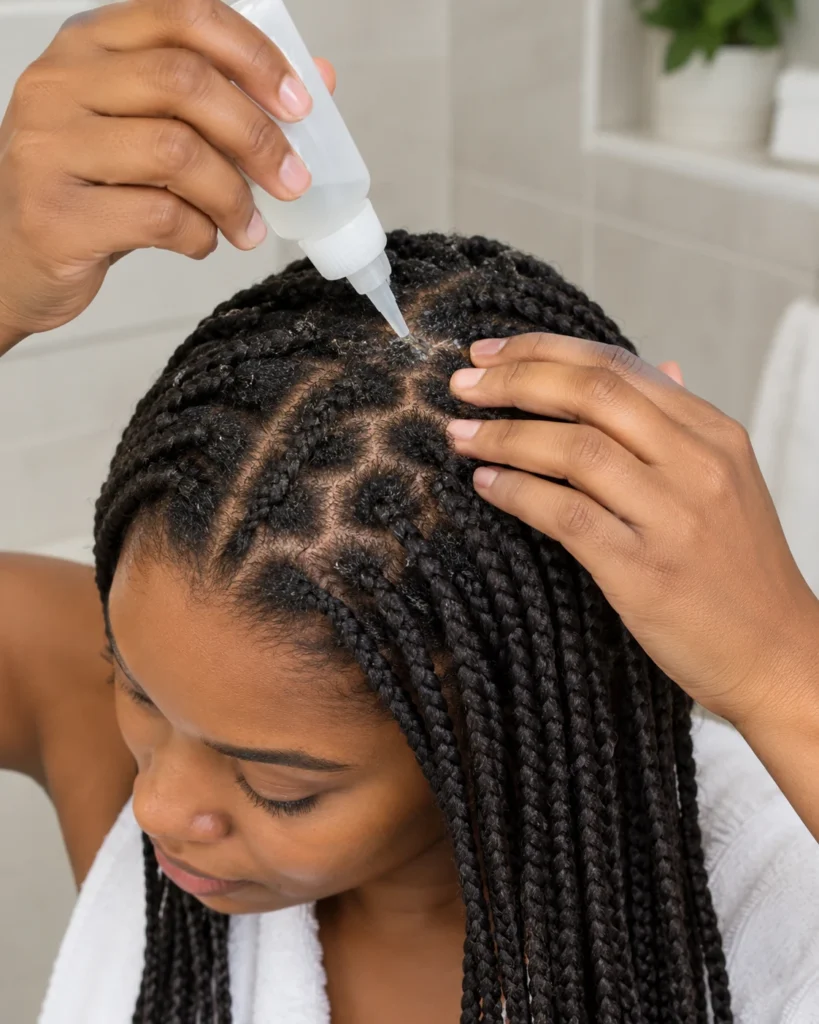
This is one of the most important steps in the entire routine.
Rather than coating every braid in a large amount of shampoo, focus first on cleansing the scalp. Apply a small amount of gentle shampoo along the partings, working from the front of your head toward the crown and back.
An applicator bottle can make this easier, especially if your braids are small or densely packed.
If the shampoo’s instructions permit dilution, you can follow them to make the product easier to distribute. However, you don’t have to dilute every shampoo.
How to massage your scalp without creating frizz:
- Use the pads of your fingertips rather than your fingernails.
- Gently press and move your fingertips over the scalp.
- Work in small sections so you don’t miss areas between the braids.
- Avoid vigorous circular rubbing that twists or tangles the braided roots.
- Don’t scrub the braid lengths against one another.
If you have considerable buildup, a second gentle cleanse may help. Rinse away the first application before applying more shampoo.
Step 4: Clean the Braid Lengths Gently
Once your scalp is clean, allow the shampoo suds to travel down the braided lengths.
Use your hands to guide the suds downward. If you need to remove sweat or residue from the braids themselves, gently squeeze each section rather than rubbing it between your palms.
Pay attention to the nape and the lower lengths, where sweat, lint, and styling products may accumulate.
If you’re wearing goddess or boho braids with loose curly pieces, take extra care around those curls. Avoid bunching them together or scrubbing them vigorously, as doing so can create tangles and increase frizz.
You don’t need to repeatedly shampoo the entire length of every braid unless it is genuinely dirty.
Step 5: Rinse Thoroughly From Scalp to Ends
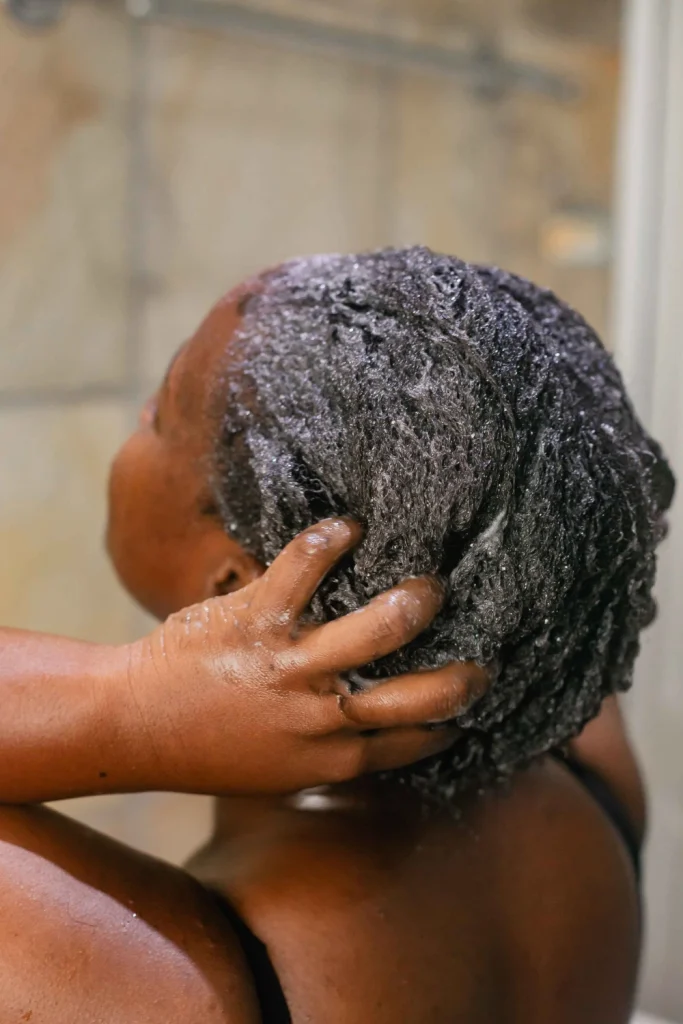
Rinsing is just as important as shampooing.
Leftover shampoo can make your scalp feel itchy or leave a film on your braids. Rinse slowly, allowing the water to reach each section of your scalp before flowing down to the ends.
Lift the braids gently in sections so water can pass between them.
Run your fingertips lightly along the partings to check for lingering suds. Continue rinsing until the water runs clear and you no longer feel a slippery shampoo residue.
Don’t rush this step. Thick braids may need more time to rinse than thinner styles.
Step 6: Use Conditioner Carefully
Do you need conditioner when your hair is braided?
It depends on your hairstyle, the products you use, and whether your natural hair or loose extensions need extra conditioning.
For box braids and knotless braids with added hair, you can often keep the routine simple. A lightweight conditioner may be useful on accessible natural hair or the ends, but applying a thick conditioner all over the scalp and braid lengths can leave residue.
If you’re wearing braids with loose curly pieces, use a suitable lightweight conditioner on those sections if the product is compatible with your extension hair.
Apply conditioner sparingly, avoid coating the scalp unnecessarily, and rinse it out completely.
The American Academy of Dermatology recommends conditioning hair during regular hair care to help protect vulnerable strands. However, the best approach for extensions is to account for the type of braid and the manufacturer’s product-care instructions.
Step 7: Remove Excess Water Without Rubbing
Now comes the step that can make a noticeable difference to your finished style.
Once you’re done rinsing, gently gather the braids and press them between your hands to remove excess water. Don’t wring or twist them tightly.
Next, wrap a microfiber towel or soft cotton T-shirt around the braids and press gently.
Avoid rubbing the towel back and forth over the surface. That friction can disturb small hairs and make the braids look fuzzier.
Allow the towel to absorb as much moisture as possible before moving on to the drying stage.
Step 8: Dry Your Braids Completely
Don’t stop when the outside of your braids feels dry. The roots and inner sections may still hold moisture.
Spread your braids out rather than keeping them gathered in a tight bun. Let air circulate around your scalp and between the sections.
You can allow your braids to air-dry in a well-ventilated room. If you have thick or long extensions, a blow-dryer on a low-heat or cool setting may help speed things up. Keep the airflow moving, and avoid concentrating high heat on one area.
Pay particular attention to the roots, nape, and thicker sections of the braids.
Avoid going to bed with damp braids. Wait until your scalp and braids have dried thoroughly before tying them up or covering them with a bonnet or scarf.
Once your hair is fully dry, you can apply a small amount of lightweight braid mousse if you want to smooth minor flyaways. Use it sparingly, since excess product can build up over time.
How Often Should You Wash Braids?
There isn’t one washing schedule that works for everyone.
The American Academy of Dermatology recommends that Black hair generally be washed once a week or every other week to help prevent product buildup. You can use that as a starting point while accounting for your scalp, lifestyle, and hairstyle.
Consider washing sooner if you exercise frequently, sweat heavily, notice significant buildup, or have an uncomfortable scalp.
Your braids may need less frequent full-length washing if they include delicate loose curls or are particularly slow to dry. Even then, don’t ignore persistent dirt, irritation, or buildup simply to preserve the style.
The goal is to keep your scalp clean without creating unnecessary friction or leaving moisture trapped in thick braids.
For more guidance, see the American Academy of Dermatology’s hair-care recommendations. DermNet also notes that shampooing can be continued while braids are in place in its guide to hair-care practices for women of African descent.
7 Common Mistakes to Avoid When Washing Braids
Even with the right products, a few habits can undermine your results.
1. Scrubbing the Scalp With Your Nails
Your scalp needs cleansing, but scratching it with your nails can irritate the skin. Use your fingertips to massage shampoo gently along the partings.
2. Piling Braids on Top of Your Head
This can cause unnecessary friction and tangling. Keep your braids hanging naturally or divide them into loose sections while washing.
3. Using Too Much Product
Large amounts of shampoo, conditioner, oil, or styling cream can leave residue behind. Start with a modest amount and add more cleanser only when needed.
4. Rinsing Too Quickly
Shampoo trapped between braids can contribute to an uncomfortable, itchy scalp. Take your time and rinse the roots as well as the lengths.
5. Rubbing Your Hair With a Towel
Vigorous towel-drying creates friction. Press the towel gently against the braids to absorb water instead.
6. Leaving the Roots Damp
The exterior of a braid can dry while the inside remains wet. Make sure the scalp, roots, and thickest sections are dry before covering your hair or going to bed.
7. Ignoring Pain, Bumps, or Hairline Thinning
Pain isn’t a normal part of maintaining braids. If the style feels excessively tight, ask for it to be loosened or removed. Persistent bumps, inflammation, or noticeable thinning warrant evaluation by a dermatologist.
The American Academy of Dermatology’s guidance on hairstyles that can cause hair loss explains why reducing repeated tension is important.
How to Keep Braids Smooth Between Washes
Your washing technique matters, but your everyday habits also affect how your braids look.
Protect Your Braids While Sleeping
A satin or silk bonnet, scarf, or pillowcase may help reduce friction while you sleep.
Make sure your braids are fully dry before covering them. Avoid tying them into a tight overnight style that pulls on your roots.
Use Styling Products Sparingly
If your braids have a few flyaways, a small amount of suitable braid mousse may help keep them looking neater.
Avoid continually adding gels, oils, and creams to cover up frizz. Too much layering can create buildup and make your next wash more difficult.
Moisturize Your Scalp Only When Needed
If your scalp feels dry, choose a lightweight product that suits your skin and use it sparingly. Oils can help reduce friction or soften the feel of hair, but they don’t replace cleansing and may contribute to buildup when overused.
If a product causes itching, redness, or irritation, stop using it.
Avoid Pulling Your Braids Too Tightly
You can wear your braids down, in a loose ponytail, or in a relaxed bun. The key is to avoid styles that continually pull on the same areas around your hairline.
Changing your styling habits can help limit tension-related damage, as explained in the American Academy of Dermatology’s guidance on traction alopecia.
Frequently Asked Questions
Can I wash my braids without making them frizzy?
Yes, you can reduce frizz by using gentle techniques, but you cannot guarantee that your braids will remain completely smooth. Some flyaways are normal, especially as natural hair grows or the style ages. Focus on minimizing friction rather than trying to eliminate every loose hair.
Should I dilute shampoo before washing braids?
Not necessarily. Some people find that an applicator bottle makes it easier to distribute shampoo along the scalp. Follow the product’s instructions if you dilute it, and make sure you rinse thoroughly. A gentle shampoo applied directly to the scalp can also work well.
Can I wash box braids with extensions?
Yes. Concentrate on your scalp, let the suds flow down the braids, and rinse carefully. Drying is particularly important when your extensions are thick or long because they can hold substantial moisture.
Is it better to wash braids in the shower or over a sink?
Either method can work. A handheld showerhead is useful because it lets you direct water along individual partings. A sink can work well for shorter braids or when you want more control over the water flow.
Choose whichever method allows you to rinse your scalp thoroughly without tangling your braids.
Can I use conditioner on braids?
You can, depending on the braid type and the products involved. Use lightweight conditioner sparingly on suitable sections, especially if you have loose curls or accessible natural hair that needs conditioning. Avoid leaving thick layers of conditioner on the scalp or braid roots, and rinse thoroughly.
Why do my braids smell bad after washing?
A lingering damp smell may mean your braids haven’t dried completely. Thick braids and extensions can retain moisture at the roots and in their inner sections. Allow them to dry thoroughly and avoid covering them while damp. If an odor persists, or you also notice itching, pain, discharge, or inflammation, seek medical advice.
What should I do if my scalp itches after washing braids?
First, consider whether you rinsed all the shampoo and other products out. Product irritation, scalp dryness, and existing skin conditions can all contribute to itching.
If the itching persists, becomes severe, or occurs with redness, sores, bumps, or unusual scaling, consult a dermatologist rather than repeatedly applying oils or other products to the area.
Can washing braids make them last longer?
Gentle washing helps remove sweat, dirt, and product buildup, which can keep your scalp cleaner while you wear braids. However, washing cannot prevent all frizz or stop natural new growth. Your braid technique, hair texture, extension type, and everyday care also influence how long the style looks neat.
Final Thoughts
Washing your hair with braids in doesn’t have to be complicated. Clean the scalp first, handle the braid lengths gently, rinse out every trace of product, and give your hair enough time to dry.
The biggest change is often avoiding unnecessary rubbing. You don’t need to scrub your braids aggressively to get them clean.
With a gentle routine and a little patience during drying, you can maintain a cleaner, more comfortable scalp while keeping your braids looking neat for as long as the style remains suitable for your hair.
