Haircuts for Women Over 70 to Bring to Your Next Salon Visit
Haircuts for women over 70 can be so much more interesting than simply going shorter. A beautifully shaped bob, an airy pixie, soft shoulder-length layers, or even long natural curls can all work. What matters most is choosing a shape that makes sense for your actual hair and the amount of styling you want to do each morning.
I also think this is the age to stop fighting your texture. If your hair has become finer, a strong perimeter can make it look more substantial. If you have waves or curls, thoughtful layering can bring them out instead of brushing them into submission. And if you are wearing your silver or white naturally, the right cut can make that color look especially intentional.
Fringe, layer placement, and length are worth thinking about before you sit in the salon chair. A wispy bang gives a totally different effect from a long side sweep, while a closely tapered pixie needs more frequent reshaping than a shoulder-length cut. Even two bobs can behave very differently depending on whether the ends are blunt, graduated, feathered, or softly rounded.
Below, I pulled together a mix of short, medium, and long ideas so you can compare those little details. Pay attention to the silhouette you keep coming back to, then think about your density, natural texture, favorite parting, and realistic maintenance level. Those clues will usually point you toward the haircut you will actually enjoy wearing.
Haircuts for Women Over 70 to Bring to Your Next Salon Visit
1. Classic Chin-Length Silver Bob
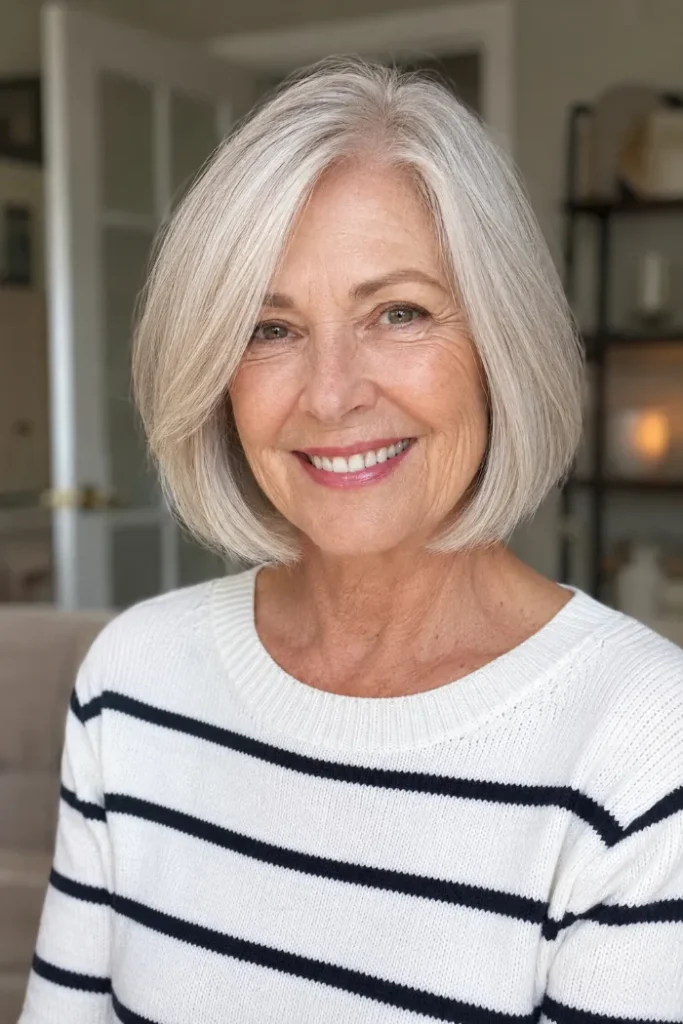
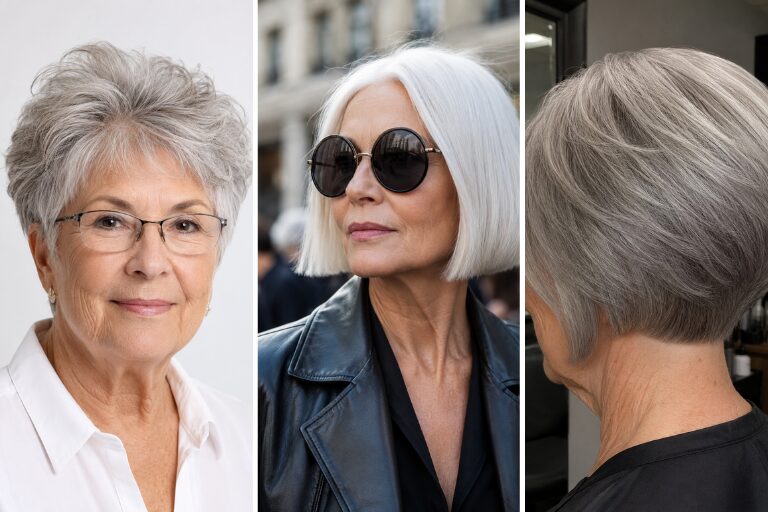
This smooth silver bob sits around the chin with a clean, softly curved perimeter that turns inward rather than looking sharply blunt. The side part creates a long sweep across the forehead, while the rest of the cut stays fairly sleek and minimally layered. I like how the fuller shape through the ends keeps the style looking substantial without adding obvious volume at the crown.
Ask your stylist for a chin-length bob with a dense perimeter and only enough internal shaping to help the ends tuck under. Keep the front long enough to sweep from a side part rather than cutting a separate bang. For the smooth finish, use a round brush or paddle brush with the airflow directed downward through the ends.
2. Soft Side-Parted Silver Bob
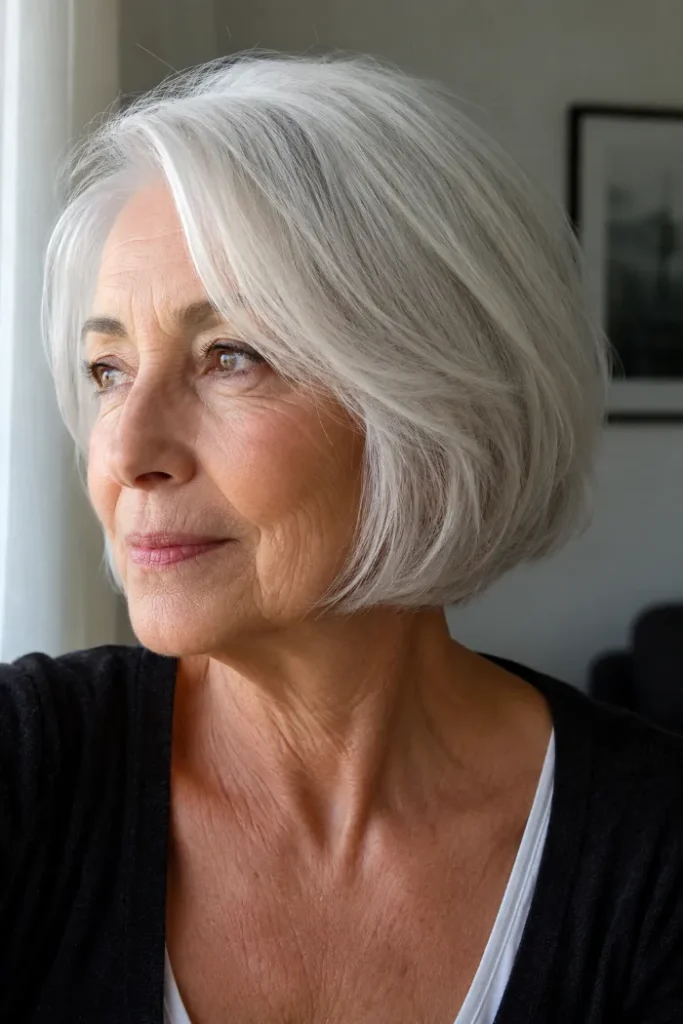
This silver bob has a softer, airier shape than the first one, with a rounded back and light movement around the cheek and jaw. A deep side part feeds into long face-framing pieces that curve away from the face. The ends still look full, but subtle layering removes enough weight for the hair to move instead of sitting as one solid block.
Ask your stylist to keep the overall bob around jaw length while adding gentle graduation through the back and long, blended pieces near the face. The key is keeping those front sections long enough to sweep and bend instead of becoming short bangs. A light round-brush blowout will show off the curved shape without making it stiff.
3. Shoulder-Length Blonde Layers With Flipped Ends
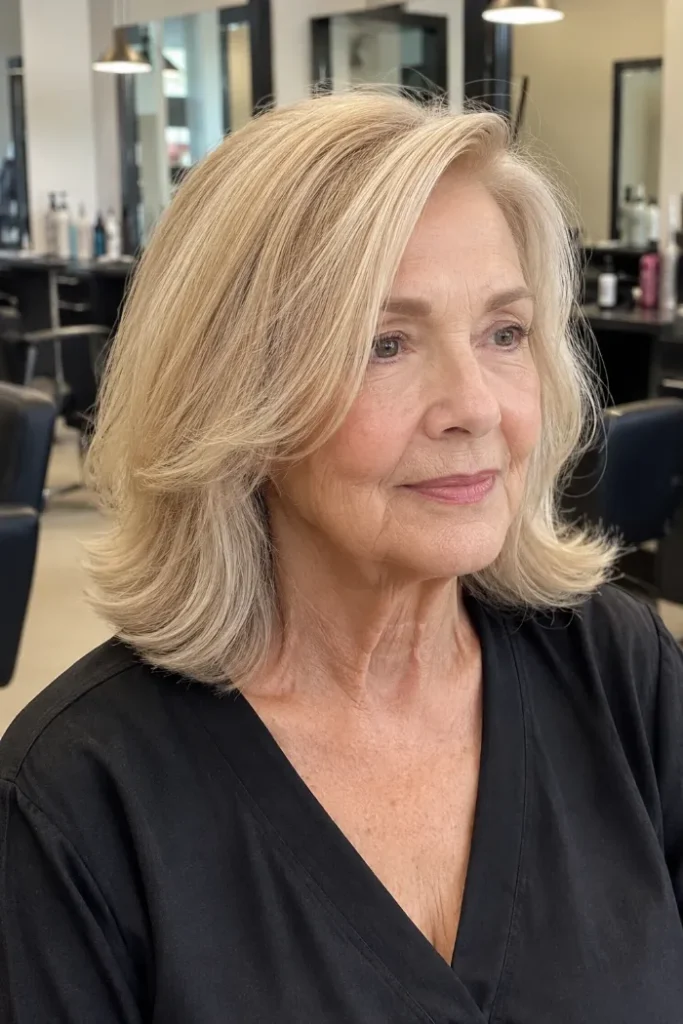
This shoulder-length blonde cut gets most of its personality from long feathered layers and ends that kick outward. The front layers begin around the cheek area and sweep back into the rest of the haircut, so there is movement without sacrificing the medium length. The soft side part and lifted blowout give the silhouette a little width and bounce around the sides.
Ask your stylist for shoulder-grazing length with long layers starting around the cheekbones and continuing gradually through the ends. Keep enough weight at the bottom so the cut does not turn stringy. When styling, roll the front sections away from your face and flick the lower layers outward with a medium round brush rather than curling everything under.
4. Feathered White Pixie-Bob
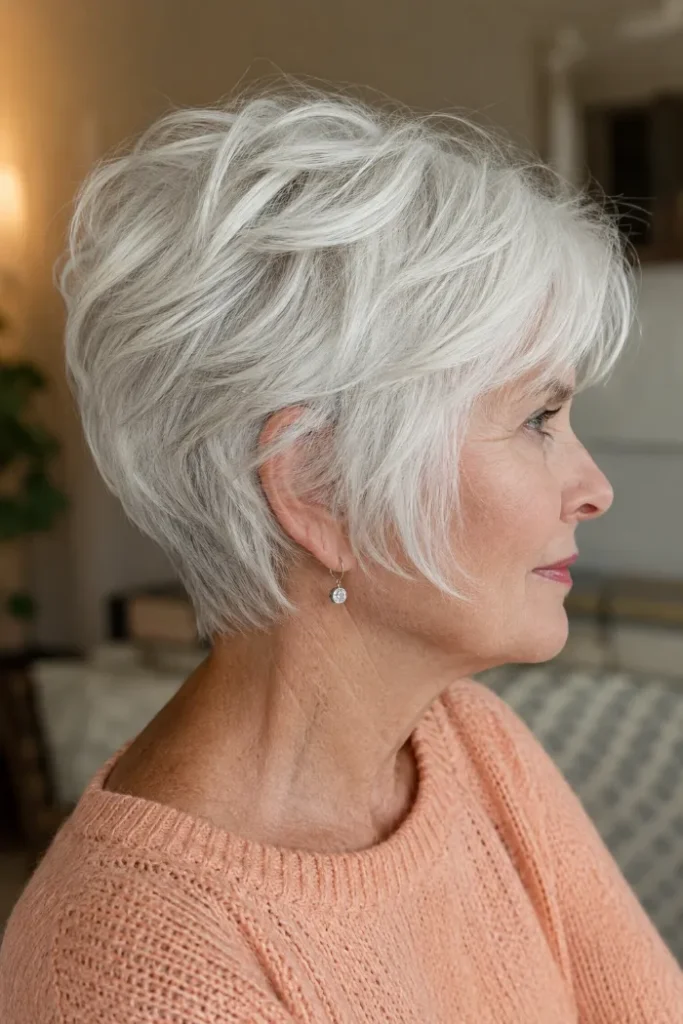
This white pixie-bob keeps extra length through the crown and top, then tapers down toward a neat nape. The layers are feathered in different directions, which creates separation and soft volume instead of a round helmet shape. Longer wispy pieces skim the forehead and cheek, while the area around the ear stays light and piecey.
Ask your stylist for a tapered pixie-bob with the nape cut close but the crown and upper sides left long enough to feather. Request soft point-cutting through the top and a wispy diagonal fringe rather than a heavy straight bang. At home, a small amount of light styling cream or airy paste can separate those layers without flattening them.
5. Long Gray-Blended Layers With Soft Waves
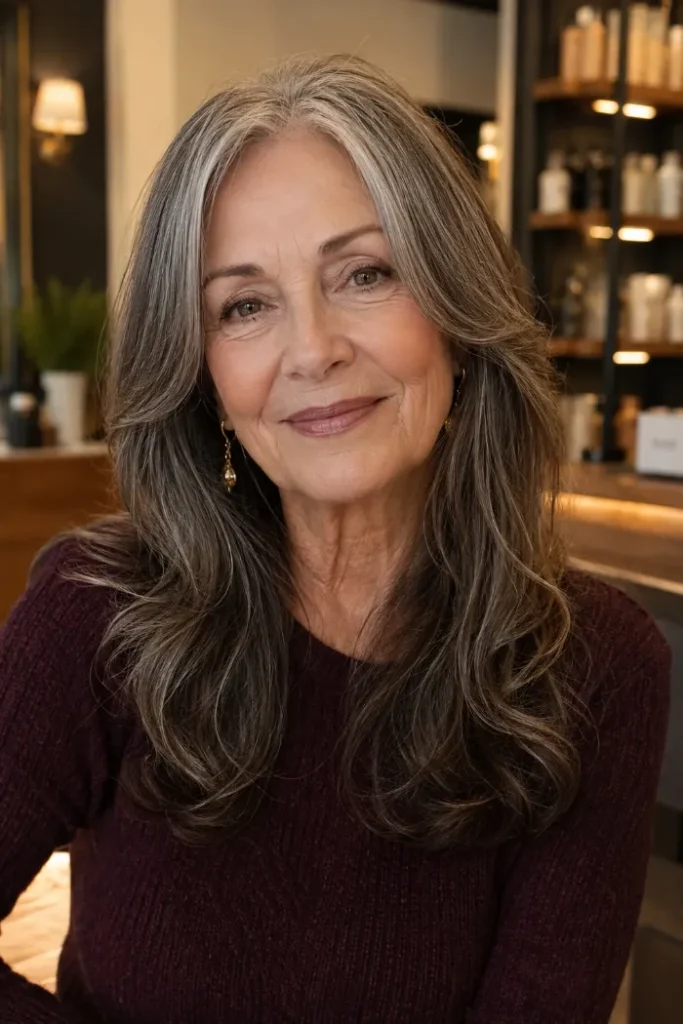
You absolutely do not have to give up long hair after 70, and this cut is a lovely example of why. The length falls well past the shoulders, with long layers creating gentle bends through the lower half. Shorter face-framing pieces curve from around the cheeks into the longer lengths, while the natural mix of darker hair and silver gives the style visible dimension.
Ask your stylist for long layers that preserve a substantial perimeter, plus face-framing pieces that begin around the cheek or jaw instead of being cut too short. If your ends tend to look sparse, keep the lowest layers minimal. A large round brush or wide-barrel hot tool can create these relaxed bends without turning the style into tight curls.
6. Long Curly Layers for a Full Gray Ponytail
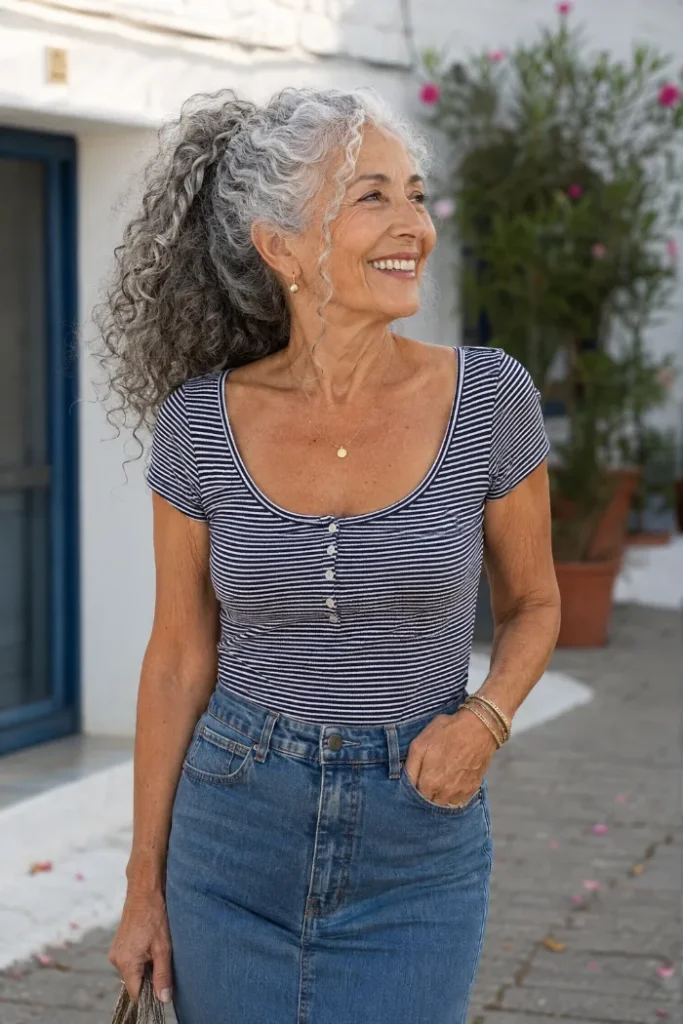
This style shows how gorgeous long natural curls can look when the haircut leaves enough length and density for a full ponytail. The curl pattern stays springy through the gathered lengths, while shorter silver tendrils are left loose around the face. The contrast between darker gray underneath and brighter silver near the front makes the individual curls especially noticeable.
Ask your stylist for long curl-conscious layers that remove bulk without thinning out the bottom of your ponytail. If you want the same loose pieces at the front, have a few curls shaped to fall around the cheek and jaw when pulled back. Make sure those pieces are cut with their natural shrinkage in mind rather than stretched straight.
7. Precision Graduated Silver Bob
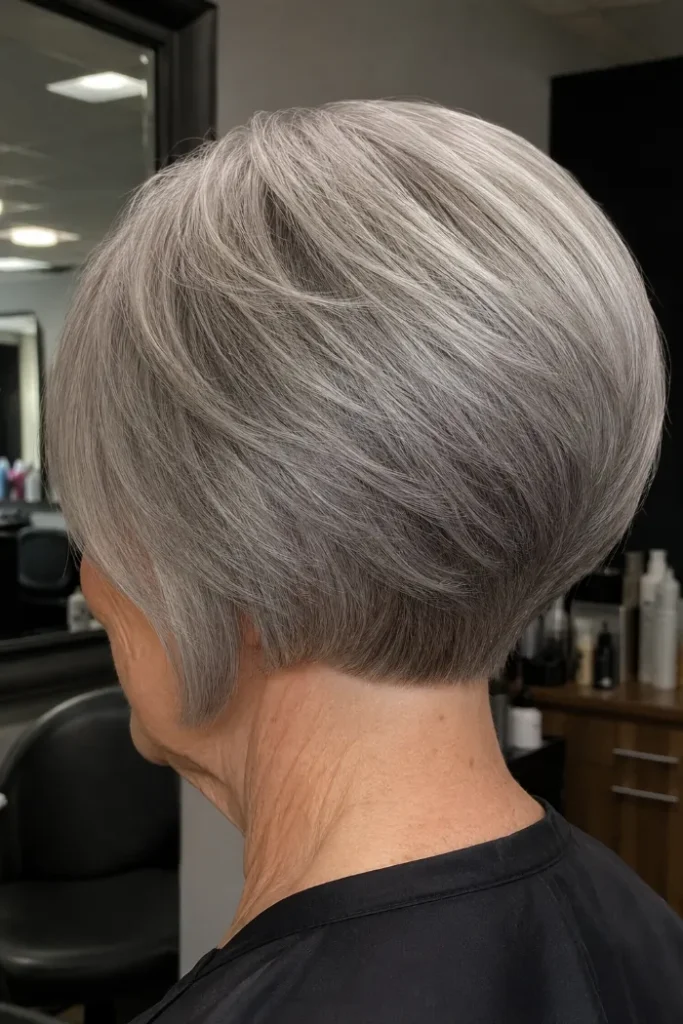
The back view really shows the architecture of this short silver bob. The nape is cut close and clean, then the hair builds gradually into a rounded, fuller shape higher on the back of the head. Long surface layers lie smoothly over the graduation, giving the cut that polished stacked effect without visible choppy steps.
Ask your stylist for low, controlled graduation at the nape with the weight building through the occipital area instead of being removed too high. Show them exactly how close you want the neckline, because that changes the whole feel of this cut. Keeping the top layers longer will help maintain the smooth, seamless finish seen here.
8. Rounded Gray Bob With a Deep Side Part
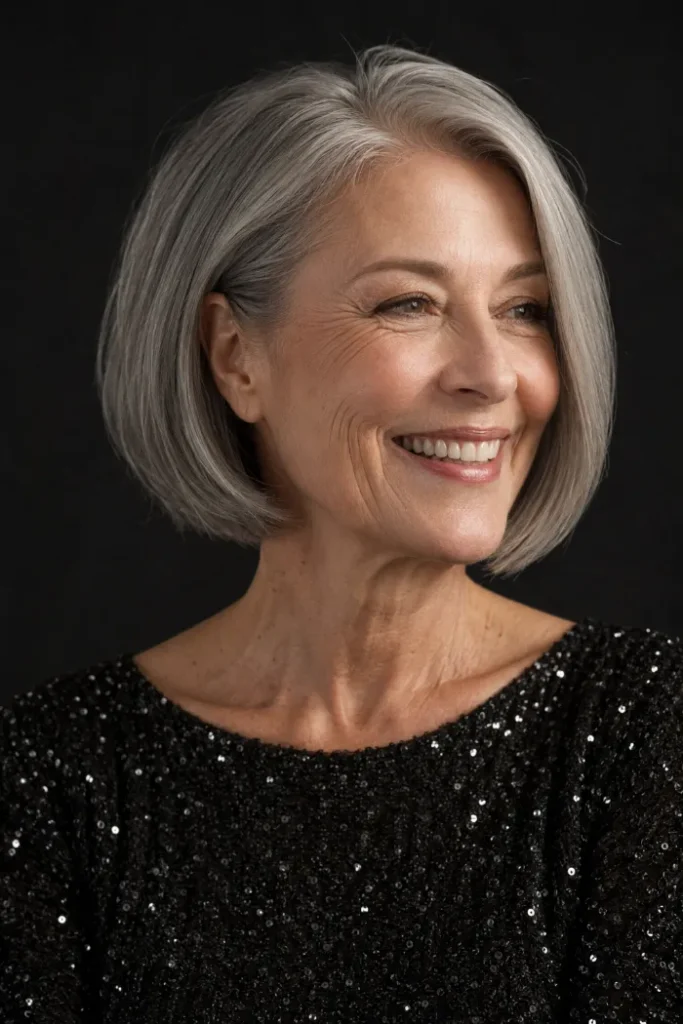
This jaw-length gray bob has a compact, rounded silhouette with the ends curving gently toward the neck. The deep side part gives one side more volume while the opposite side sits neatly behind the ear. There is just enough shaping through the lower edge to keep it from feeling boxy, but the perimeter still looks wonderfully dense and controlled.
Ask your stylist to preserve a strong jaw-length perimeter and use subtle graduation or internal shaping rather than heavy texturizing. Tell them which side you normally part your hair on so the cut balances correctly when one side is tucked back. If your hair is fine, keeping the ends relatively solid will help maintain this fuller outline.
9. Sharp White Blunt Bob
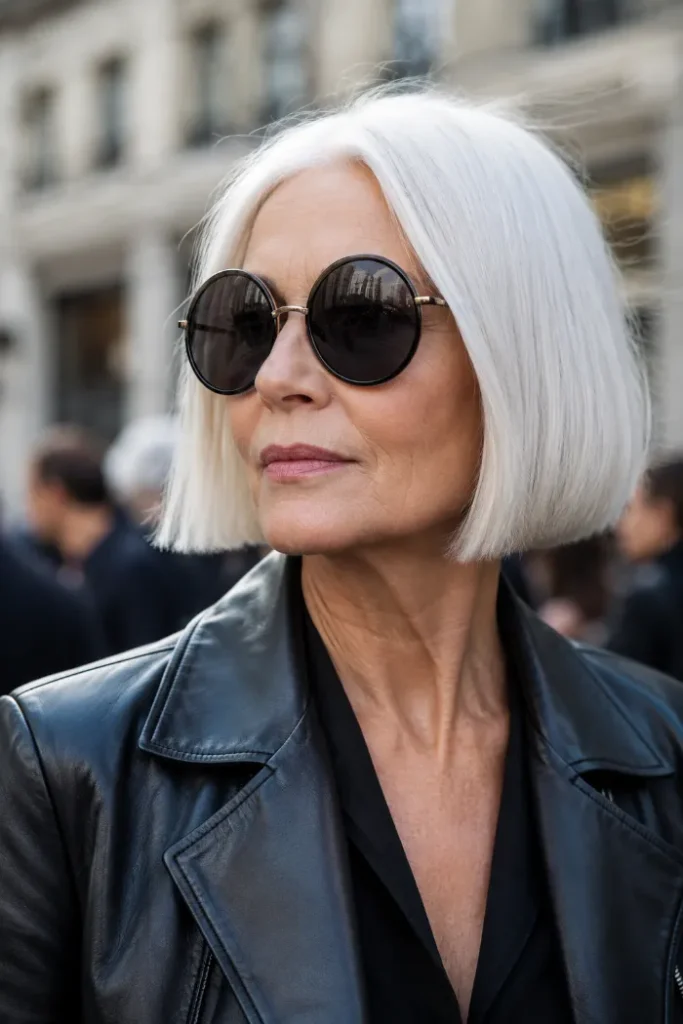
This bright white bob is all about the line. The hair falls to roughly jaw level with a crisp, nearly one-length perimeter and very little visible layering. The center area is parted simply, letting the sleek texture and graphic shape do the work. Compared with a rounded bob, this one feels sharper because the ends hang straight instead of curling underneath.
Ask your stylist for a blunt jaw-length bob with minimal layering and enough weight left through the corners to keep the outline strong. Be specific that you want the ends to fall straight rather than bevel under. For a finish this sleek, use heat protection and direct a flat or paddle brush downward while drying to smooth the cuticle.
10. Layered Silver French Bob
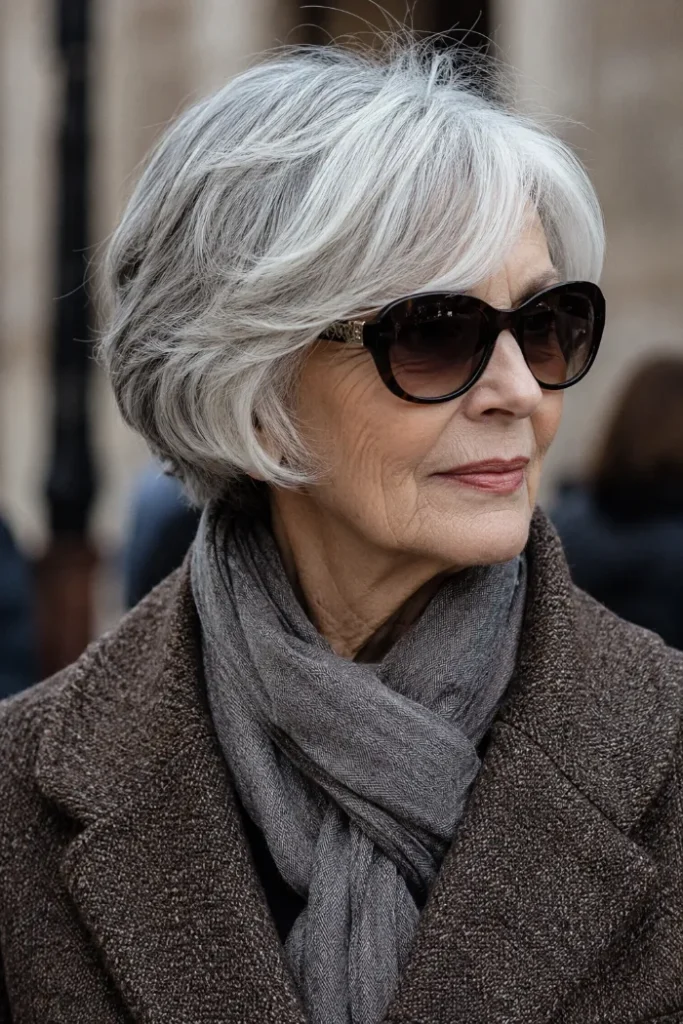
This short silver bob has more movement than a classic one-length French bob. The sides are softly layered and feather away from the face, while the fringe sweeps diagonally across the forehead instead of sitting straight down. The overall length stays close to the jaw, but the curved layers create a fuller, less geometric silhouette around the sides.
Ask your stylist for a short jaw-skimming bob with light layering around the sides and a long diagonal fringe that can sweep across the forehead. Keep the layering soft so the perimeter still has some substance. When blow-drying, direct the fringe to the side and roll the side layers gently away from the face for that feathered movement.
11. Airy Silver Pixie With Piecey Texture
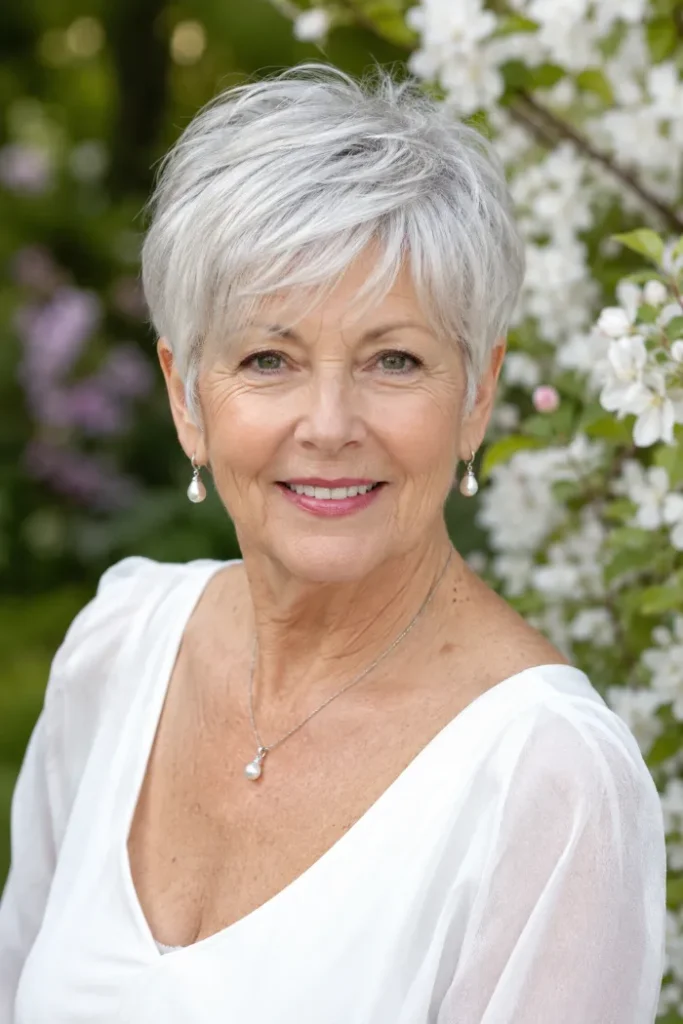
This little silver pixie has plenty of lift without looking overly styled. The sides are cropped close, while the crown and top are left longer and broken into soft, piecey sections. A wispy side-swept fringe brings the texture forward over the forehead. The uneven separation through the top is what keeps the short shape light rather than severe.
Ask your stylist to keep the sides and nape neat while leaving noticeably more length through the crown and fringe for movement. Request point-cut texture through the top instead of thinning the entire cut. Rub a tiny amount of lightweight paste between your fingertips and pinch a few sections into place rather than coating every strand.
12. White Layered Bob With Wispy Bangs
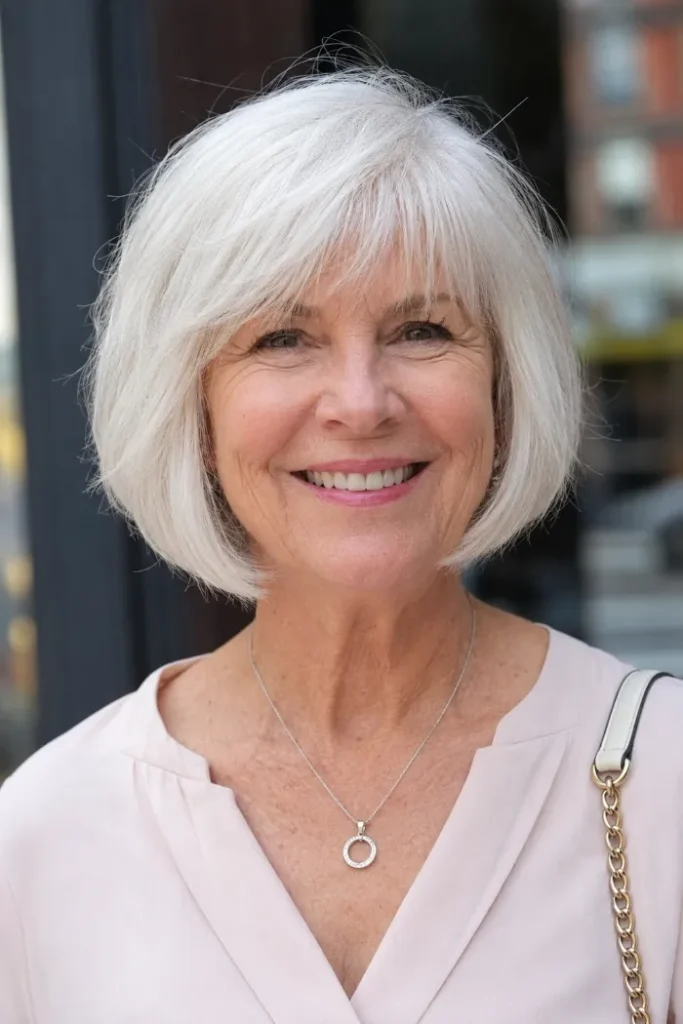
This white bob has a soft rounded shape that falls around the chin, but the wispy fringe makes it feel completely different from the sleek bobs above. The bangs are light enough to separate across the forehead, and delicate layers around the sides keep the edge from looking too heavy. The slightly tousled finish also gives the bright white color a softer texture.
Ask your stylist for a chin-length layered bob with airy bangs that graze the brow rather than a thick fringe cut from far back on the crown. Request gentle face-framing around the cheek area while keeping enough density along the bottom. A light volumizing mousse and quick round-brush pass can add movement without turning it into a formal blowout.
13. Soft Feathered Short Cut
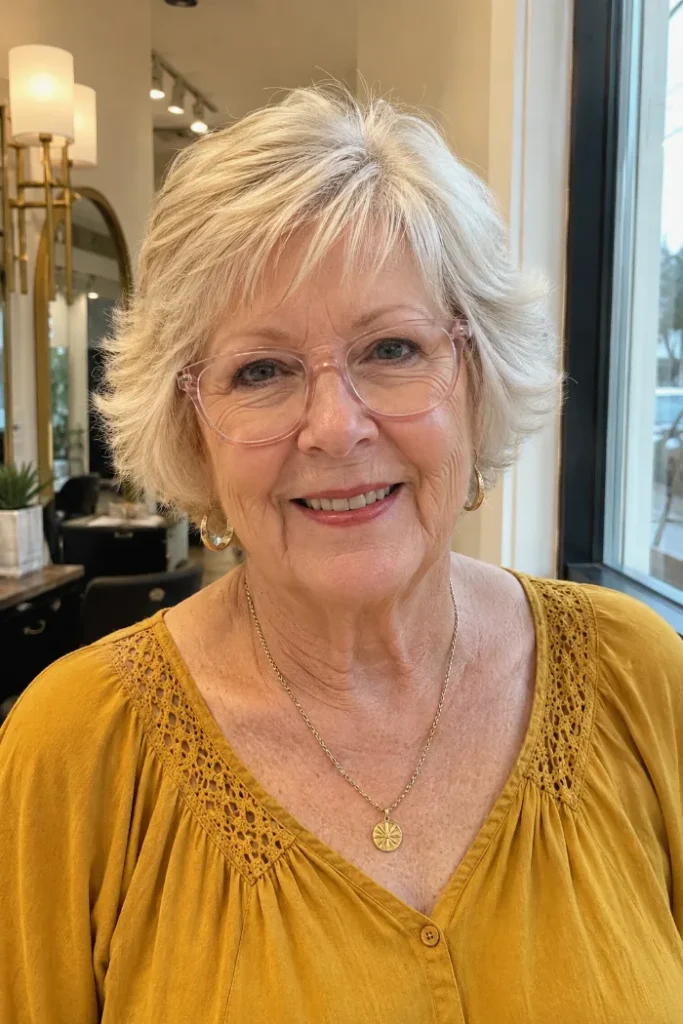
This short blonde cut sits between a pixie and a cropped bob, with lots of feathered movement around the sides. Fine, wispy bangs skim the forehead, while the side layers flip outward near the ears instead of hugging the head. The crown is kept slightly fuller, which balances the lighter, flicked ends and gives the haircut a relaxed, airy shape.
Ask your stylist for a short layered cut with enough length through the crown and sides to create those outward flips. Keep the fringe soft and broken rather than cutting a dense straight line. If your hair loses volume easily, avoid excessive thinning at the crown and use a small round brush to lift the roots as you dry.
14. Voluminous Wavy Gray Lob
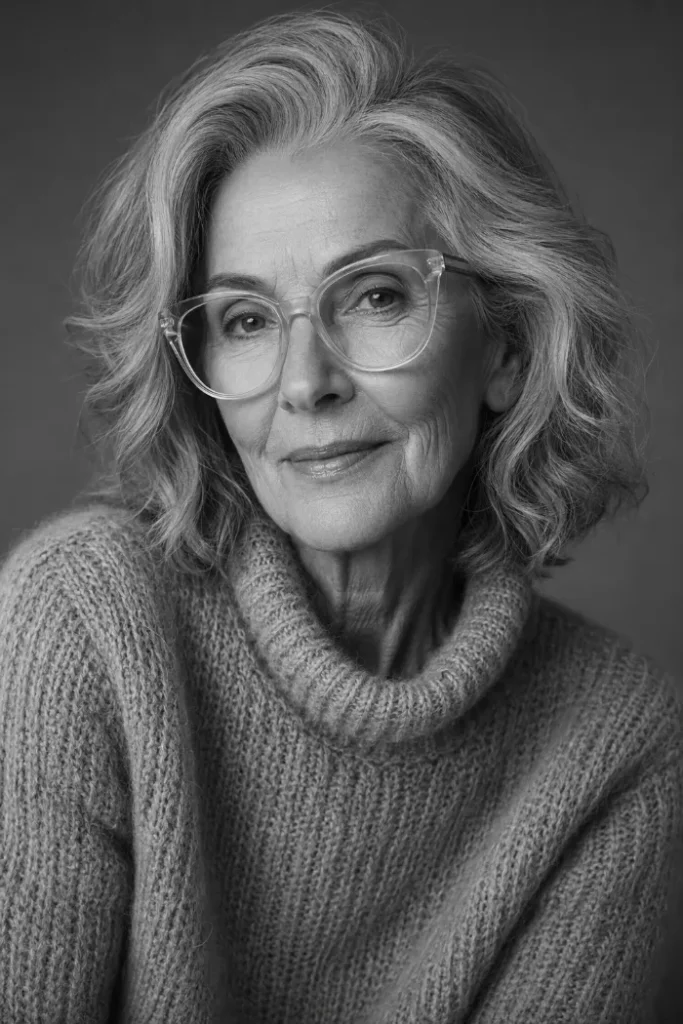
This medium gray lob has a glamorous amount of movement, with a deep side part and broad waves sweeping away from the face. The length sits around the shoulders, while layers through the sides keep the wave pattern from becoming bottom-heavy. The front has plenty of lift, and the ends remain soft rather than forming a blunt line across the shoulders.
Ask your stylist for a shoulder-level lob with blended layers beginning around the cheekbones and continuing through the lower lengths. Keep enough perimeter weight to support the larger waves. For this kind of volume, set the front away from your face with a round brush, large rollers, or a wide-barrel tool and let it cool before brushing through.
15. Full-Crown Gray Pixie
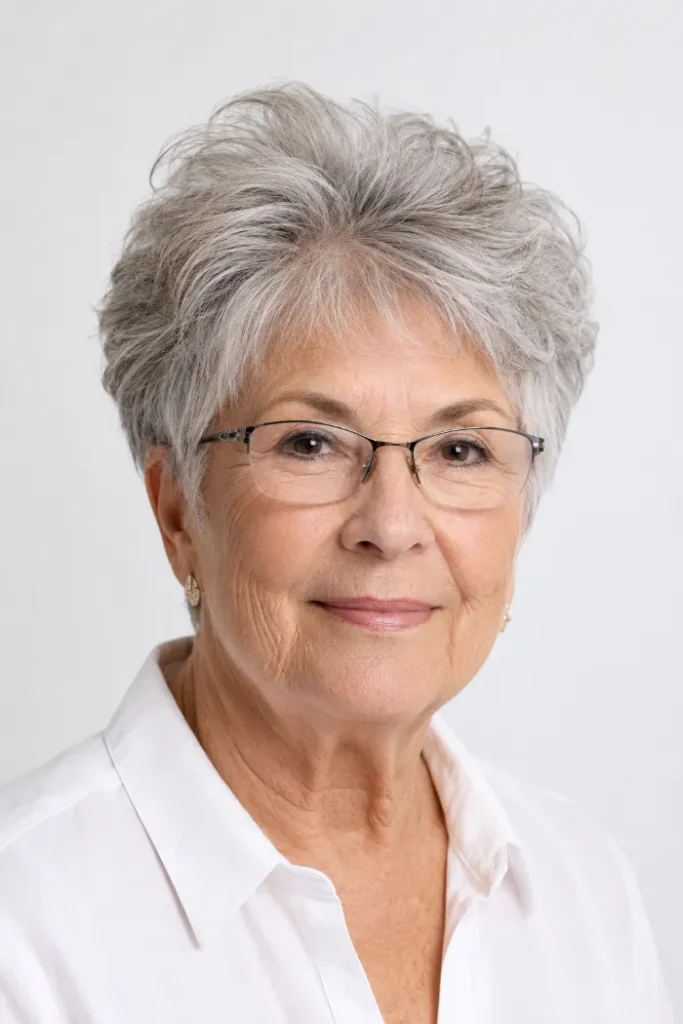
This gray pixie keeps the sides relatively neat but leaves a generous amount of soft length through the crown and upper sides. The top is tousled upward rather than pressed flat, and a short, wispy fringe falls forward across the forehead. I especially like the rounded fullness through the top because it gives the crop presence without needing a hard, sculpted finish.
Ask your stylist for a tapered short cut with the crown left longer than the sides so you have enough hair to lift and separate. Request a soft fringe with uneven, feathered ends rather than a blunt bang. When styling, concentrate your mousse or root-lifting product at the crown and keep heavier creams away from that area.
16. Textured Pixie With Side-Swept Fringe
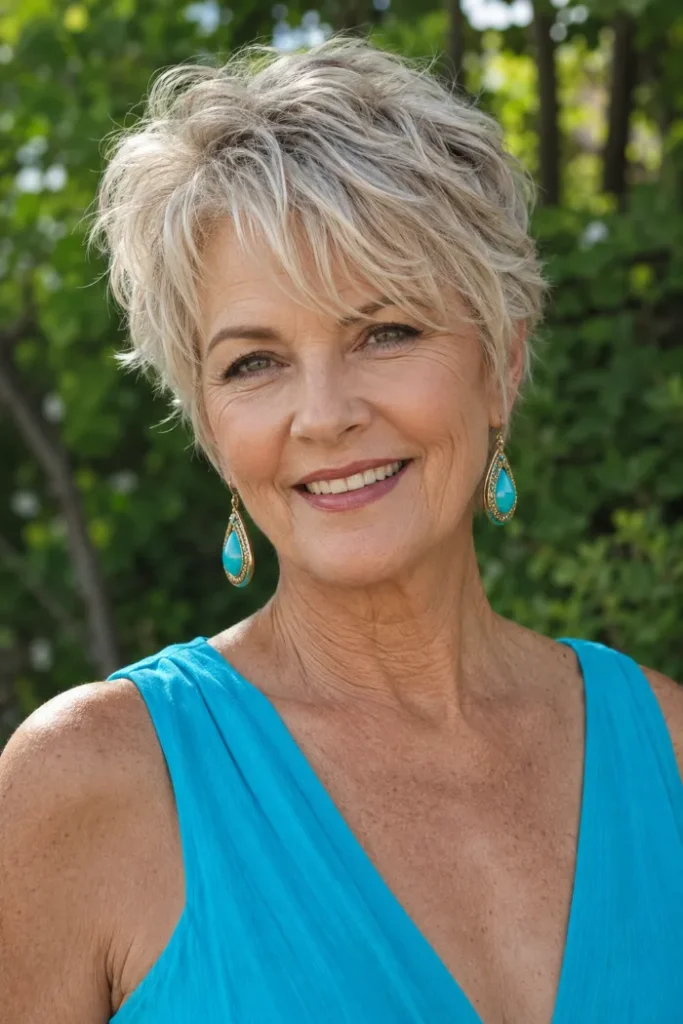
This silver-blonde pixie has a longer top that sweeps diagonally across the forehead, while the crown is cut into separated, tousled layers. The sides stay short enough to expose the ears, so all the movement is concentrated through the upper section. Brighter pieces around the fringe make the texture stand out even more against the slightly deeper roots.
Ask your stylist to leave the front long enough for a true side sweep while tapering the hair cleanly around the ears and nape. Have the crown point-cut for separation, but keep enough density in the longer fringe to hold its shape. Style the top in different directions with your fingers instead of brushing it into one uniform curve.
17. Ultra-Short Silver Pixie Crop
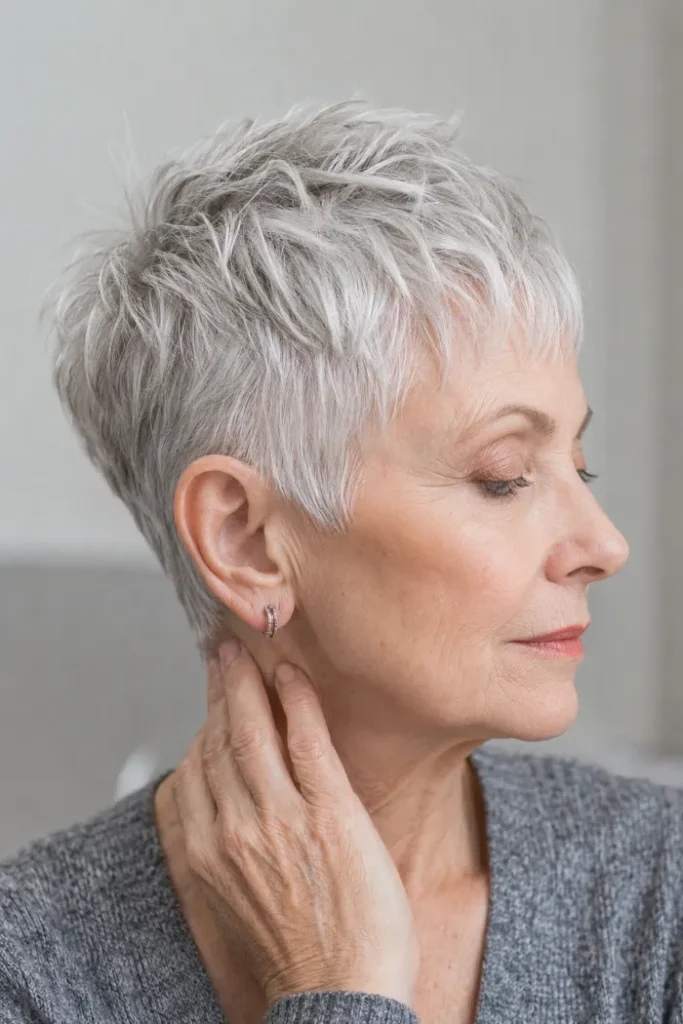
This is the shortest cut in the roundup, with closely tapered sides, a neat nape, and a short textured top. The tiny fringe is broken into fine pieces across the forehead rather than cut as one heavy line. Even at this cropped length, the slightly longer strands through the crown create enough irregular texture to keep the silhouette from looking flat.
Ask your stylist for a close tapered pixie with the sides and nape snug but the top left just long enough for piecey texture. Request a soft micro fringe that blends into the temples rather than a sharp horizontal edge. This shape depends on its clean outline, so plan on regular reshaping if you want to keep it this cropped.
Haircuts for Women Over 70 FAQs
How often should a short haircut be trimmed?
Very short pixies usually show their grow-out fastest, so around four to six weeks is a common starting point if you want to preserve a close taper. A bob can often go closer to six to eight weeks, while longer layered cuts may comfortably stretch further. Your own growth rate and how precise you like the shape matter most.
Are bangs a good option if my hair has become finer?
They can be, but I would keep an eye on how much hair is being borrowed from the top to create them. A light, wispy fringe or longer side sweep can give you softness without taking a huge section from the crown. If density is limited, preserving fullness through the rest of the haircut may be the better tradeoff.
What kind of haircut works well with natural gray or white hair?
There is no single cut that gray hair needs. Choose according to your texture and density first. Sleek silver can look striking in a precision bob, while wirier or more textured gray hair can be beautiful in feathered pixies, waves, or curl-focused layers. A clear shape usually matters more than trying to force the hair into a particular finish.
How do I choose a haircut that is easier to style?
Start with what your hair already wants to do. If it dries straight, a blunt or softly rounded bob may require less effort than creating daily curls. If you have natural texture, a layered cut that works with it can save time. Also consider salon maintenance, because a wash-and-go pixie can still require frequent trims to keep its shape.
Choosing the Cut You Will Actually Enjoy Wearing
When you narrow these down, look first at your favorite visual detail. Maybe it is the crisp line of a silver bob, the lifted crown of a pixie, the softness of a sweeping fringe, or the movement in long layers. Then compare that detail with your own texture and density instead of trying to copy every part of the reference photo.
I would also be realistic about upkeep. A very short taper gives you a clean, intentional shape but needs more salon visits, while medium and long layers offer more room to grow. Pick the version that fits your routine as well as your taste, and bring the exact image you like to your stylist so you can talk through the details together.