10 Fine Hair Styling Mistakes That Make Your Hair Look Flat
Fine hair can look beautifully soft one moment and completely flat the next. You spend time styling it, carefully arranging the roots and smoothing the ends, only to find that the volume has disappeared before you’ve even left the house.
Sometimes the problem isn’t your hair. It’s the way you’re treating it.
A rich conditioner applied too close to the scalp, an overly layered haircut, or a styling cream that’s too heavy for your strands can change the way fine hair looks and feels. Even habits that seem helpful, like brushing repeatedly or turning up the heat on your blow dryer, may be working against you.
Fine hair has its own strengths. It can look incredibly sleek, hold a beautifully defined haircut, and feel naturally soft without much effort. The trick is knowing which habits complement those qualities and which ones leave it looking limp.
Here are ten styling mistakes worth reconsidering, along with realistic adjustments that can help your fine hair look fuller without sacrificing its condition.
The First Mistake Happens Before You Start Styling
Most people focus on the finished hairstyle. But the products you apply before drying can have just as much influence on the result.
Mistake 1: Using Too Much Product Because Your Hair Looks Flat
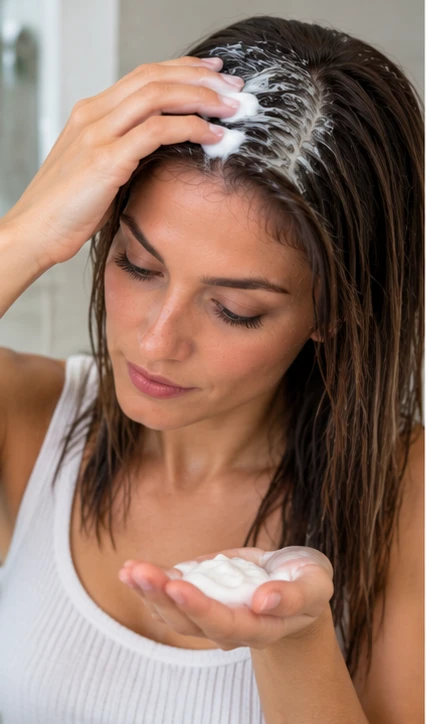
It’s tempting to assume that more styling product will create more volume.
You might apply a leave-in conditioner, follow it with mousse, add a smoothing cream, and finish with hairspray.
Each product has a purpose, but together they may leave fine strands feeling coated or weighed down.
Fine hair doesn’t always need less care. It often needs more careful product selection and application.
A better approach: Start with one styling product that addresses your main concern.
If your roots are flat, consider a lightweight volumizing mousse or root-lifting product. If your ends are dry, concentrate a small amount of conditioning product where it’s needed.
Avoid applying every product from roots to ends unless the instructions and your hair’s needs call for it.
The American Academy of Dermatology recommends using small amounts of leave-in conditioner, particularly for fine hair, to avoid an overly greasy appearance.
Try this at your next wash: Use only your usual shampoo, conditioner, and one styling product. Observe whether your hair has more movement than it does when you use several products.
You may discover that simplifying your routine works better than buying something new.
Mistake 2: Applying Rich Conditioner All Over Fine, Straight Hair
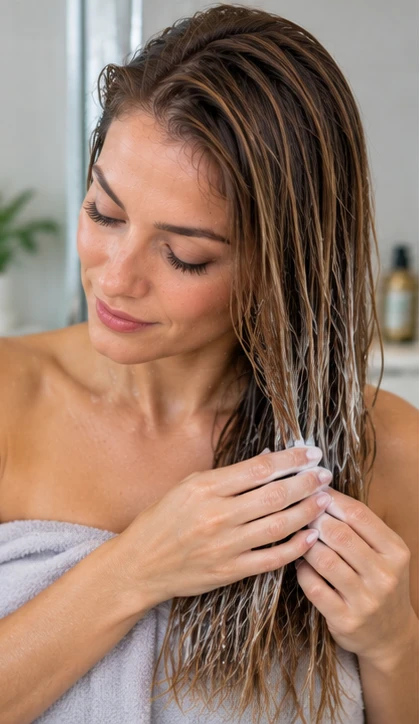
Conditioner isn’t the enemy of fine hair.
In fact, skipping it completely can leave your hair difficult to detangle, especially if it’s long, color-treated, or prone to breakage.
The issue is often placement.
If your fine hair is straight and your scalp becomes oily quickly, applying a rich conditioner all the way to the roots may leave your hairstyle looking flatter.
Try concentrating your rinse-out conditioner on the mid-lengths and ends.
Use enough to make the hair manageable, then rinse thoroughly.
This isn’t a universal rule for everyone with fine hair. Fine curls, chemically treated hair, and particularly dry strands may benefit from conditioning throughout more of the hair.
The goal isn’t to remove moisture. It’s to condition the areas that need it without unnecessarily weighing down the roots.
Mistake 3: Following a Washing Schedule That Doesn’t Suit Your Scalp
Some hair-care advice insists that washing less frequently is always healthier.
For someone with fine, straight hair and an oily scalp, that approach may leave the roots looking greasy and separated.
Other people have dry scalps or curl patterns that respond better to less frequent washing.
There isn’t one washing schedule that works for every person.
According to the American Academy of Dermatology, washing frequency should depend on how oily or dirty your scalp becomes.
If your hair feels heavy with oil or styling residue, it may be time to cleanse.
Concentrate shampoo on the scalp rather than aggressively rubbing the lengths.
Let the shampoo rinse through the hair while avoiding unnecessary friction.
How to tell whether washing frequency is affecting your volume
Consider these observations:
- Your roots look noticeably flatter as scalp oil accumulates.
- Your hair feels coated even after brushing.
- Dry shampoo is becoming a regular substitute for washing.
- Your ends feel dry while your scalp feels oily.
These clues can help you adjust your routine, although they don’t necessarily mean you need to wash daily.
Experiment with a schedule appropriate to your scalp rather than following a blanket rule.
The Styling Habits That Quietly Work Against Your Hair
Clean, well-conditioned hair can still look flat if the styling technique doesn’t match the result you want.
Mistake 4: Blow-Drying Every Section Straight Down
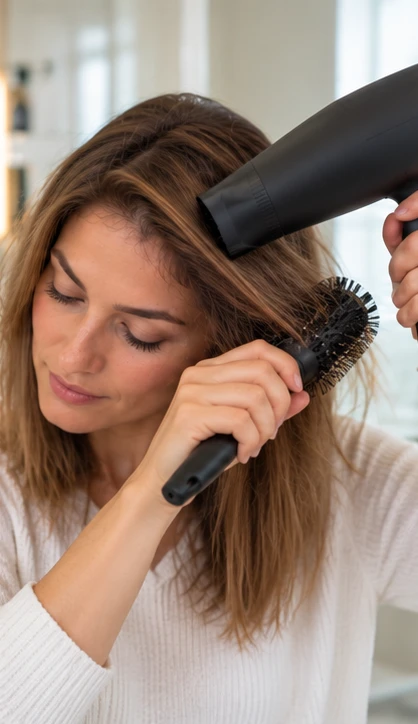
A downward blow-drying technique can produce a smooth, polished finish.
But if your goal is additional height around the crown, drying every section flat against the scalp may not give you the shape you want.
The direction in which you arrange your roots affects how your finished hairstyle sits.
Try lifting small sections around the crown with your fingers or a brush while directing airflow gently toward the roots.
Keep the dryer moving and avoid pulling the hair tightly.
Use a low or medium heat setting, follow heat-protectant instructions, and reduce heat styling when possible.
Allowing hair to partially air-dry can also reduce the amount of time needed with the dryer.
If you want a detailed volume-building routine, see our guide to adding volume to fine hair once that companion article is published.
You don’t have to create a dramatic blowout. Even a modest adjustment to the root direction may improve the shape.
Mistake 5: Believing Higher Heat Will Make Fine Hair Hold Its Style Better
When a hairstyle refuses to hold, it’s easy to increase the heat.
You might use the hottest dryer setting, repeatedly straighten the same section, or keep a curling iron in place longer than necessary.
But excessive heat can damage the hair shaft, leading to breakage and a less healthy-looking finish.
Fine hair doesn’t automatically require a particular temperature. The appropriate setting depends on your hair’s condition, tool, texture, and the manufacturer’s instructions.
The American Academy of Dermatology recommends reducing heat exposure, allowing hair to partially air-dry when practical, and using low or medium settings.
Try changing your technique before increasing the temperature.
Work with smaller, manageable sections. Keep heated tools moving as appropriate, avoid repeated passes, and allow styled sections to cool.
A gentler routine is especially worthwhile if your hair is bleached, fragile, or already showing signs of breakage.
Mistake 6: Constantly Brushing Your Hair to Bring Back Volume
Repeated brushing may temporarily rearrange flat strands, but it can also undo your styling.
Aggressive brushing and pulling can contribute to breakage, particularly when hair is tangled or vulnerable.
The old idea that hair needs 100 brush strokes a day isn’t supported by dermatologists.
Instead, brush only as needed for detangling and styling.
If the crown has lost its shape, try adjusting the roots with your fingertips rather than brushing through every section again.
If you have fine waves, brushing dry hair may also disturb the wave pattern and create unwanted frizz.
A practical alternative: Gently change your part, reposition the front sections, or use a loose clip to lift the crown briefly.
These adjustments may refresh the silhouette without putting your hair through a complete restyling session.
When Your Haircut Is Part of the Problem
Not every fine hair concern can be solved with a new product.
Sometimes the shape of your haircut deserves more attention.
Mistake 7: Asking for Too Many Layers Without Considering Hair Density
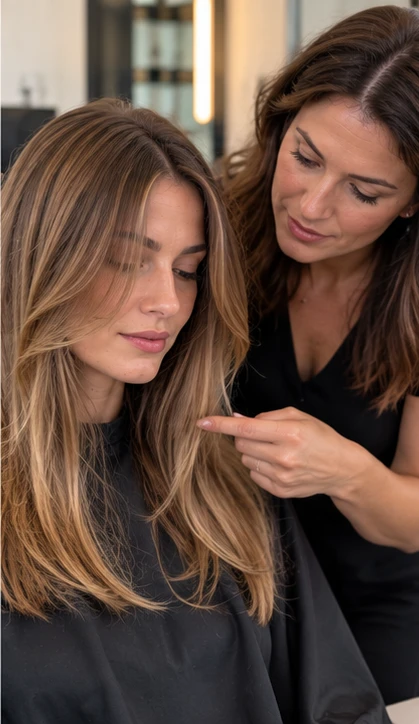
Layers can add movement and shape, but they also redistribute where the hair ends.
If you have fine strands and relatively low density, removing too much hair from the lower lengths may make your ends appear sparse.
This is particularly noticeable when a haircut has many short layers and very little hair remaining around the perimeter.
That doesn’t mean fine hair should never be layered.
Someone with dense, fine waves might benefit from thoughtfully placed layers that help the hairstyle move more naturally.
The important distinction is between strand thickness and overall hair density.
Before asking for a heavily layered style, talk to your stylist about how much fullness can be preserved through the ends.
A useful salon question is:
“Can we add some movement without making the bottom of my hair look thinner?”
For haircut inspiration, explore our short layered bob hairstyles and chin-length bob ideas for fine hair.
Mistake 8: Keeping a Haircut That No Longer Has the Shape You Want
Long hair isn’t automatically unsuitable for fine strands.
But holding onto a particular length when the ends have become damaged, uneven, or difficult to style may leave the overall hairstyle looking less defined.
Take a look at your hair when it’s dry and arranged naturally.
Does the bottom edge still have the fullness you like?
Does the shape work with your natural movement?
Do you regularly struggle to make your haircut look balanced?
You may not need a dramatic transformation.
A modest trim, a revised cutting line, or better-placed layers may be enough to make the style feel more intentional.
Three haircut directions worth discussing
| If your concern is… | Consider discussing… | Why it may help visually |
|---|---|---|
| Wispy-looking ends | A blunt bob or fuller perimeter | Creates a more defined outline |
| Flat crown with longer hair | Controlled layering or shorter shape | Can change weight distribution |
| Lack of movement | A softly shaped lob | Offers flexibility without excessive layering |
A fuller-looking haircut doesn’t have to be dramatic or heavily styled.
A clean outline and movement in the right places can make an understated bob look polished.
For more ideas, browse our short bob hairstyles for thin fine hair and long bob hairstyles for thin fine hair.
Two Mistakes That Affect Hair Condition, Not Just Volume
A hairstyle that looks good for a few hours isn’t worth repeated damage.
These habits are worth checking even if you aren’t currently struggling with flat roots.
Mistake 9: Roughly Drying and Detangling Wet Hair
Wet hair needs careful handling.
Rubbing it vigorously with a towel or pulling through tangles can increase friction and breakage.
Instead of aggressively towel-drying, gently blot or wrap the hair to absorb excess water.
For straight hair, letting it dry slightly before detangling may make handling easier. Use a wide-tooth comb and work from the ends upward.
For curly or tightly textured hair, detangling while damp and conditioned may be more appropriate.
Avoid forcing the comb through knots.
If you encounter resistance, pause and gently separate the strands rather than pulling harder.
Good detangling habits won’t magically make fine hair thicker, but they can help preserve the condition of your existing lengths.
Mistake 10: Confusing Fine Hair With Hair That Is Actually Thinning
This is one of the most important distinctions in the article.
Fine hair refers to the diameter of individual strands.
Thin hair generally describes lower hair density.
You can have naturally fine hair with plenty of strands, or you can have fine hair and also experience a reduction in density.
A styling product may change how full your hair appears, but it won’t necessarily address the reason your hair density is changing.
If your part is becoming noticeably wider, your ponytail is getting smaller, or you’re experiencing sudden shedding, don’t assume the solution is simply another volumizing product.
A dermatologist can assess possible causes and explain appropriate next steps.
For a detailed explanation of the difference, read our companion guide, Fine Hair vs Thin Hair: What’s the Difference and Why It Matters?
A Better Way to Troubleshoot Fine Hair
Before changing your entire routine, identify the single problem that bothers you most.
This quick reference can help.
| Your main concern | First habit to investigate | A reasonable adjustment |
|---|---|---|
| Roots look greasy quickly | Washing schedule and scalp products | Cleanse according to scalp needs |
| Hair feels coated | Number and amount of products | Simplify your styling routine |
| Ends look dry | Conditioning and heat exposure | Condition appropriately and reduce heat |
| Hair loses shape after drying | Root direction | Adjust drying technique |
| Ends appear wispy | Haircut shape | Discuss preserving the perimeter |
| Hair breaks while styling | Brushing, tension, or heat | Use gentler handling |
| Scalp is increasingly visible | Potential change in density | Seek professional evaluation |
Avoid making several changes at once.
If you switch shampoo, conditioner, styling mousse, haircut, and drying technique during the same week, you won’t know which change helped.
A more useful approach is to adjust one variable and pay attention to how your hair responds.
For example, you might start by reducing the amount of styling cream you use at the roots.
If your hair feels lighter and has more movement, you’ve learned something useful about how that product interacts with your strands.
If nothing changes, you can move on to another possibility.
What You Don’t Need to Buy to Make Fine Hair Look Better
It’s easy to assume that every volume problem requires another product.
But a useful fine hair routine doesn’t need to be complicated.
You don’t automatically need a clarifying shampoo every week, an expensive rotating hot brush, several leave-in products, or a collection of professional styling sprays.
What matters more is whether your routine addresses your actual needs.
A gentle shampoo appropriate for your scalp, a suitable conditioner, and one styling product may be enough for some people.
Others may need additional conditioning or styling support because their hair is color-treated, curly, or prone to tangling.
The right number of products isn’t the same for everyone.
Before purchasing something new, ask yourself whether it solves a problem your current routine can’t address.
Give Your Fine Hair a Little More Room to Move
Fine hair isn’t a flaw to correct. It’s a natural hair characteristic that responds differently to styling, product weight, moisture, and haircut shape.
Some of the most useful improvements are also the simplest.
Using less product near the roots, conditioning according to your texture, reducing aggressive handling, or adjusting the shape of your haircut may make your hair easier to manage.
You don’t need to follow every recommendation at once.
Start with the mistake that sounds most familiar, make one thoughtful change, and see whether your hair looks and feels better.
Fuller-looking fine hair often comes down to working with the strands you have rather than trying to force them to behave like a completely different hair type.
Sources and Further Reading
- American Academy of Dermatology — Tips for Healthy Hair
- American Academy of Dermatology — 10 Hair-Care Habits That Can Damage Your Hair
- American Academy of Dermatology — Dermatologists’ Tips for Using Leave-In Conditioner
- American Academy of Dermatology — Hair Styling Without Damage
Editorial note: This article provides general hair-care and styling information. Styling outcomes vary according to hair density, natural texture, length, and condition. The accompanying AI-generated visuals are editorial illustrations, not tested client results.