Fine Hair vs Thin Hair: What’s the Difference and Why It Matters?
Fine hair and thin hair are often treated as the same thing, but they describe two different characteristics of your hair. Understanding the difference can completely change how you choose a haircut, apply styling products, and build your daily hair-care routine.
Fine hair refers to the diameter of individual hair strands, while thin hair generally refers to how much hair you have on your scalp. You can have fine hair that looks incredibly full, thick strands with low density, or a combination of both.
That’s why a hairstyle that creates beautiful volume for one person may fall flat on another.
Before buying another volumizing shampoo or asking your stylist for layers, it helps to know exactly what you’re working with.
Fine Hair vs Thin Hair: The Key Differences
The simplest way to understand the difference is to think about the size of each strand compared with the number of strands growing from your scalp.
| Feature | Fine Hair | Thin Hair |
|---|---|---|
| What it describes | Individual strand diameter | Overall hair density |
| Strand texture | Each strand is relatively narrow | Strands may be fine, medium, or coarse |
| Overall appearance | Can look flat despite having plenty of hair | May show more scalp, especially around the part |
| Common styling concern | Hair loses volume or becomes weighed down | Hairstyles may lack overall fullness |
| Main styling approach | Lightweight products and root lift | Strategic shape, coverage, and gentle handling |
| Can both occur together? | Yes | Yes |
Your hair density and strand thickness work together to determine how full your hairstyle appears. Hair texture, curl pattern, length, and the way your hair is cut also influence the result.
What Is Fine Hair?
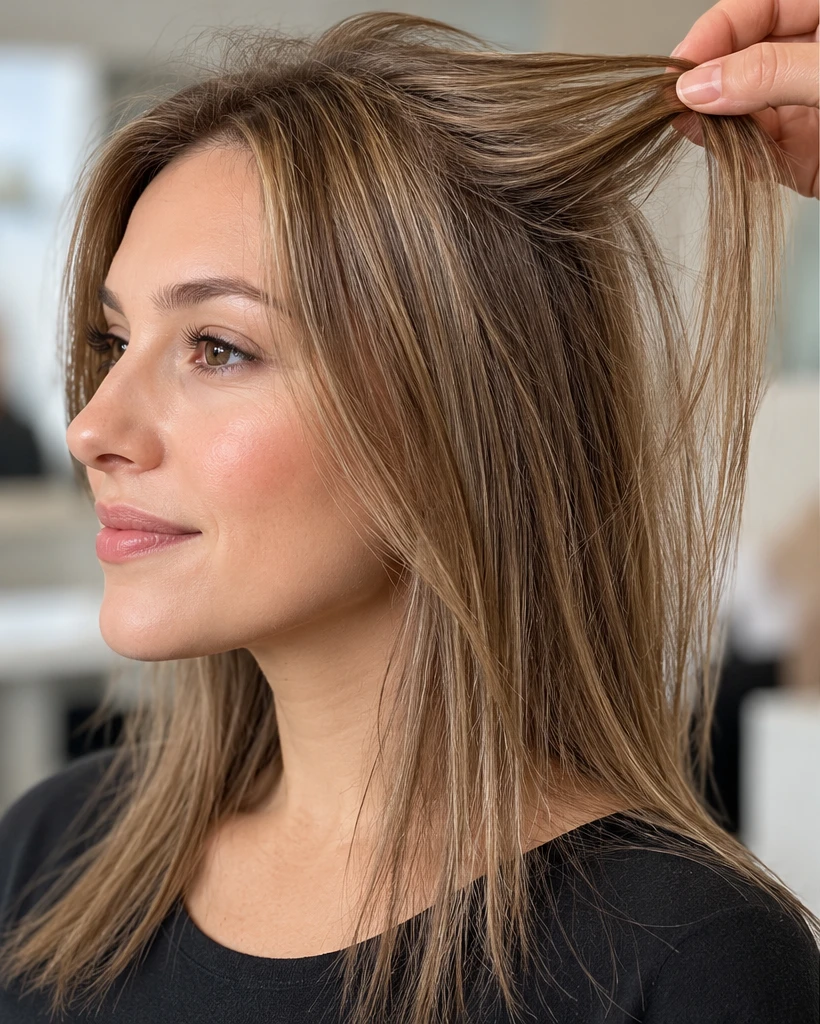
Fine hair consists of strands with a relatively small diameter. When you hold a single strand between your fingers, it may be difficult to feel.
Because each strand has less bulk, fine hair can look sleek and soft but may struggle to hold certain styles.
Fine hair is not necessarily unhealthy, and it doesn’t automatically mean you’re losing hair.
Someone with fine hair can have high hair density, giving them a full head of hair despite the delicate size of each strand.
Common characteristics of fine hair
- Individual strands are difficult to feel between your fingers.
- Hair may become flat shortly after styling.
- Heavy conditioners, creams, or oils can weigh it down.
- Roots may appear oily before the lengths do.
- Curls or waves may lose their shape relatively quickly.
These are possible characteristics, not a reliable diagnostic checklist. Oily roots or curls that fall flat can occur with other hair types, too.
How to care for fine hair
Start with lightweight products that give your hair movement without leaving a heavy coating.
Choose a shampoo suitable for your scalp, and apply conditioner mainly through the lengths and ends if your hair is straight and fine.
For styling, try a small amount of volumizing mousse or a lightweight root-lifting product.
Avoid layering several heavy products at once. Fine hair often responds better to a simple routine where each product has a specific purpose.
What Is Thin Hair?
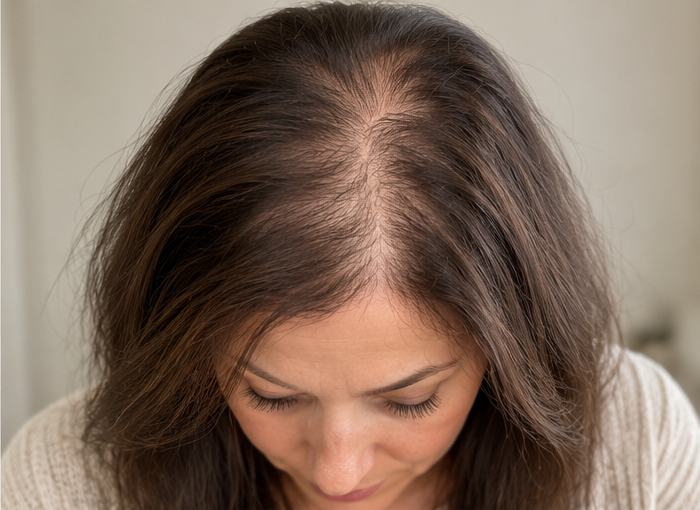
Thin hair usually means that fewer strands are growing within a given area of your scalp, or that the overall density is lower.
It’s important to separate naturally low-density hair from hair that has become thinner over time.
Some people have always had lower-density hair. Others notice changes in their hairline, part width, or ponytail fullness.
These changes can happen for different reasons, and a styling product cannot identify or treat an underlying cause.
Common signs of reduced hair density
You might notice:
- More scalp showing through your hairstyle.
- A wider part than you remember having.
- A ponytail that feels smaller than it used to.
- Less coverage around your crown.
- Difficulty creating a full-looking updo.
The American Academy of Dermatology identifies a widening part and reduced ponytail fullness among possible early signs of hair loss.
If the change is new, ongoing, or significant, it is worth speaking with a dermatologist rather than assuming it’s simply your natural hair type.
Can You Have Both Fine and Thin Hair?
Yes. Strand diameter and hair density are separate features, so you can have both fine strands and relatively low density.
This combination can make volume harder to maintain because there’s less total hair mass and each strand contributes less bulk.
The solution isn’t necessarily to add more layers or use stronger products.
Too many short layers can sometimes make the ends appear sparse. Heavy styling products may also leave the hair looking flatter.
A thoughtfully shaped haircut with controlled layering and lightweight styling can often create a more balanced appearance.
How to Tell Whether Your Hair Is Fine, Thin, or Both
You can make some useful observations at home, although a professional assessment is more reliable if you’re concerned about hair loss.
Step 1: Examine an individual strand
Take a naturally shed hair and hold it gently between your fingertips.
Does the strand feel barely noticeable, or can you feel its texture clearly?
A very delicate strand may suggest fine hair.
This isn’t a precise measurement, but it can help you begin to understand your strand thickness.
Step 2: Check your part and crown
Stand in front of a mirror in good lighting.
Look at your part, then gently change its position and observe how much scalp is visible.
Some scalp visibility is normal. What matters more is whether your part has become wider or the coverage has changed compared with earlier photos.
Lighting, hair color, oil, and the way you part your hair can all affect how much scalp appears to show.
Step 3: Look at your ponytail
Gather your hair into a comfortable, loose ponytail.
Notice how full it feels, particularly if you’ve worn the same hairstyle for years.
A smaller ponytail can reflect a change in density, but layers, hair length, breakage, and recent haircuts can also affect its size.
Step 4: Compare older photographs
Look at pictures taken in similar lighting, with a similar hairstyle and part.
Check whether the crown, temples, or overall fullness appears different.
One photograph isn’t enough to draw a conclusion, but a consistent change over time may be worth investigating.
Your quick hair assessment
| What you notice | What it may suggest | What to do next |
|---|---|---|
| Very narrow strands, but plenty of overall coverage | Fine hair with relatively good density | Prioritize lightweight volume styling |
| Thicker individual strands with a visible, naturally sparse part | Coarser hair with potentially lower density | Discuss coverage and haircut shape with a stylist |
| Very narrow strands and relatively little coverage | Fine hair with low density | Use gentle styling and consider professional advice |
| Part getting wider or ponytail becoming noticeably smaller | Possible change in hair density | Consult a dermatologist |
| Sudden shedding, patches, or scalp symptoms | Possible hair or scalp condition | Seek medical assessment |
This checklist is a starting point for understanding your hair, not a medical diagnosis.
The Best Haircuts for Fine Hair vs Thin Hair
The best haircut depends on more than hair thickness alone. Face shape, curl pattern, styling habits, hair density, and the appearance you want all matter.
Still, certain haircut structures can help create a fuller-looking result.
1. Blunt bob for fine hair
A blunt bob creates a strong, even perimeter, making the ends appear more substantial.
It’s a useful option for fine, straight, or slightly wavy hair that tends to look wispy when heavily layered.
Consider a chin-length or jaw-length bob if you’re comfortable with a shorter style.
The exact length should depend on your face shape, natural texture, and the amount of styling you’re willing to do.
For inspiration, browse our short bob hairstyles for thin fine hair.
2. Softly layered lob for movement
A long bob, often called a lob, offers more length while keeping the overall shape relatively compact.
Subtle layers can add movement without removing too much visual fullness from the ends.
Ask your stylist to preserve a substantial-looking perimeter rather than cutting numerous short layers.
Explore our long bob hairstyles for thin fine hair to compare different shapes.
3. Textured pixie for easy root lift
A pixie cut can work especially well when longer fine hair tends to collapse under its own weight.
Shorter sections can be easier to lift and shape with a small amount of styling product.
A textured top, softly tapered sides, and a fringe can create visual interest without requiring long styling sessions.
See our short pixie haircuts for fine hair for ideas.
4. Carefully shaped layers for thin hair
Layers can help create movement, but they don’t physically increase the number of hairs on your scalp.
If your ends already look sparse, excessive layering may make the problem more noticeable.
Discuss keeping fullness around the perimeter while creating movement only where needed.
A good stylist should consider how your hair falls naturally before deciding where to remove weight.
A Simple Styling Routine for Fuller-Looking Fine Hair
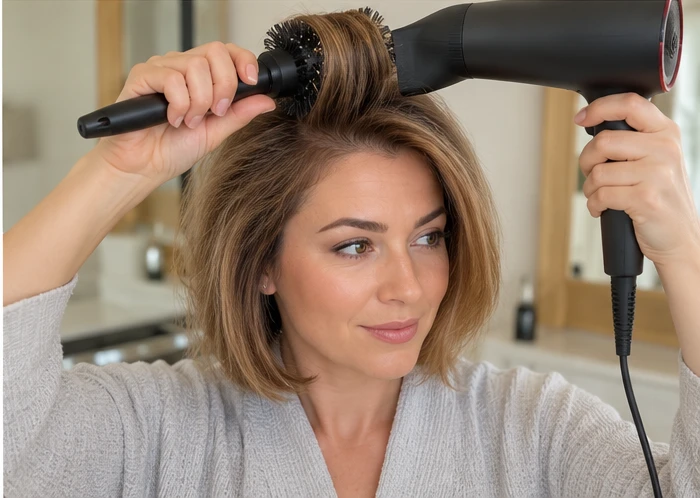
You don’t need a complicated collection of products to create a fuller hairstyle.
Start with this routine and adjust it to your hair’s texture, condition, and tolerance for heat.
Step 1: Wash your scalp thoroughly
Apply shampoo primarily to your scalp and gently massage using your fingertips.
Let the shampoo rinse through the lengths rather than aggressively rubbing the ends.
The right washing frequency depends on how oily or dirty your scalp becomes, not a universal rule that everyone should wash every few days.
Step 2: Condition the lengths
For straight, fine hair, start by applying conditioner mainly to the mid-lengths and ends.
If your hair is curly, dry, damaged, or textured, you may need more conditioning throughout.
Rinse thoroughly and avoid unnecessary product buildup.
Step 3: Gently remove excess water
Press the hair with a soft towel or microfiber towel rather than rubbing vigorously.
Detangle according to your hair texture, working carefully from the ends upward.
Step 4: Add lightweight styling support
Use a small amount of volumizing mousse or root-lifting product according to the manufacturer’s directions.
Concentrate on the areas that tend to fall flat.
Start with less product and add more only if necessary.
Step 5: Create gentle root lift
When blow-drying, use a low or medium heat setting and heat protectant.
Gently lift sections at the roots with a brush while directing airflow along the hair.
Avoid excessive tension and overheating.
If you don’t need to blow-dry, allowing your hair to dry naturally can help limit heat exposure.
Step 6: Finish without flattening the hair
Avoid applying heavy oils near the roots if they make your hair lose volume.
A small amount of lightweight finishing product may be enough.
The goal is movement and a balanced shape, not a stiff hairstyle that requires constant brushing.
Five Styling Mistakes That Can Make Fine Hair Look Flatter
1. Using too much conditioner near the roots. This may weigh down some fine hair types. Adjust placement based on your hair’s dryness and texture.
2. Choosing heavy styling products. Multiple creams, oils, and serums can leave hair with less movement.
3. Asking for too many short layers. Layers can create shape, but excessive removal of hair from the ends may make lower-density hair appear thinner.
4. Relying on high heat for volume. Repeated overheating can damage fragile strands. Use gentler heat settings and avoid unnecessary passes.
5. Confusing cosmetic volume with treating hair loss. Styling techniques can make hair look fuller, but they cannot reliably reverse a medical cause of thinning.
When Should You See a Dermatologist?
Fine hair is a normal hair characteristic and doesn’t require medical treatment.
However, noticeable changes in density deserve attention.
Consider consulting a dermatologist if you notice sudden shedding, patchy hair loss, a progressively widening part, scalp pain, inflammation, or a significant reduction in hair fullness.
A dermatologist can assess possible causes and explain appropriate treatment options.
Avoid starting hair-growth supplements or medical treatments simply because a product promises thicker hair. The cause of hair loss matters.
Frequently Asked Questions
Is fine hair the same as thin hair?
No. Fine hair describes a small individual strand diameter, while thin hair usually refers to lower overall hair density. You can have either characteristic or both.
Can fine hair be thick?
Yes. Someone can have a large number of fine strands, resulting in dense, full-looking hair.
Does cutting fine hair short make it thicker?
Cutting hair doesn’t change the diameter of the strands or increase the number of follicles. However, shorter styles and well-defined ends may make hair appear fuller.
Are layers good for thin hair?
They can be, but placement matters. Too many layers may leave the ends looking sparse. Subtle, carefully positioned layers often preserve more visual fullness.
Should fine hair be washed every day?
Not necessarily. Washing frequency depends on scalp oil production, product buildup, texture, and personal needs. Some people with fine, oily hair prefer frequent washing, while others need less.
Can shampoo make thin hair grow back?
Ordinary cosmetic shampoos can cleanse and improve how the hair looks or feels, but they generally aren’t treatments for underlying hair loss. A dermatologist can recommend appropriate options if you’re experiencing thinning.
The Bottom Line
Knowing the difference between fine hair and thin hair helps you make better decisions about haircuts, products, and styling.
If your hair is fine, focus on lightweight formulas, careful layering, and styles that create movement.
If your hair has low density, prioritize a flattering haircut shape, gentle handling, and realistic approaches to creating the appearance of fullness.
And if your hair is becoming noticeably thinner over time, don’t rely on styling advice alone. Understanding the reason for the change is the most useful next step.
The best hair routine isn’t the one with the most products. It’s the one that works with the hair you actually have.
References
- American Academy of Dermatology Association — Tips for Healthy Hair
- American Academy of Dermatology Association — Hair Loss: Signs and Symptoms
- American Academy of Dermatology Association — 10 Hair-Care Habits That Can Damage Your Hair
Editorial note: This article provides general hair-care and styling information, not individualized medical advice.