20 Pixie Cuts for Thin Wavy Hair to Show Your Stylist
If you’ve been saving pixie cuts for thin wavy hair but aren’t sure which version will actually work with your texture, this is the kind of roundup I’d bring straight to a salon appointment. The right short cut can encourage your natural bends instead of flattening them, while thoughtful layers can create movement without taking away the density you want to keep.
With finer hair, I pay extra attention to where the stylist removes weight. Too much thinning through the crown or ends can make a pixie fall flat, while leaving strategic fullness through the top, fringe, or upper sides can give the whole shape more presence. Your natural wave pattern matters too. Some cuts below lean into loose, fluffy movement, while others use a more polished bend or sculpted wave.
Fringe is another big decision here. You’ll see everything from wispy bangs and broken fringe to long side-swept pieces and curtain shapes. There are also closely tapered crops, softer bixies, shaggy pixies, and longer crown-heavy cuts if you want more styling flexibility.
I’ve included what I notice about each shape plus specific details you can discuss with your stylist. Think about the length you’re comfortable losing, how much morning styling you’ll realistically do, and whether you prefer airy texture, a fuller rounded silhouette, or something a little more undone.
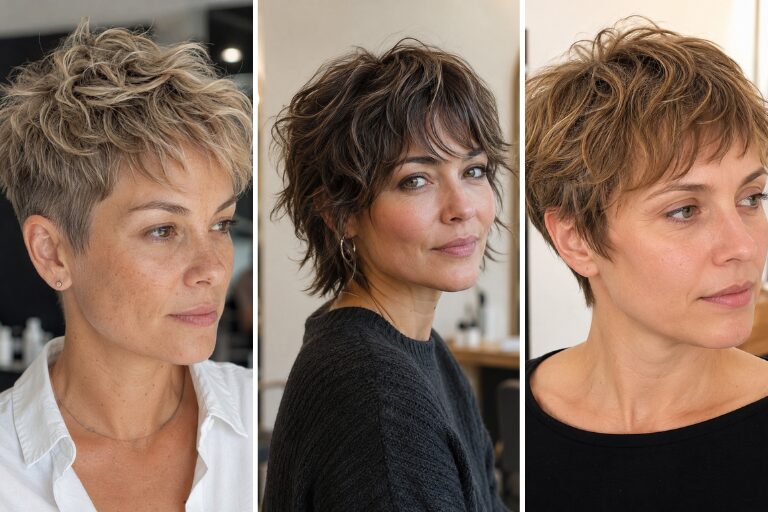
1. Choppy Pixie with Curtain Fringe

This choppy pixie has plenty of loose movement through the crown, with longer curtain-like fringe sweeping open around the forehead and cheekbones. The sides and nape stay much shorter, so the extra length on top feels intentional rather than heavy. Fine lighter ribbons through the brunette base also emphasize the bends and piecey separation.
Ask your stylist for a softly tapered nape with longer, irregular crown layers and fringe that stays long enough to split around the eyes. Keep texturizing focused on separation rather than aggressively removing bulk. For styling, work a tiny amount of lightweight paste through dry ends and pinch a few pieces forward.
2. Cropped Pixie with Fluffy Texture
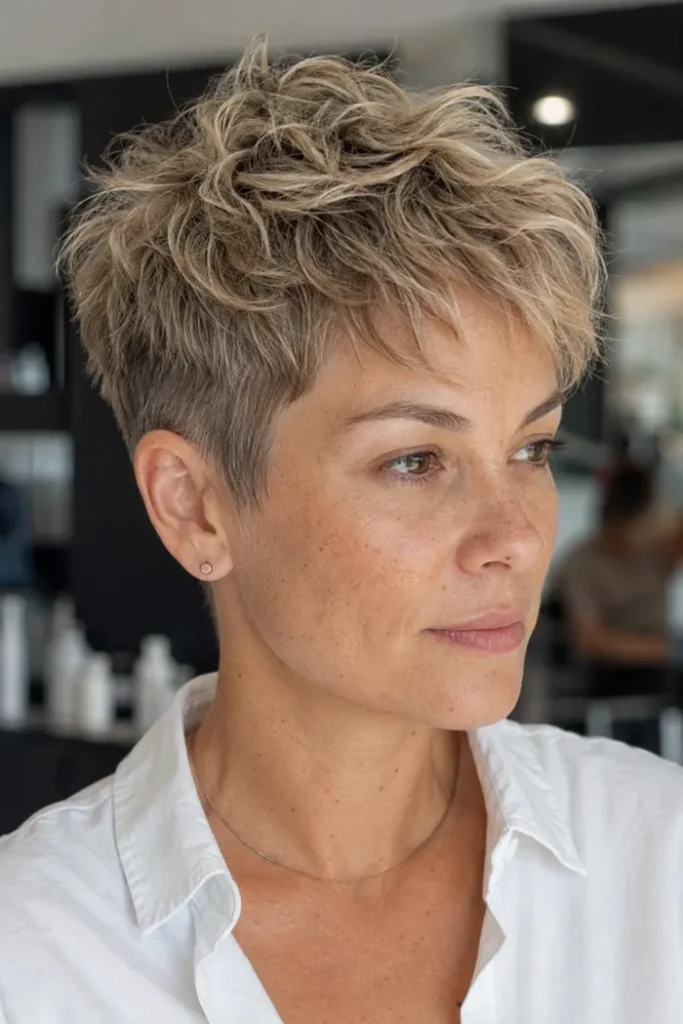
This is one of the shortest cuts in the group, with closely tapered sides and a soft, fluffy layer of length across the crown. The short fringe blends directly into the top instead of creating a separate bang section. Tousled bends keep the silhouette airy, while the light blonde and beige tones make the individual layers easy to see.
Ask your stylist to keep the sides neat around the ears while leaving enough length through the crown for your wave to bend rather than stick straight up. I’d avoid excessive thinning on fine hair here. A little root mousse and fingertip styling while blow-drying can create that lifted, touchable finish.
3. Ear-Length Wavy Pixie Bob
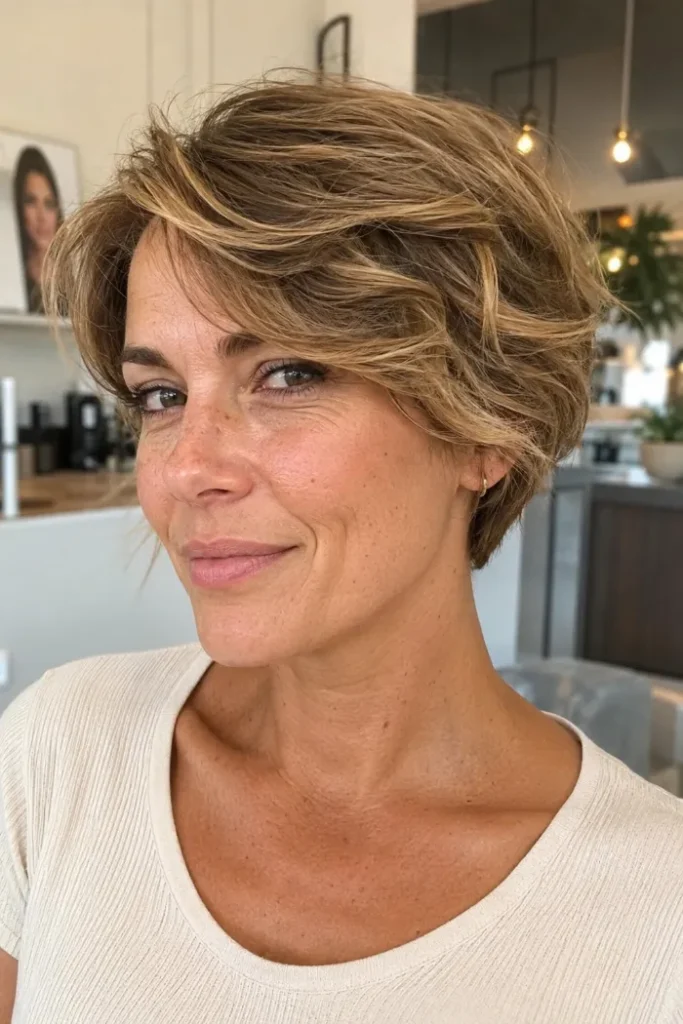
This longer pixie-bob keeps enough length around the ears and upper sides to show off broad, soft waves. The front is swept away from the face in curved pieces, while the back narrows into a shorter nape. Warm golden highlights trace the surface layers, making the flowing shape look especially dimensional without relying on lots of tiny layers.
Ask your stylist for an ear-skimming perimeter with longer layers through the top and front, then a gentle graduation into the nape. If your density is fine, keeping some weight in those side sections is important. Style with a light volumizing foam and a round or vent brush, encouraging the front away from your face.
4. Layered Pixie with Airy Crown Lift
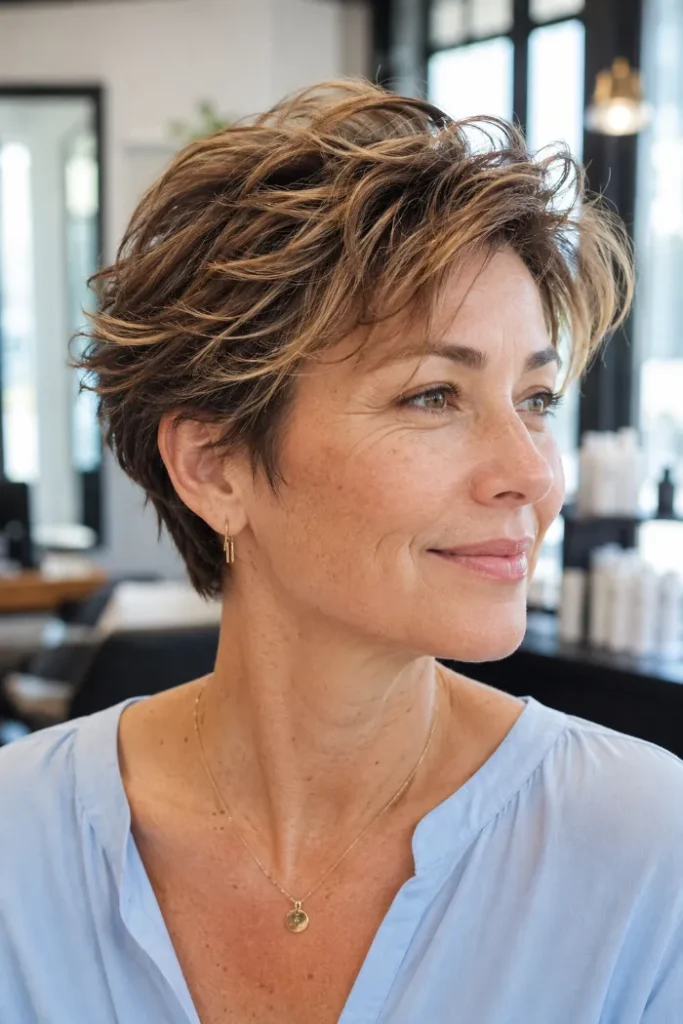
The lifted crown is really the feature of this pixie. Longer layers sweep up and back from the face, creating a loose, windswept shape, while the lower sides and nape stay slimmer. Warm caramel ribbons sit over the darker base and highlight each bend. The result has height and movement without a stiff, overly styled finish.
Ask your stylist to preserve several inches through the crown and front while graduating the lower back and sides much closer. The top needs enough length to fold into those loose waves. At home, lift the roots with your fingers while drying, then use a small amount of flexible styling cream only through the mid-lengths and ends.
5. Modern Wavy Bixie
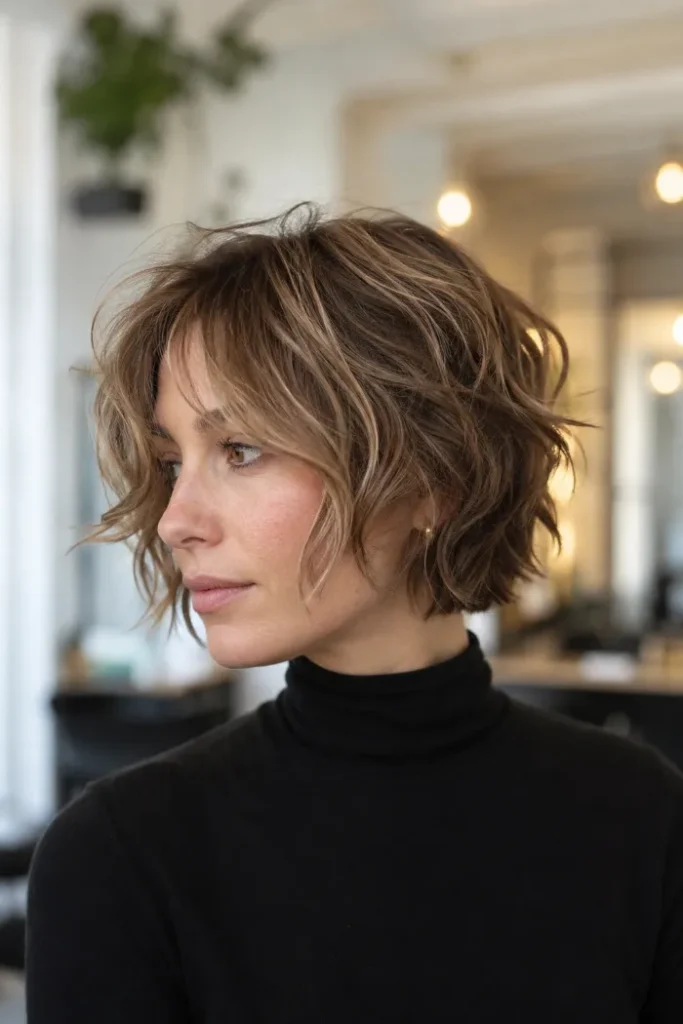
This bixie sits in that sweet spot between a short bob and a pixie, with soft ear-to-jaw-length pieces and a loose, tousled wave pattern. The front has wispy face-framing strands rather than a heavy fringe, while the back keeps enough length to feel relaxed and slightly undone. Subtle lighter pieces add definition around the face.
Ask your stylist for a soft bixie perimeter with internal layers that encourage movement but don’t shred the ends. Keep the front pieces long enough to tuck, curl, or wear loose around the cheek. If your waves tend to collapse, scrunch in lightweight foam and diffuse on low airflow instead of brushing everything smooth.
6. Piecey Razor Pixie
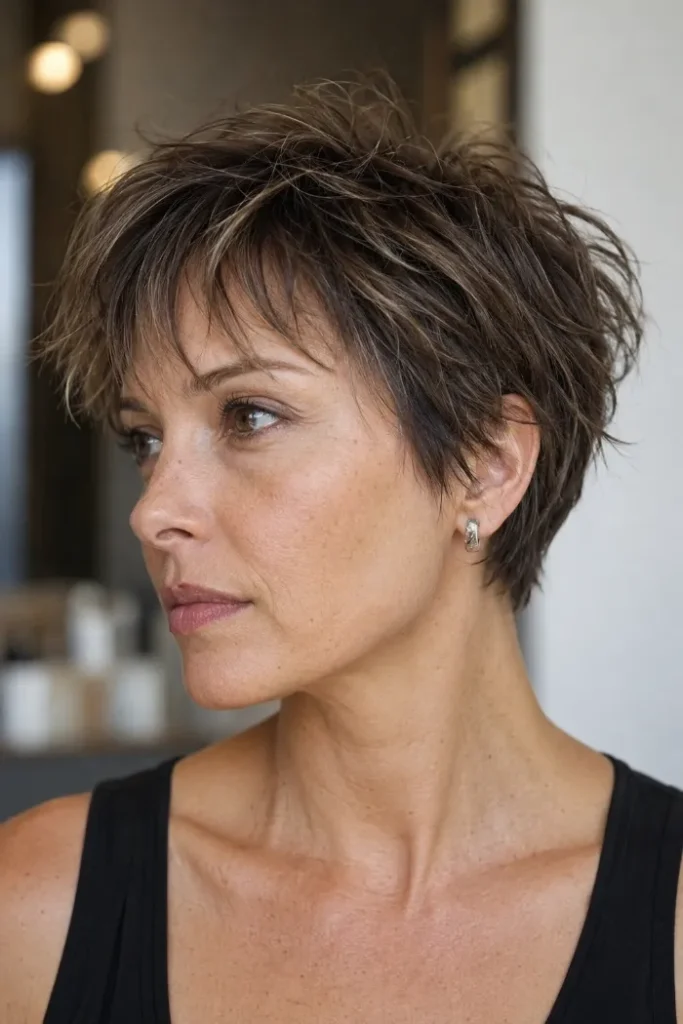
This short brunette pixie has a deliberately separated finish, with wispy fringe, tousled crown pieces, and a neatly tapered neckline. The layers are slim and directional rather than fluffy, which gives the cut a little edge while still looking soft. There’s enough length over the ears and crown for natural bends to show instead of disappearing into a uniform crop.
Ask your stylist for point-cut or softly razor-textured ends, but mention that you want to retain density through the interior if your hair is thin. The nape can stay close while the crown remains longer. A pea-size amount of dry texture paste rubbed between your fingertips will help define individual pieces without coating the roots.
7. Relaxed Italian Pixie Crop
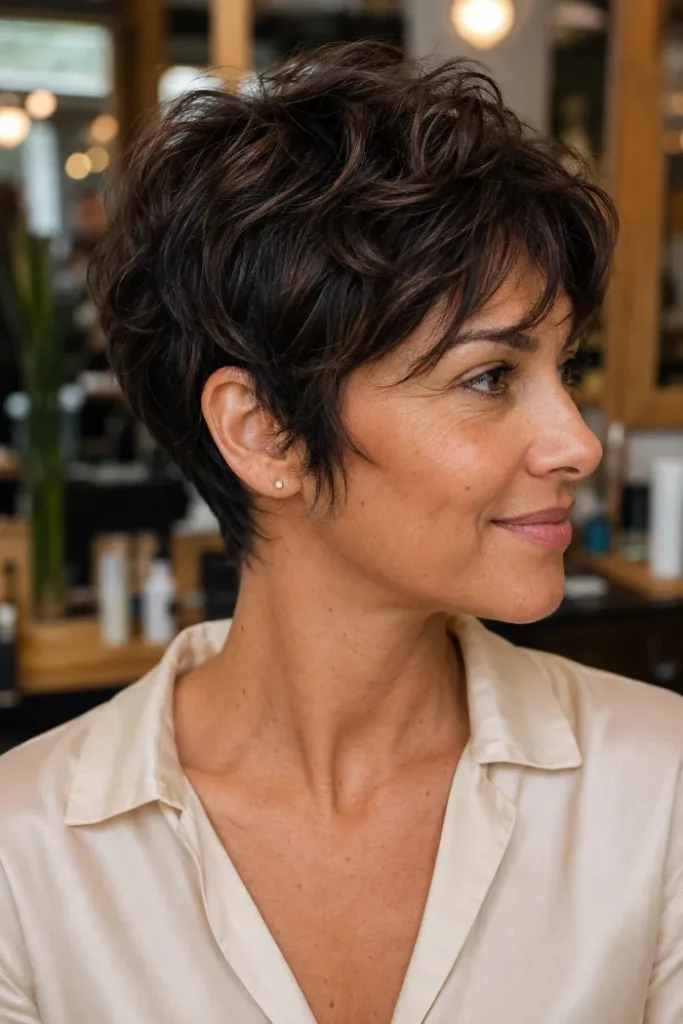
This dark pixie has a fuller, luxurious-looking crown balanced by much neater sides and a short neckline. Broad waves sweep through the top instead of forming tiny separated pieces, and the soft side fringe follows that same relaxed movement. I like how the silhouette keeps the fullness up high while remaining clean around the ear and neck.
Ask your stylist to keep the crown noticeably longer than the sides, with blended layers that allow your natural wave to form broad bends. Keep the temple and nape tidy rather than bulky. For a softer finish, use a lightweight blow-dry cream and direct the top with your fingers instead of trying to make every section identical.
8. Rounded Pixie Cut with Wispy Bangs
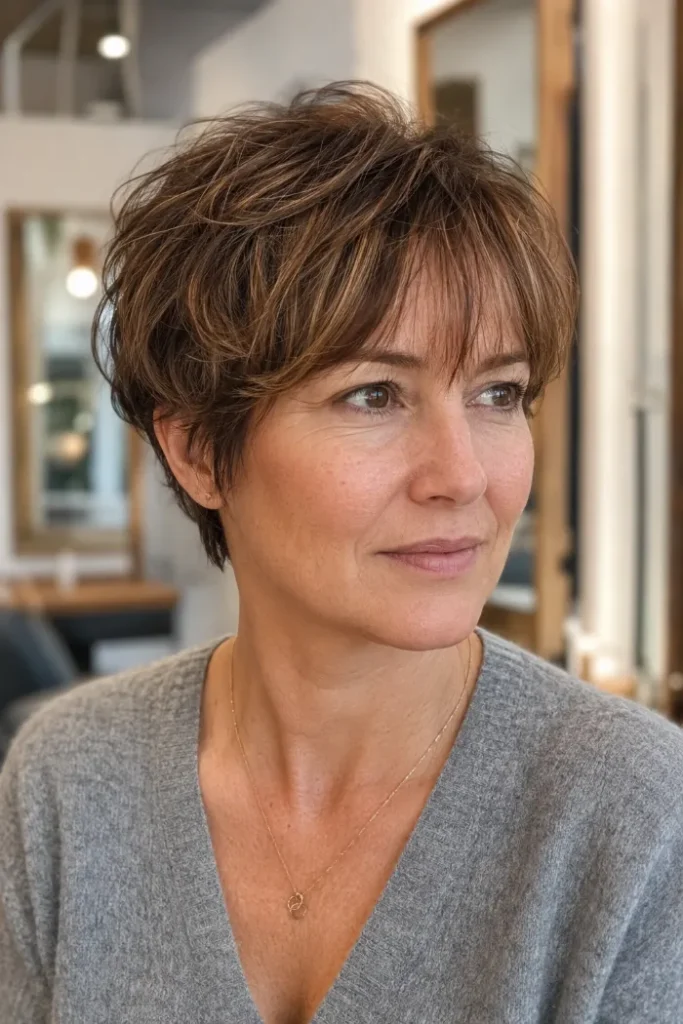
This pixie has a distinctly rounded shape through the crown and upper sides, with soft layers curving toward the face. The wispy eyebrow-length fringe breaks up the front without creating a blunt line, and the nape remains short and tidy. Warm highlighted pieces add even more definition to the curved layers and keep the shape from looking solid.
Ask your stylist for a rounded, weight-conscious silhouette with delicate bangs and only light texturizing through the ends. On thin hair, keeping fullness through the upper sides can be more useful than carving out lots of internal layers. A small round brush can help bend the fringe and surface pieces without flattening the crown.
9. Shaggy Pixie with Broken Fringe

This shaggy pixie is much less polished than a traditional crop. Choppy pieces move in different directions through the crown, the fringe is intentionally uneven and broken, and the back extends into longer wisps at the neckline. The sandy brown and blonde tones make the irregular layering especially noticeable, giving the cut a cool, lived-in feel.
Ask your stylist for short-to-long shag layering with a little extra length through the nape and an irregular, point-cut fringe. If your ends are already fine, ask them not to over-razor the wispiest sections. Styling can be as simple as scrunching in a light texture spray and letting your natural bends decide where the pieces fall.
10. Side-Parted Pixie with Sculpted Waves
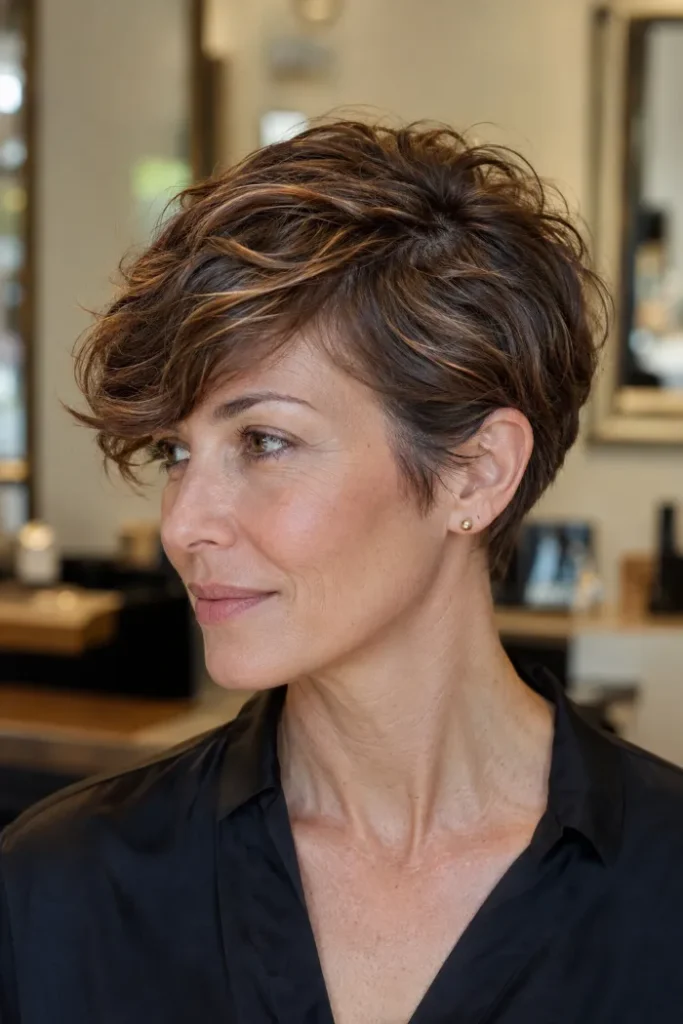
A deep side part gives this pixie its strong shape. The longer top sweeps across the forehead in a broad, sculpted wave, while the sides stay closely fitted around the ear. Warm coppery ribbons against the dark brunette base make each curved section stand out. It feels polished, but there’s still softness and movement through the crown.
Ask your stylist for a longer top that can travel across the head from a deep side part, paired with a compact taper around the ears and neckline. Keep the front substantial rather than overly thinned. To style, create one or two gentle bends with a small flat iron, then separate them with flexible cream.
11. Soft Curved Pixie with Tapered Neckline

This softly curved pixie keeps a lovely amount of fullness across the crown while narrowing gradually toward the neckline. The fringe is light and side-swept, and the layers over the ear bend neatly into the silhouette instead of sticking outward. Cool beige and silvery highlights trace the curved top layers and add visible dimension throughout the shape.
Ask your stylist for gentle graduation through the back with a tapered neckline and enough weight left through the upper sides to maintain that rounded profile. Keep the fringe soft and movable. If your roots need help, apply volumizing mousse only at the crown and blow-dry upward before smoothing the ends into place.
12. Soft Feathered Pixie Bob
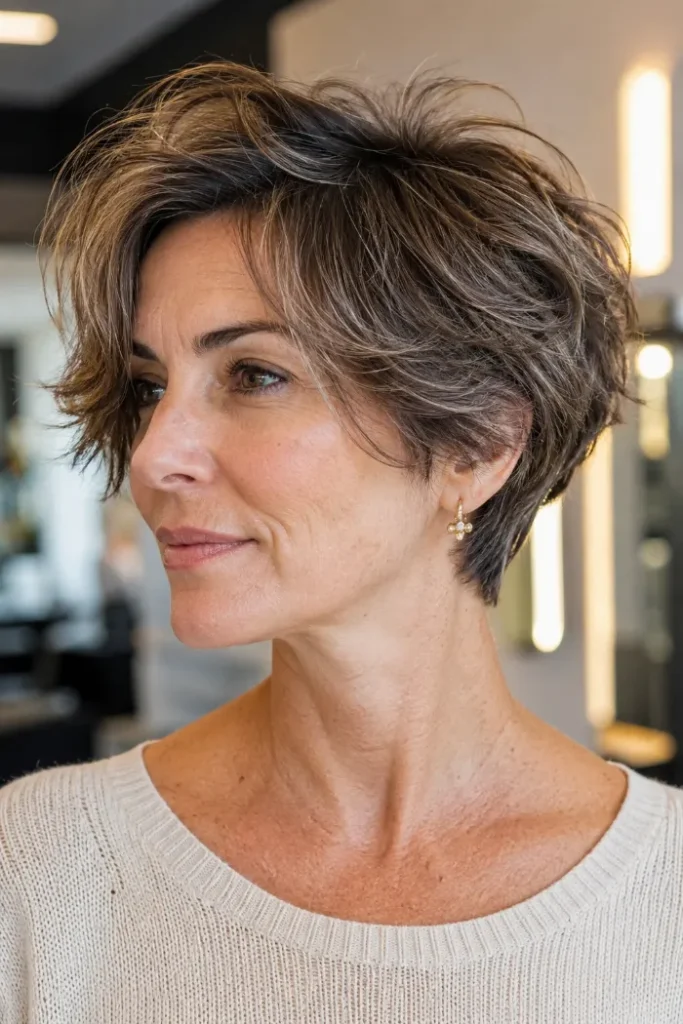
This longer pixie has the flow of a mini bob, especially through the sweeping front and upper sides. Feathered layers move back from the cheekbones, while the lower back is shorter and closer to the neck. The mix of brunette and soft ash-beige pieces emphasizes the direction of the layers and gives the longer crown an airy look.
Ask your stylist for long crown and side layers with a shorter, blended nape rather than a severe undercut. Keeping the side sections substantial helps preserve the pixie-bob feeling. Use a vent brush or small round brush to direct the front backward, then loosen it with your fingers so the feathering doesn’t look too set.
13. Soft Undercut Pixie for Fine Waves
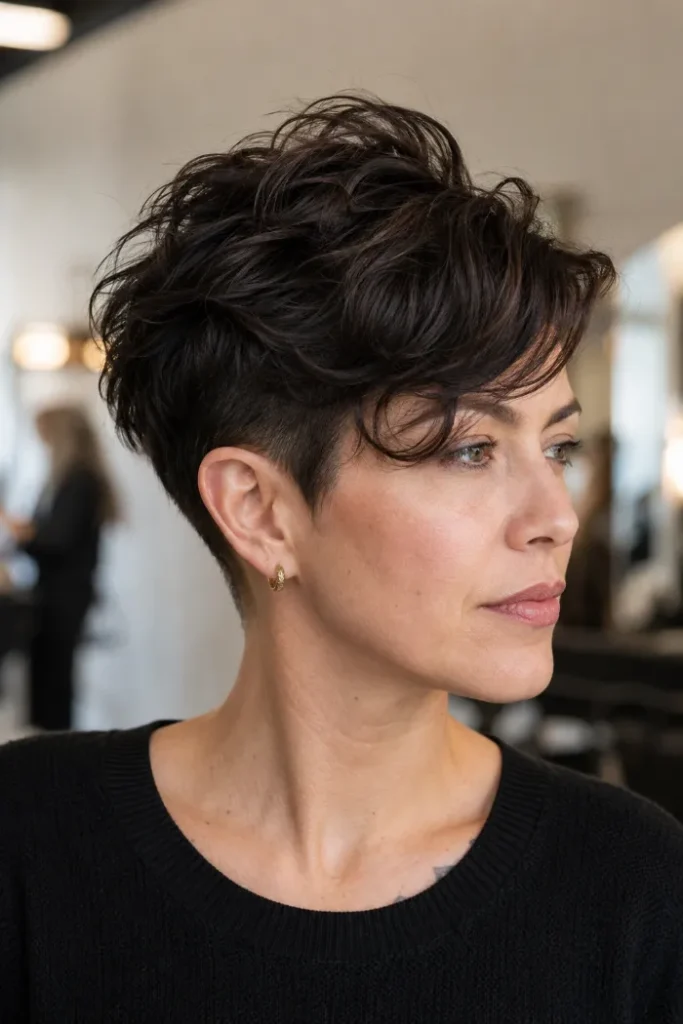
The contrast in this pixie is what makes it interesting. The side is cut very close around the ear, while the top stays dramatically longer and falls in glossy, loose waves. A sweeping front section softens the undercut and gives you far more styling flexibility than an evenly cropped pixie. The deep brunette color keeps the silhouette especially defined.
Ask your stylist for a soft undercut or very close taper beneath a substantially longer crown, making sure the top retains enough density to cover or reveal the short section as you prefer. Skip heavy thinning through the longest pieces. Scrunching with foam or using a diffuser can bring out the wave without collapsing the roots.
14. Soft Wolf Pixie
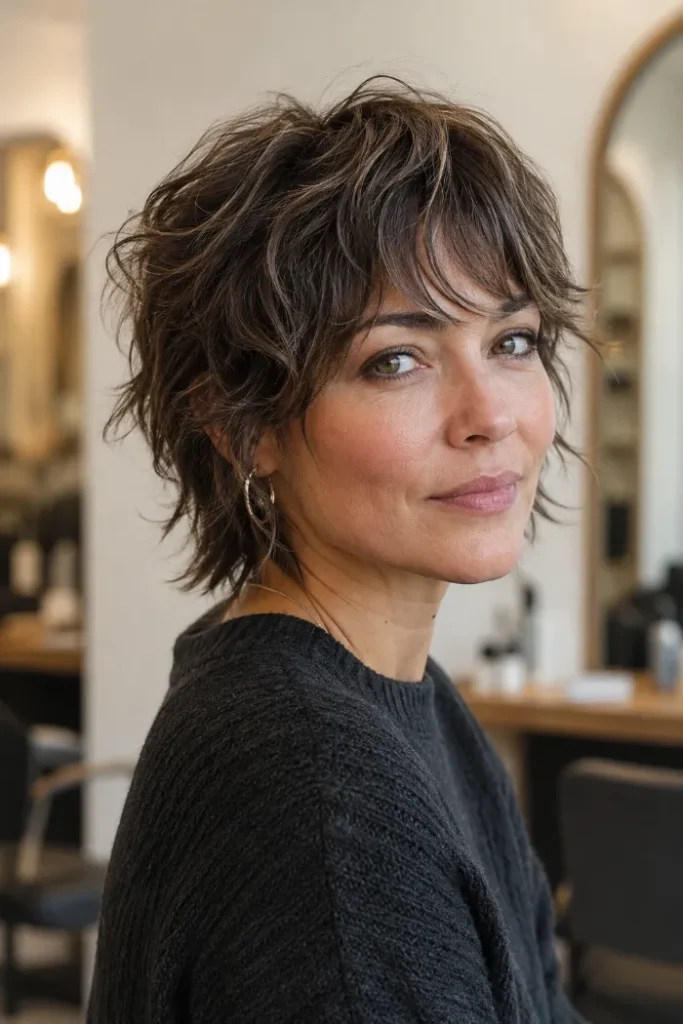
This wolfy pixie keeps the crown tousled and full, then stretches into longer, flicked pieces through the back and nape. The fringe is soft and separated across the forehead, with additional face-framing strands around the temples. It has the looseness of a mini shag, but the overall length is still short enough to read as a pixie.
Ask your stylist for layered crown volume, a lightly broken fringe, and intentional length through the nape instead of a traditional tight pixie neckline. Keep those outer pieces wispy but not sparse. A lightweight wave spray and a little scrunching should be enough for daily styling, which suits this cut better than a polished blowout.
15. Tapered Pixie with Loose Crown Waves

Seen from the side, this pixie has a beautifully clear shape: generous rounded volume through the crown and upper back, then a gradual taper into a neat neckline. Loose bends travel across the longer surface layers without making the cut look overly textured. The fringe follows the rounded silhouette, creating a soft transition into the side.
Ask your stylist to preserve weight through the crown and upper occipital area, then shorten progressively toward the nape. This is one cut where aggressive thinning could work against the shape, especially with fine density. Lift the crown while blow-drying, then twist or bend a few surface pieces with your fingers to encourage movement.
16. Textured Pixie with Long Crown Layers
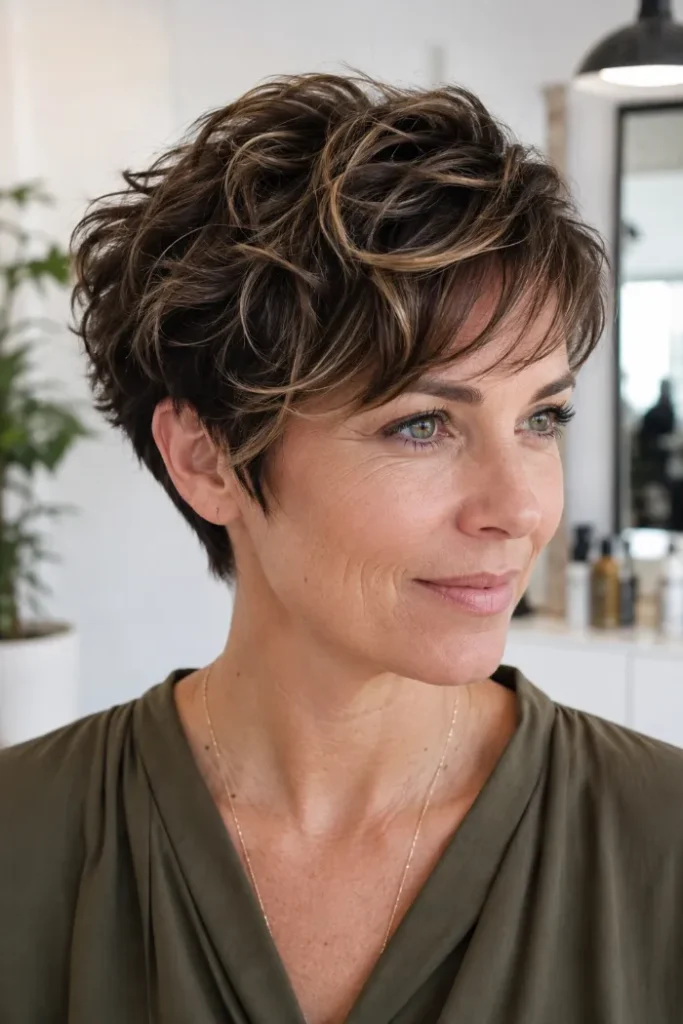
This pixie leaves the crown noticeably long, creating looping, separated waves over a much shorter perimeter. The front sweeps softly across the forehead, while the sides and nape stay slim enough to keep the volume concentrated on top. Caramel ribbons through the brunette base follow the curves of the longer layers and make the texture especially visible.
Ask your stylist for elongated crown layers with a short, blended perimeter and plenty of contrast between the top and nape. Keep the longest sections substantial so they can form real waves. If your natural texture needs help, wrap just a few pieces around a small iron, leaving the ends relaxed rather than curling every strand.
17. Tousled French Pixie Crop
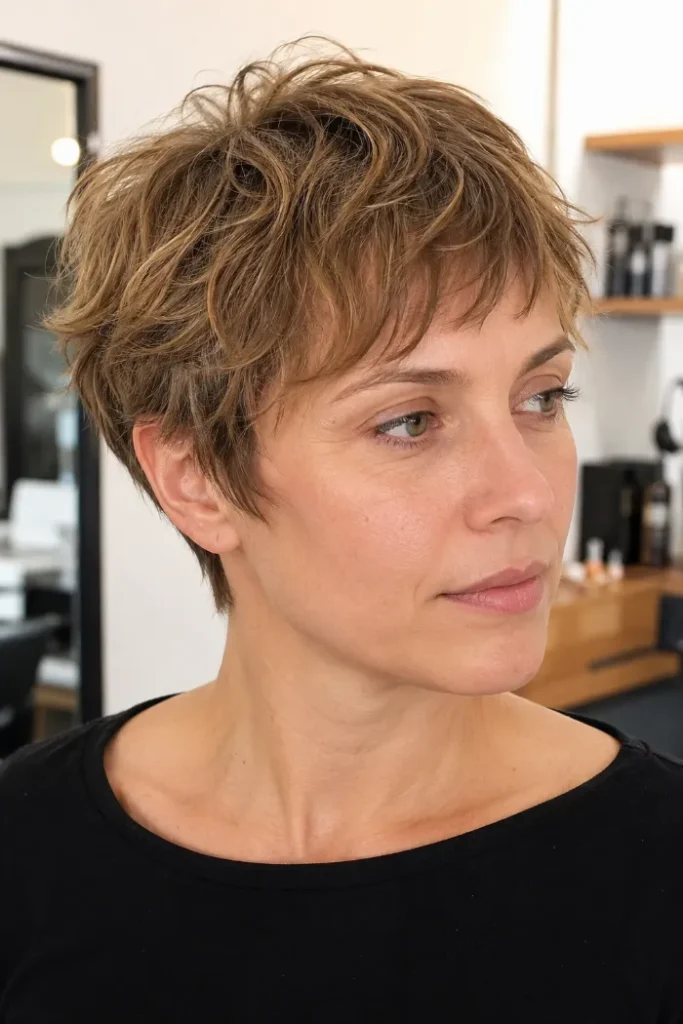
This tousled crop has a relaxed, unfussy shape with short sides, a compact nape, and slightly longer pieces moving across the crown. The fringe is light and broken rather than blunt, which keeps the front soft. Warm golden-brown tones and subtle lighter pieces emphasize the airy texture without distracting from the simple short silhouette.
Ask your stylist for a classic short pixie outline with extra length through the top and a softly point-cut fringe. The goal is separation without making fine ends look feathery everywhere. For styling, rub a tiny amount of matte paste between your hands, then skim it over the crown and pinch only a few sections into place.
18. Vintage-Inspired Wavy Pixie
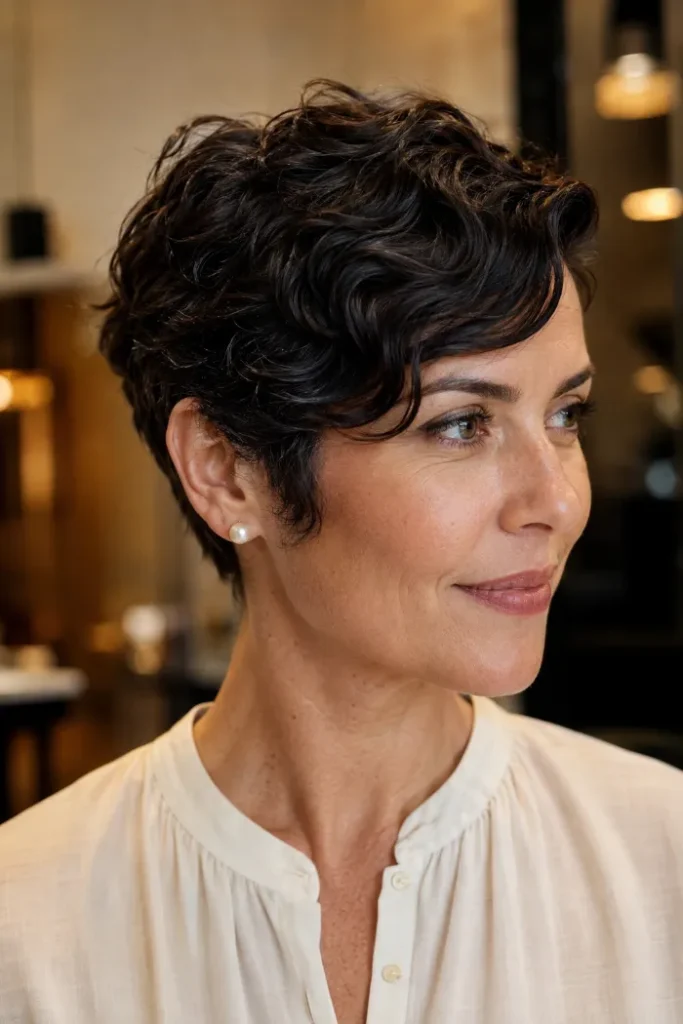
This glossy brunette pixie uses larger, more sculpted waves than the tousled cuts in the roundup. The top and front are long enough to form defined S-shaped bends, while the sides and neckline stay compact. That contrast gives the style its vintage mood, especially around the sweeping front section, without requiring the hair itself to be long.
Ask your stylist to leave enough length across the top and fringe for a full wave pattern while keeping the lower sides and nape closely shaped. For the finish, use a light setting foam and form the front into broad bends with a small iron or fingers, then brush very gently so the waves connect.
19. Wavy Pixie with Long Side Fringe
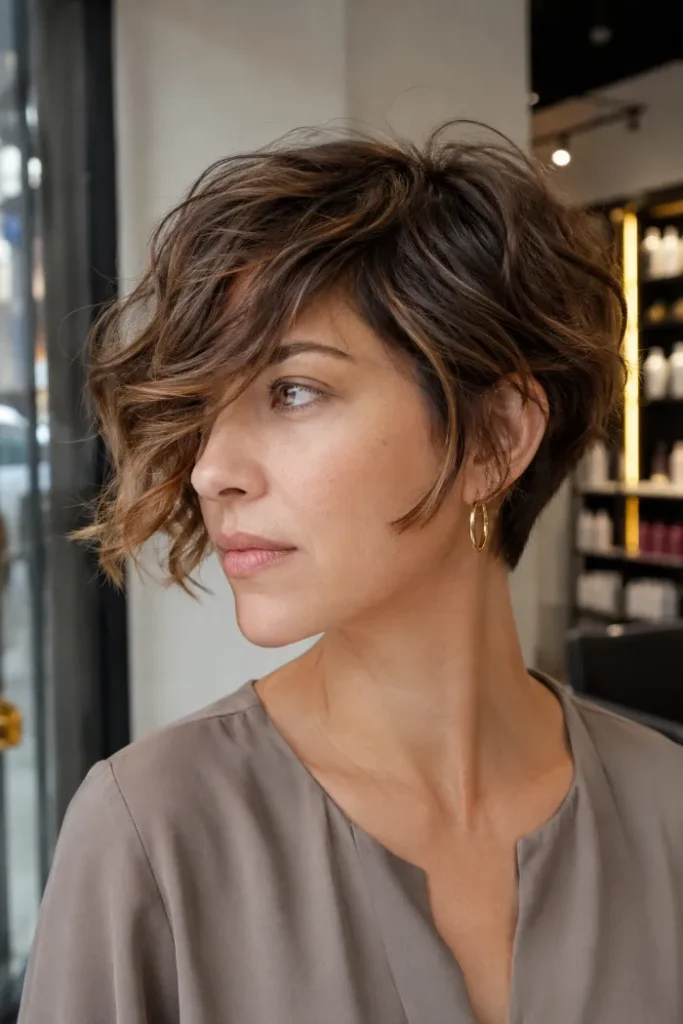
This asymmetrical pixie puts nearly all the drama into one long side fringe. The front falls in loose waves toward the cheek and partially across the eye, while the opposite side and back are cut much shorter. Warm highlights are concentrated through the longer pieces, which makes the wave pattern stand out and reinforces the intentionally uneven silhouette.
Ask your stylist for a deep side part with front length reaching roughly to the cheekbone area, paired with a snug taper through the opposite side and nape. Don’t over-thin that fringe if your density is limited. A single loose bend through the front with a flat iron can create the sweep without making it look curled.
20. Wispy Pixie with Soft Face-Framing Layers
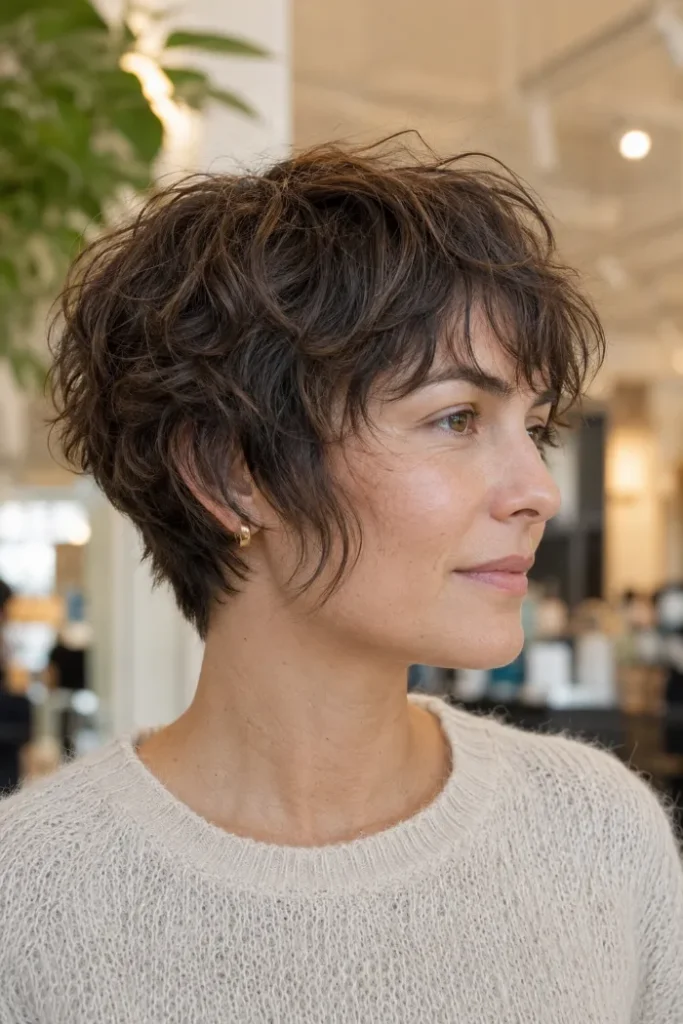
This wavy brunette pixie has a soft rounded crown paired with wispy pieces around the forehead, temples, and cheek. The face-framing sections are noticeably longer than the compact nape, which keeps the cut from feeling severe. Loose bends throughout the top create an airy outline, while the fringe blends naturally into the side layers instead of sitting separately.
Ask your stylist for a short tapered back with longer face-framing pieces left around the temples and cheekbones, plus a light fringe that merges into the crown. Keep the internal layering gentle if fullness is a priority. Scrunch in a small amount of airy mousse, then let a few front pieces dry naturally for that soft separation.
FAQs About Pixie Cuts for Thin Wavy Hair
Are pixie cuts a good choice for thin wavy hair?
They can be, especially when the cut works with your natural wave instead of thinning it away. Keeping useful weight through the crown or upper sides can give fine hair a stronger silhouette, while shorter lengths remove some of the drag that can stretch soft waves flatter.
Which pixie shape can make thin hair look fuller?
Rounded pixies, tapered cuts with longer crown layers, and soft bixies are worth considering because they preserve visible areas of fullness. If your ends are very fine, be cautious with extremely shredded or heavily razored layering. A few well-placed layers often give you more usable volume than lots of tiny ones.
How should I style a wavy pixie without flattening it?
Start with a small amount of lightweight mousse or root lift, then dry with your fingers or a diffuser instead of repeatedly brushing the wave straight. Once dry, add paste or cream only where you want separation. Heavy oils and thick styling creams can weigh down finer roots surprisingly quickly.
How often does a pixie cut need trimming?
A close, precise pixie usually needs more frequent reshaping than a bixie or shaggy version. Around four to eight weeks is a useful range to discuss with your stylist, depending on how quickly your hair grows and how much you mind the neckline and sides becoming softer between appointments.
Choosing the Right Wavy Pixie for You
If your waves are soft and your density is fine, I’d start by choosing the detail you most want to keep: a fuller crown, longer fringe, rounded sides, or a bit of length around the face. Then build the rest of the cut around that feature instead of asking for texture everywhere. That usually gives your stylist a much clearer direction.
Also be realistic about maintenance. A close tapered pixie keeps its shape best with regular trims, while a bixie, wolf pixie, or longer crown can give you more room to grow between appointments. Pick the silhouette you’re excited to style on an ordinary morning, not just the one that looks cutest in a freshly finished salon photo.